Transcription of BSBMGT617 Develop and implement a business plan
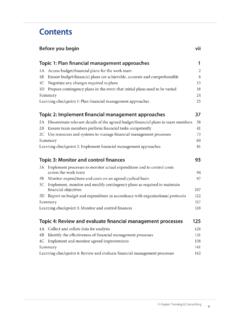
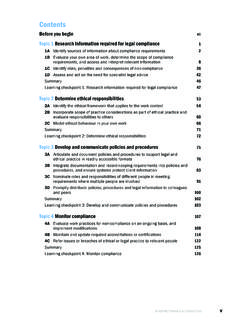
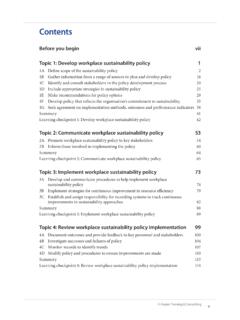
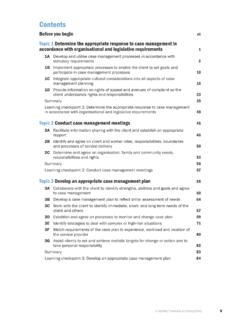
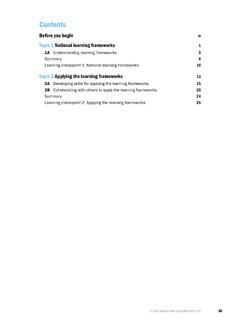
1 Aspire Training & ConsultingvContentsBefore you begin viiTopic 1: Develop a business plan 11A Review and evaluate pre-existing strategic, business and operational plans 21B Analyse and interpret business vision, mission, values and objectives 91C Consult with key stakeholders 131D Review market requirements, profile customer needs and research pricing options 171E Develop performance objectives and measures 241F Identify financial, human and physical resource requirements 271G Consider any permits or licences that may be required for new activity 311H Write a business plan 36 Summary40 Learning checkpoint 1: Develop a business plan 41 Topic 2: Monitor performance 472A Communicate the business plan 482B Ensure skilled labour is available 522C Test performance measurement process 552D Ensure timely reports on all key aspects of the business are available 622E Report system failures, product failures and variances to the business plan 66 Summary69 Learning checkpoint 2: Monitor performance 70 Topic 3: Respond to performance data 753A Analyse performance and review objectives and indicators 763B Ensure training and development activities are implemented to improve performance803C Review system processes and work methods regularly as part of continuous improvement84 Summary90 Learning checkpoint 3: Respond to performance data 912 Aspire Training & ConsultingBS BMGT617 Develop and implement a business planIt is crucial that business and operational plans are regularly reviewed because of possible changes in an organisation s direction.
2 Managers need to review the current business goals and assess whether they are still right for the organisation. Reasons why an organisation might need to review business The business may have new competitors. There might be new and/or better ways to market the products andservices (such as using social media). The business might be able to Develop different products that better meetthe needs of the clients. Financial goals may have how a business plan is developedA business plan is developed by consulting with stakeholders, gathering key people in the organisation to review the current business plan, strategic plan and operational plans, and conducting research and analysis to determine requirements for the designated period, for example, the next 12 months. There are a number of steps to developing a business plan, as shown plan development process1 Analyse and interpret the business vision, mission, values, objectives and goals outlined in the strategic consultation with key market requirements for the product and/or service, profile customer needs, competitors and research pricing performance objectives and measures through consultation with key Review and evaluate pre-existing strategic, business and operational plans6 Aspire Training & ConsultingBS BMGT617 Develop and implement a business planExample: understanding a business planYou may like to watch the business planning case study video produced by the Queensland Government: operational plansOperational plans are planning documents that help the organisation achieve its goals over the 12 months of the business plan.
3 They give more detail about what needs to be implemented and detail the implementation procedures for a specific area of the business , such as production or marketing. In large organisations, particularly those involved in the finance industry, there may be risk management plans. Operational plans outline activities and tasks to keep the organisation on track, promotional activities, and identify and document resource requirements. They also identify potential risks, treatment options and contingency plans. You need to constantly monitor performance to ensure that the plans are current, as there will always be internal and external changes that affect the ability to achieve the targets. Here is a comparison between internal and external changes Staffing changes Relocation of offices Restructures of departments Changes in senior leadership ormanagement New technology changes dueto internal forces; for example,a new IT system better meetsclient needsExternal changes Legal requirements, such asnew laws Political changes, such as newgovernments bringing in newpolicies New competitors to thebusiness Changes in social media for theworkplace Environmental changes New technology changes dueto external forces; for example,upgrades to productionequipment Aspire Training & Consulting11To p i c 1 Develop a business planEvaluate objectivesAs change in internal and external environments is constant, objectives need to be evaluated to ensure they are still relevant and current in enabling the business areas to meet corporate objectives.
4 The business plan should include sets of performance measures for each objective. By comparing actual performance to planned performance in different areas, you can identify whether the objectives are being met. The variance analysis determines the appropriateness and effectiveness of the current objectives and what is required for organisational areas to meet the longer-term strategic objectives. All objectives need to be framedTarget and clearly define a specific area that you want to an indicator of progress; quantify if possible. Determine how you will know the goal has been what the goals should be and keep them achievable in the time what results can realistically be achieved given the available resources, knowledge and when the result can be achieved; make sure there is enough time to achieve the goal, but not too much : understand business plan objectivesIn 2015 2020, Fabrique will consolidate its position in the market as a lead retailer for luxury lifestyle products.
5 To do this, Fabrique will focus on the following business stability: Increase revenue by 15% (compared to the previous 12 months) by the end of the financial year. Maintain annual profit levels of 15% of revenue for all products and services, calculated at theend of each financial year. Re-invest 75% of profit back into the business at the end of each financial position: Maintain the number one rating in the national industry customer service awards. Launch new high quality exclusive consumer products to meetcustomer demand, ahead of competitors, within budget and by theagreed deadlines .Right people: Provide induction training at the commencement of employment totrain new employees to be knowledgeable, helpful and enthusiastic. Provide the financial, physical, human and time resources to supportan annual professional development program for all Aspire Training & ConsultingBS BMGT617 Develop and implement a business planInternal stakeholdersExternal stakeholders business owners business partners Directors and managers Team leaders Employees Community leaders Government agency representatives Shareholders Suppliers and key customers Technical or specialist consultantsConsultation methods and toolsFor consultation to be effective, all stakeholders must have the opportunity to contribute to the review of the existing plan and be involved with the development of the new plan.
6 There are a number of processes and approaches that can be used in obtaining input and feedback from consultation as shown Call a meeting to specifically seek feedback on current and desiredperformance from internal stakeholders. Discuss any issues as an agenda item during regular meetings, suchas area/unit team leader meetings, and ask for the relevant parties toprovide their Either one-on-one or with a group of stakeholders or externalstakeholders. Interviews may be face-to-face, over the telephone, videoconferencingor conducted via questionnaire. Have a defined set of questions to ask when you are seeking An open forum where people provide input and ideas on solutions togiven issues. The issue first needs to be defined. A key part of this approach is that there should be no analysis ornegative judgment of any ideas. One approach when dealing with a large number of stakeholders is tobreak into smaller groups where each addresses specific issues.
7 Each group reports back to the whole group who add additional ideasand provide feedback on the ideas cause analysisTo identify the root causes of any issues that arise during the consultation, the group can Develop a cause and effect diagram. v120 9 Aspire Training & Consulting19To p i c 1 Develop a business planReview identified market requirements In developing a new product or service or taking an existing product or service to a new market, some organisations prepare a market requirements document (MRD). This is quite common for organisations who have product managers or who manage new product development or new market penetration as projects. The document is used to guide the design and production or development and marketing of the product or service. The document may be called by another name in different organisations, or the information is incorporated into a comprehensive marketing plan for a product or product is a summary of what is contained in a MRD and the review and action considerations associated with developing an elementsElements of an MRD generally include: an explanation of the new product or service that addresses a need or aproblem the need or want for the product by the consumers or business clients who the customers will be in terms of the market and the segment of themarket they represent how the product or service enables the organisation to achieve strategicobjectives competitors current or future products existing or potential substitutes marketing/promotional activitiesSome documents are more detailed than others, depending on the nature of the organisation and the product or service.
8 For example, a software development company may provide a document that includes details about the product s and action considerationsTo review the requirements and determine what needs to change to meet objectives, consider the currency and relevancy of the existing document. Ask the following questions: Have needs or wants changed, as reflected in sales figures andenvironmental analysis reports? In what areas have you got a competitive advantage? What are competitors doing and how will that affect our share of the market? Have actual or anticipated changes in the internal or external environmentprovided the organisation for opportunities to expand the product line? Are there any new competitors or product/service substitutes since thedevelopment of the document? What objectives and production, purchasing and/or marketing strategiesand tactics need to be redeveloped to meet changes in the marketrequirements?
9 26 Aspire Training & ConsultingBS BMGT617 Develop and implement a business continuedEfficiency measures These measures are used to determine productivity or cost effectiveness. Examplesinclude the number of calls received by a customer service team per day (on average), cost per product or outputs per unit of measures Quality measures are used to determine the effectiveness in meeting customerexpectations related to product reliability and service responsiveness. Manufacturing organisations also measure product quality error rates. For a customer service team, a measure might relate to the level of satisfaction of customer in dealing with the : use the balanced scorecard as a measurement toolThe balanced scorecard, originally developed in 1996 by Kaplan and Norton, is used by a major Australian financial institution as a performance management tool. At the strategic and business levels, the system integrates financial and operational measures aligned to strategic goals.
10 The four organisational perspectives that are measured by the bank are: financial measurements including profitability analysis customer satisfaction and needs by tracking satisfaction levels and market share business processes to enable the organisation to achieve objectives through efficiency measures learning and growth that focuses on measuring staff commitment, experience and skills, anddeveloping leadership, motivational and human resource strategies to ensure staff are willingable to perform learn more about the balanced scorecard, watch the Harvard business video at: , in which Kaplan discusses the development and application of the Balanced task type of performance measure is designed to assess the quantity of products or services? to the MBO approach, how do managers set objectives?28 Aspire Training & ConsultingBS BMGT617 Develop and implement a business planHuman resourcesAn organisation may Develop a strategic human resources plan to determine staffing level requirements based on the corporate strategies, business objectives and operational plans.