Transcription of Buddhist Ethics - Cabrillo College
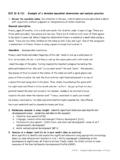
1 Buddhist EthicsThe Practice of Compassion The four noble Truths:1. Life is Duhkha (Universal Suffering) ..the truth of duhkha, found in every aspect of conditioned existence; birth, death, grief, lamentation, pain, distress and despair; conjunction with the hated, separation from the dear; and not getting what one wants. (Robinson & Johnson, The Buddhist Religion, 4thed.)The four noble Truths:2 The cause of duhkhais trishna/tanha(Thirst or desire) I am the architect of my own suffering The four noble Truths:3. To eliminate Duhkhaone must eliminate Tanha On the arising of the ego, so arises suffering; on the cessation of the ego, so ceases suffering. The four noble Truths:4. The way to eliminate tanha is to follow the noble Eightfold Path (The Middle Way)Right UnderstandingRight ResolveRight SpeechRight BehaviorRight LivelihoodRight EffortRight MindfulnessRight Concentration The Middle Way The Blessed One began by condemning each of two extremes, saying sensual indulgence is low, vulgar, worldly, ignoble, and useless, whereas self-torture is painful as well as ignoble and useless.
2 The Tathagata, by avoiding these extremes, had discovered the Middle Way the produces vision and knowledge and leads to peace, higher knowledge, Awakening, and nirvana. (The First Sermon )The Razor s EdgeFair goes the dancing when the sitar's tuned;Tune us the sitar neither low nor high,The string o'erstretched breaks, and the music flies;The string o'erslack is dumb, and music dies.(Sir Edwin Arnold's, Light of Asia )Nirvana/NibhanaLiterally to blow out or to extinguish the egoSometimes referred to as the state of no wind Occurs with a fundamental and profound recognition of the illusion of separatenessOne relinquishes the idea of an enduring, unchanging, identifiable selfAnatman (Anatta)Rejects the idea of Atman(the Hindu name for soul )
3 Maintains that we are only an ever-changing, impermanent course of processes called dharmas Namas Dharmas mental processesRupas Dharmas bodily processesImplies that selfishness is based on ignorance of one s true beingInterdependent ArisingPaticca Samuppada dependent origination=>all beings depend on all beings =>all actions are felt by all beings=>moral responsibility is not measured individually but collectivelyThe BodhisattvaOne who has achieved awakening or has made great progress in Mahayana BuddhismCharacterized by the The Six Perfections 1. Dana-paramita (other-directed)2. Shila-paramita (correct moral discipline)3. Kshanti-paramita (patience & tolerance)4. Virga-paramita (determination & perseverance5. Dhyana-paramita (skill in meditation)6.)
4 Prajna-paramita (wisdom -one who sees the world as it is)The four Immeasurables: Brahma Viharas May all sentient beings have happiness and its causes, May all sentient beings be free of suffering and its causes,May all sentient beings never be separated from bliss without suffering,May all sentient beings be in equanimity, free of bias, attachment and anger. Karuna: Compassion Compassion and love are not mere luxuries. As the source both of inner and external peace, they are fundamental to the continued survival of our species. His Holiness the XIV Dalai LamaSangha: A community of practicePlum Village founded by Vietnamese monk Th ch Nh t H nh, and his colleague Bhikkhuni Ch n Kh ng, in 1982 , who invited American veterans of the Vietnam War to come and heal from their Examples of Engaged Buddhism The Dalai Lama won the Nobel Prize for Peace in 1989 and Martin Luther King nominated Thich Nhat Hanh in 1967 Mean Street Monks working in Stockton, who have turned their monastery into a refuge for neighborhood childrenAmitabha Hospice Service a New Zealand Buddhist charity providing free home help support and companionship for the terminally ill and their families.
5 Other Examples of Engaged Buddhism Compassion applies to any sentient beingOther Examples of Engaged BuddhismCompassion alsoapplies to the non-sentientenvironment as a whole.