Transcription of Change Plan Worksheet - ctacny.org
1 Motivational Groups for Community Substance Abuse Programs Change plan Worksheet The changes I want to make (or continue making) are: The reasons why I want to make these changes are: The steps I plan to take in changing are: The ways other people can help me are: I will know that my plan is working if: Some things that could interfere with my plan are: What I will do if the plan isn t working: 98 Part Three: Groups Change plan Worksheet Outline The changes I want to make are: List specific areas or ways in which you want to Change Include positive goals (beginning, increasing, improving behavior) The most important reasons why I want to make these changes are: What are some likely consequences of action and inaction? Which motivations for Change seem most important to you? The steps I plan to take in changing are: How do you plan to achieve the goals? Within the general plan , what are some specific first steps you might take? When, where and how will these steps be taken?
2 The ways other people can help me are: List specific ways that others can help support you in your Change attempt How will you go about eliciting others support? I will know that my plan is working if: What do you hope will happen as a result of the Change ? What benefits can you expect from the Change ? Some things that could interfere with my plan are: Anticipate situations or changes that could undermine the plan . What could go wrong? How might you stick with the plan despite the changes or setbacks 99 Motivational Groups for Community Substance Abuse Programs Change plan Worksheet Example The changes I want to make are: 1. Stop smoking crack 2. Reduce my drinking 3. Take better care of my kids The most important reasons why I want to make these changes are: 1. Get out of trouble with probation avoid dirty urines 2. Take better care of my health 3. Give my kids a better chance. The steps I plan to take in changing are: 1. Keep coming to group and treatment here.
3 2. Give urines to my every week. 3. Spend time each day focusing on my children 4. Go to my kids schools to meet their teachers. 5. Stop using crack, one day at a time. 6. Get a sponsor at NA. 7. Avoid hanging out with people who use. 8. Go back to church. The ways other people can help me are: 1. My can encourage me when I give a clean urine. 2. My counselor can help me deal with my depression. 3. My group can help me talk about my difficulties in quitting. 4. My mom can care for my kids when I m working or at treatment. 5. My sponsor can help me when I have a craving. I will know that my plan is working if: 1. I am not using crack. 2. I am giving clean urines. 3. I am coming to group 8 out of 10 times. 4. I am spending time each day focusing on my children and their needs. 5. I am going to NA 3 times a week. Some things that could interfere with my plan are: 1. If I get sent back to jail for a dirty urine. 2. If I don t plan ahead for cravings and urges 3.
4 If I don t stop hanging with using friends. 4. If I quit treatment. What I will do if the plan isn t working: 1. Be honest with my counselor and my group and ask for help. 2. Make another plan that takes care of cravings/urges better. 3. Tell my I need residential treatment or more treatment. 4. Refuse to let myself feel like a failure 100 Responding to Change Talk: EARS! Elaborating: In what ?; Tell me ; What else? Affirming: That took a lot of courage; You re a person who can make changes when you need Reflecting: That s really important to you ..; You realize it s become a Summarizing: There are a number of things I m hearing about your situation . First, you re concerned Also, you , and you are Responding to Change Talk: EARS! Elaborating: In what ?; Tell me ; What else? Affirming: That took a lot of courage; You re a person who can make changes when you need Reflecting: That s really important to you.
5 ; You realize it s become a Summarizing: There are a number of things I m hearing about your situation . First, you re concerned Also, you , and you are Evocative Question (Assumes client has a concern, idea, or resource) Decisional Balance (Looking at both sides of the ambivalence) Ask for an Example Query Extremes (Worst Best ?) Ask for Elaboration Importance/ Confidence Ruler Looking Back Explore Goals/Values (What s important to you?) Looking Forward Come Alongside (Side with the status quo) Evocative Question (Assumes client has a concern, idea, or resource) Decisional Balance (Looking at both sides of the ambivalence) Ask for an Example Query Extremes (Worst Best ?) Ask for Elaboration Importance/ Confidence Ruler Looking Back Explore Goals/Values (What s important to you?) Looking Forward Come Alongside (Side with the status quo) Evocative Question (Assumes client has a concern, idea, or resource) Decisional Balance (Looking at both sides of the ambivalence) Ask for an Example Query Extremes (Worst Best ?)
6 Ask for Elaboration Importance/ Confidence Ruler Looking Back Explore Goals/Values (What s important to you?) Looking Forward Come Alongside (Side with the status quo) Evocative Question (Assumes client has a concern, idea, or resource) Decisional Balance (Looking at both sides of the ambivalence) Ask for an Example Query Extremes (Worst Best ?) Ask for Elaboration Importance/ Confidence Ruler Looking Back Explore Goals/Values (What s important to you?) Looking Forward Come Alongside (Side with the status quo) Evocative Question (Assumes client has a concern, idea, or resource) Decisional Balance (Looking at both sides of the ambivalence) Ask for an Example Query Extremes (Worst Best ?) Ask for Elaboration Importance/ Confidence Ruler Looking Back Explore Goals/Values (What s important to you?) Looking Forward Come Alongside (Side with the status quo) Evocative Question (Assumes client has a concern, idea, or resource) Decisional Balance (Looking at both sides of the ambivalence) Ask for an Example Query Extremes (Worst Best ?)
7 Ask for Elaboration Importance/ Confidence Ruler Looking Back Explore Goals/Values (What s important to you?) Looking Forward Come Alongside (Side with the status quo) Evocative Question (Assumes client has a concern, idea, or resource) Decisional Balance (Looking at both sides of the ambivalence) Ask for an Example Query Extremes (Worst Best ?) Ask for Elaboration Importance/ Confidence Ruler Looking Back Explore Goals/Values (What s important to you?) Looking Forward Come Alongside (Side with the status quo) Evocative Question (Assumes client has a concern, idea, or resource) Decisional Balance (Looking at both sides of the ambivalence) Ask for an Example Query Extremes (Worst Best ?) Ask for Elaboration Importance/ Confidence Ruler Looking Back Explore Goals/Values (What s important to you?) Looking Forward Come Alongside (Side with the status quo) Evocative Question (Assumes client has a concern, idea, or resource) Decisional Balance (Looking at both sides of the ambivalence) Ask for an Example Query Extremes (Worst Best ?)
8 Ask for Elaboration Importance/ Confidence Ruler Looking Back Explore Goals/Values (What s important to you?) Looking Forward Come Alongside (Side with the status quo) Evocative Question (Assumes client has a concern, idea, or resource) Decisional Balance (Looking at both sides of the ambivalence) Ask for an Example Query Extremes (Worst Best ?) Ask for Elaboration Importance/ Confidence Ruler Looking Back Explore Goals/Values (What s important to you?) Looking Forward Come Alongside (Side with the status quo) Motivational Interviewing for OAPP GranteesTrainer: Tim Hunt, LCSW (PhD candidate) Dir., Training and Capacity Building, Social Intervention Group, Columbia Univ. School of Social Work; Behavioral ScientistOffice of Adolescent Pregnancy Prevention (OAPP)February 9-10th, 2010, Grand HyattTraining GoalTo increase participants knowledge and skill related to Motivational Interviewing to enhance health outcomes for pregnant and parenting adolescents and their families.
9 Training Objectives{By the end of this workshops, participants will:zReview the key concepts and principles of Motivational Interviewing (MI)zEnhance skill in utilizing MI spirit and techniques to improve health behavior Change in the clients being servedzDescribe steps to integration of MI into current programs, including supervision and coaching to assist others in I Introductions{Find someone who has an answer on your cross word puzzlezIntroduce yourself and your program{Move onto the next person until you have completed your crossword.{Once your cross word is completed, pair up with the last person you encountered to discuss (or when trainer calls time):How long have you been working with teens?How long have you been using MI? What component of MI do you feel you do particularly well? What would you like to improve in your use of MI? Write your answers on an index card at the table with no Stages in Learning MI1. The SPIRIT of MI2. OARS client-centered counseling skills3.}}}}
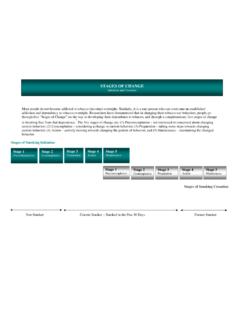
10 Recognizing and reinforcing Change talk4. Eliciting and strengthening Change talk5. Rolling with Resistance6. Developing a Change Plan7. Consolidating client commitment8. Shifting flexibly between MI and other methods ~ Miller & Moyers, 2006 MI is like scout training. To get out of the woods, you must look 1 tree ahead at a time, moving to that tree, & repeat again, and job is to help clients talk themselves out of the woods. ---Bill Miller, 2007 Overview of MIWhat Motivates People and How do People Change Behavior?MotivationSelf Determination Theory{A general theory of human motivation concerned with the development and functioning of personality within social contexts {Focuses on the degree to which human behaviors are volitional or self-determined{Three primary motivators: zautonomy zcompetence feedback zrelatedness Deci, Edward L.; & Ryan, Richard M. (1985). Intrinsic motivation and self-determination in human behavior. New York: Plenum. Maslow s Hierarchy of Maslov, A Theory of Human Motivation, Psychological Review 50 (1943):370-96 Stages of Change or the Transtheoretical Model of Behavior Change (TTM) Prochaska, DiClemente & Norcrosso DEFINES MOTIVATION AS THE PROBABILITY THAT A PERSON WILL ENTER INTO, CONTINUE, AND ADHERE TO A SPECIFIC Change STRATEGY{PERSONALIZATION{vulnerability{S usceptibilityo ANTICIPATED BENEFITSs SOCIAL NORMSo SKILLSS tages of Change Prochaska, DiClemente & NorcrossDeterminationDeterminationDecisi onDecisionStages of Change (SOC)James Prochaska, PhD.}}}}}}