Transcription of CHCDIS009 Facilitate ongoing skills development using a ...
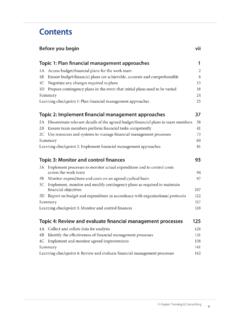
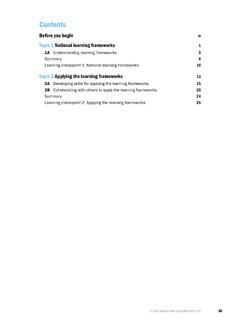
1 ASPIRE TRAINING & CONSULTING vContentsBefore you begin viiTopic 1 Identify individual skill development needs 11A Identify the person s skill development needs using a person-centred approach 21B Document assessment outcomes according to organisation guidelines 111C Identify skill development opportunities in collaboration with the person and relevant others 151D Make referrals to other staff or specialist services 22 Summary 25 Learning checkpoint 1: Identify individual skill development needs 26 Topic 2 Plan person-centred, ongoing skill development 312A Engage the person with disability in identifying their learning goals 322B Identify learning strategies to address the person s goals 372C Develop formal person-centred skill development or maintenance activities with relevant others 422D Document ongoing skill development or maintenance in the person s individual plan 48 Summary 49 Learning checkpoint 2: Plan person-centred, ongoing skill development 50 Topic 3 Implement person-centred, ongoing skill development strategies 533A Work with the person to implement ongoing skill development strategies in a respectful, motivating and empowering manner 543B Ensure individual skill development or maintenance plan is implemented consistently 583C Access and use equipment and resources to Facilitate learning 623D Document outcomes in the person s individual plan 65 Summary 68 Learning checkpoint 3: Implement person-centred, ongoing skill development strategies 69 Topic 4 Evaluate skill development and review plan 734A Monitor the person s development and provide feedback about their progress towards learning objectives 744B Review records and update plan to meet changing needs 784C Identify opportunities for ongoing skill development 82 Summary 86 Learning checkpoint 4.
2 Evaluate skill development and review plan 878 ASPIRE TRAINING & CONSULTINGCHCDIS009 Facilitate ongoing skills development using A PERSON-CENTRED APPROACHHere is an example of what a skills assessment checklist may Disability Support ServicesSkills assessment checklistUn-assistedSome assistance requiredFull assistance requiredPrepares meals for selfEats and drinks independentlySelf-administers medicationShowers and grooms selfIs continent (bowel and bladder)Dresses and puts on shoesTransfers and bears weightReads and understands documentationCommunicates verballyUse different assessment toolsDuring the formal assessment process a number of different assessment tools may be used. For any of the assessment tools used, if you notice a change where the individual can no longer manage a task they used to be able to perform, then a re-assessment would be required. Ensure that it was not just a one-off by checking several times under different conditions and on several occasions. Here are examples of some different assessment tools.
3 Different assessment toolsLifestyle planning toolsA lifestyle planning tool helps a person establish life goals and then an action plan to achieve those goals. This process is usually carried out with help from a case manager, who uses it to determine what programs need to be put in lifestyle planning tools identify where assistance is required and how success is measured. For those with low literacy or intellectual skills this may be done with tools specific to the organisationYour organisation may have its own assessment tools tailored to the services it offers. These tools identify what services may be relevant to the person. If you are working in education, recreation or vocational training, assessment tools are often competency-based. ASPIRE TRAINING & CONSULTING 13 TopiC 1 IDENTIFy INDIVIDUAL SkILL development NEEDSA dditional documentsIn addition to checklists, service agreements and individual plans, there are two other essential documents that are used to record the assessment and reportsReassessment request forms or incident reportsWhere a skills assessment is an informal observation process but it is not linked to the person s learning plan, you need to document your observations on the relevant form.
4 If you are working as a support worker without direct supervision, this may be by using an incident report form. You may report an incident you have observed or a concern you may have arising from your observations. Some organisations have a separate form to request a supervisor may choose to undertake a formal reassessment and then negotiate changes to the person s individual booksSupport workers need to communicate their observations to other support workers working with an individual. These observations, including when an incident report form is lodged, should be documented in the communication communication book is an open document for all to see. It is to communicate with other staff and family members and will be seen by the individual themselves. Make sure you write in plain English and record only what you have seen. Do not express personal opinions. This is a legal document that could be produced in assessment outcomes according to organisation guidelinesClaire is a support worker who is rostered to assist Ian with home care once a week.
5 Before Claire commences working with Ian, she is told that Ian is nonverbal as a result of an acquired brain injury. Claire and Ian get on well and over the months establish a rapport. Once he feels comfortable with Claire, Ian starts to communicate using single words or short phrases such as lunch , getting tired and bathroom dirty to express his needs. Claire is pleased they are getting on well and realises after this has been happening for a couple of weeks that she should document in Ian s learning plan that Ian can speak when he feels comfortable with records on the learning plan the times that Ian speaks and under what circumstances. She also notifies her supervisor by phone and makes an entry in the communication book for other support ASPIRE TRAINING & CONSULTINGCHCDIS009 Facilitate ongoing skills development using A PERSON-CENTRED APPROACHS trategies for identifying opportunities For each of the main personal skill sets there are strategies that can be used to identify opportunity for development .
6 Life skills , for example, can be taught in different settings using different following table shows a range of strategies you may use to identify life skills development opportunities, and examples for each skillsFormal trainingTime management trainingCooking classRole modellingSupport workers and supervisor role model work life balanceDemonstrationMeal preparationSkills masteryPractise using public transportContextualisationProblem-solve how to get to the day centreDrama and role-playRole-play getting breakfastPeer educationShare information on decision-makingFurther strategies for identifying skill development opportunitiesDifferent people will have differing needs for skill development in the following areas: vocational, social, personal support, relationships, and health and safety skills . Here is an example of skill development opportunities for learning vocational and social skillsFormal training: TAFE coursesRole modelling: support worker and supervisor role model study skills and research skillsDemonstration: writing a letterSkills mastery: learn to use a computerContextualisation: fill in job application or write a resumeDrama and role-play: role-play a job interview Peer education: share information on part-time job opportunities18 ASPIRE TRAINING & CONSULTINGCHCDIS009 Facilitate ongoing skills development using A PERSON-CENTRED APPROACHI ncorporate learning opportunities in an individual planFormal skills assessment and identification of opportunities are a component of the person s annual review.
7 Their person-centred plan will be amended to incorporate any new opportunities into a revised assessment and the identification of opportunities has been part of an informal process, you need to document your observations and recommendations. Support workers working without direct supervision may need to arrange a case conference with a supervisor or the person s case manager to amend the plan. Check your organisation s procedures for recommending a formal reassessment or a variation to a person s supervisor should then collaborate with the person to check that it aligns with what they want and amend the plan and obtain sign-off by all relevant parties. Once again, organisational procedures will determine the process to with family and carersDuring the assessment process, you may need to collaborate with the person s family and/or primary carer to monitor and assess the skills displayed by the person. family membersFamily members can provide information on the person s education, professional history, schooling, hobbies, skills and interests.
8 They can also provide information on the person s relationships and how they deal with conflict or frustration. primary carerThe primary carer can observe the person s abilities and development needs when the person is not being monitored by others. The primary carer can also provide information on the person s former skill level and any changes they have ASPIRE TRAINING & CONSULTINGCHCDIS009 Facilitate ongoing skills development using A PERSON-CENTRED APPROACHE mployment officersEmployment officers can conduct an assessment of the person s pre-employment, or employability therapistsOccupational therapists can provide a professional assessment of the person s physical skills , mobility issues, and fine motor staffProgramming staff can provide information about the person s goals and aspirations, and identify the skills necessary to achieve have the ability to use various devices and equipment to assist with the person s communication, mobility and motor skills . Exampleidentify skill development opportunities in collaboration with the person and relevant othersSimon is 17 years old and has Down syndrome.
9 As part of his skills identification he says he wants to develop his social skills , find a girlfriend and get to act on the stage. Wendy, his supervisor, helps Simon research what local performance groups are in the area. They use the local paper and then check through the Arts Access Victoria website ( ).They locate several performance groups for people with disability and a theatre group in the area. Simon is now deciding which he wants to attend. He thinks he would like to join the theatre group that is run for adolescents in the 14 to 19 age range, and later join the performance group for people with disability once he has developed some performance task two sources of information you could access to find out about trainingopportunities for a person with disability. ASPIRE TRAINING & CONSULTING 31 Topic 2In this topic you will learn how to:2A Engage the person with disability in identifying their learning goals2B Identify learning strategies to address the person s goals2C Develop formal person-centred skill development or maintenance activities with relevant others2D Document ongoing skill development or maintenance in the person s individual planPlan person-centred, ongoing skill development The way services are provided in the disability services sector has changed profoundly through the social model of disability.
10 Person-centred planning is an individually-focused approach to planning for people in need of support and services, and centres on the unique needs, strengths, preferences, capacities and goals of the individual. Person-centred plans provide a holistic approach to skill development , ensuring a person s social, sexual, emotional, psychological and cognitive development is encompassed. Working in this sector, you need to understand the process of person-centred planning and how to engage the person you are supporting in the process. You will become familiar with ways to identify strategies to meet the individual needs of people and develop a formal plan setting out those strategies. ASPIRE TRAINING & CONSULTING 37 TopiC 2 PLAN PERSON-CENTRED, ongoing SkILL development 2B Identify learning strategies toaddress the person s goalsThis section investigates how you can use a range of strategies to address a person s goals and how the choice of strategies may vary according to the person or group of people with should be selected according to each person s disability.