Transcription of CHCECE007 Develop positive and respectful relationships ...
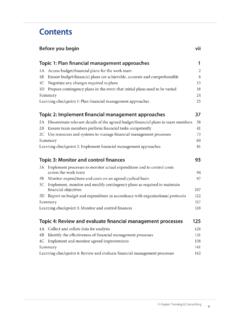
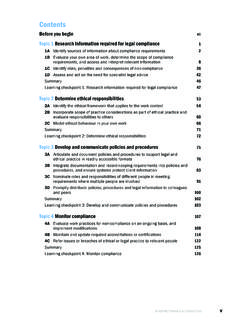
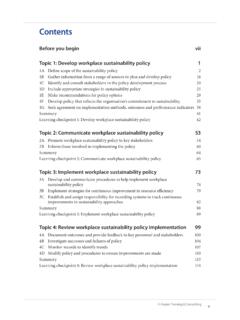
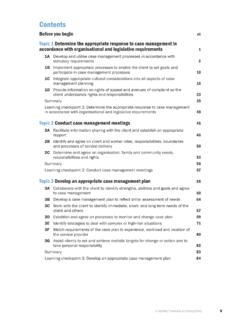
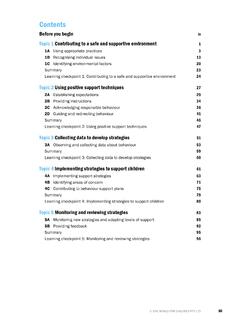
1 ONE WORLD FOR CHILDREN PTY LTD iiiContentsBefore you begin ivTopic 1 Communicating positively 11A Responding positively 31B Sustaining conversations 10 Summary 12 Learning checkpoint 1: Communicating positively 13 Topic 2 Interacting with children 152A Participating in play 172B Interacting positively 21 Summary 25 Learning checkpoint 2: Interacting with children 26 Topic 3 Supporting and respecting children 293A Creating respectful environments 313B Supporting children 40 Summary 46 Learning checkpoint 3: Supporting and respecting children 47 Topic 4 Maintaining the dignity and rights of children 494A Creating positive environments 514B Guiding children s behaviour 57 Summary 61 Learning checkpoint 4: Maintaining the dignity and rights of children 62 ONE WORLD FOR CHILDREN PTY LTD 1 Communicating positivelyThe way that you communicate with children influences their behaviour and the way they feel about themselves.
2 Educators can communicate in a way that helps children feel safe and accepted. Good communication skills allow educators to build warm and positive relationships with children. Educators can explain options for play experiences or rest, and involve children in matters that affect 1In this topic you will learn about:1A Responding positively1B Sustaining conversations2 ONE WORLD FOR CHILDREN PTY LTDCHCECE007 Develop positive AND respectful relationships WITH CHILDRENThe following table maps this topic to the National Quality Standard and both national learning frameworks. National Quality StandardQuality Area 1: Educational program and practiceQuality Area 2: Children s health and safetyQuality Area 3: Physical environmentQuality Area 4: Staffing arrangements Quality Area 5: relationships with childrenQuality Area 6: Collaborative partnerships with families and communitiesQuality Area 7: Governance and leadershipEarly Years Learning FrameworkMy Time, Our PlacePrinciples Secure.
3 respectful and reciprocal relationshipsPartnerships High expectations and equity Respect for diversityOngoing learning and reflective practicePracticeHolistic approachesHolistic approaches Responsiveness to childrenCollaboration with childrenLearning through playLearning through playIntentional teachingIntentionality Learning environmentsEnvironmentsCultural competenceCultural competenceContinuity of learning and transitionsContinuity and transitionsAssessment for learningEvaluation for wellbeing and learningOutcomes Children have a strong sense of identityChildren are connected to and contribute to their worldChildren have a strong sense of wellbeingChildren are confident and involved learners Children are effective communicators4 CHCECE007 Develop positive AND respectful relationships WITH CHILDRENR ealistic expectationsChildren s language skills begin developing from birth as a two-way process of communication. By looking at the language processes of each stage of a child s development, you can identify milestones common to each age group.
4 If you are familiar with these milestones, you will be able to respond sensitively and appropriately to children s efforts to this video to learn more about communicating with children according to their age and stage of to three monthsNewborn infants communicate unintentionally using sounds and actions. They cry when hungry, cold or uncomfortable, look at their carer s face and move their arms and bodies reflexively. When carers respond to this communication, the infant learns how to use their sounds and actions to communicate a response. This is the beginning of a two-way process of with a newbornInfant : Oh dear! What s the matter? Smiles and picks up the is comforted by the interaction, stops crying and appears to focus on the educator s : You just wanted a cuddle that s right, now. Are you hungry? Infant: Cooing sounds, : Oh, so that s what you were telling me. Better to 12 monthsAn infant s ability to communicate develops quickly.
5 At three months, they make a wider range of sounds and babble to the mselves and other people. Sudden sounds and harsh, angry or loud voices may cause them distress. They show interest in and gain comfort from familiar voices, singing and conversation. They are active communicators, using both sounds and initiation of babbling and cooing or your response t o the se sounds will encourage the infants to take tu rns in communicating at this this video abou t communicating with infants. ONE WORLD FOR CHILDREN PTY LTDv0039v004610 CHCECE007 Develop positive AND respectful relationships WITH CHILDREN1B Sustaining conversationsAs an educator you need to engage children in meaningful conversations that provide children with a sense of agency. If you plan experiences that are based on children s interests, you are more likely to be able to hold conversations with them about what they are doing, thinking and learning. These conversations will be most effectively sustained by listening actively and asking open-ended listeningA conversation is an exchange of ideas between communication partners.
6 If you want to be effective at conversing, you should use active listening. Active listening is essential if your conversation is to be meaningful and listening means giving your full attention to the child to show that you understand their point of view. To show you are concentrating and interested, you will need to:XXfocus your attention on the child and the topicXXobserve body language and nonverbal messagesXXavoid distractionsXXset aside your prejudices and opinionsXXask questions or seek directionXXchange your body position to show you are listening; for example, face the child and lean towards themXXanswer questions and follow directionsXXrespond with reflection (reflective listening); for example, So you felt scared? or Is that right? XXgive encouragement through verbal responses; for example, Oh, really? or Go on .Try to use active listening with any child or adult you are conversing with. Even in situations where words are not used, such as when interacting with an infant, you can smile, use bod y language, respond to gur gles and give y our full attention to the open-ended questionsOpen -ended questions are a useful and important tool to incorporate int o your everyday interactions with children.
7 This requires you t o thin k about how your questions are worded and presented so that children will have an opportunity to explain and extend beyon d a yes or no that require a yes , no or one-word answer are called closed questions, because the response is limited. These questions do not sustain a con versation. ONE WORLD FOR CHILDREN PTY LTD18 ONE WORLD FOR CHILDREN PTY LTDCHCECE007 Develop positive AND respectful relationships WITH CHILDRENE ducator roles in playThe roles you take in children s play should extend its value and increase agency. If you think carefully about the play that is occurring and the messages or cues the children are sending you, you will be able to think about the roles you can take during play. This process will help you to identify when it is time for you to exit or change your type of participation. You might take on one of the following roleWhat you would be doingObserverAn observer watches, listens and tries to figure out what the play is about by understanding the children s perspective and interests.
8 Careful observation means you are less likely to say or do something that disrupts children s play, and you will have a better idea of what to say or do to extend children s play if the opportunity may be an observer initially and then move into one of the other play provider notes what the children are trying to do and then thinks about what can be provided so that play can proceed smoothly. For example, a provider may arrange:XXspace for playXXspecial materials for playXXmore time for provision means you will support the play and allow it to continue. You can also extend the play by giving children more to think about and do in their mediator helps children solve problems that occur in play when the children can t solve these problems themselves. Watch for times when children get stuck. For example, when an argument threatens to stop the play, this is a cue for you to mediate. You can then:XXstep in and make a suggestionXXoffer an alternativeXXmodel a new way to act to solve the problemXXsupport the children to work out a way to enable the play to also extend children s skills in problem-solving when you intervene to mediate, as children will often copy your problem-solving solutions in future player joins in with the play.
9 This seems to be the easiest role, but careful thought is needed before you join in. Adults can be actively involved in play as long as they respect that the play belongs to the a player lets you:XXextend play by modelling new ideasXXassist new players to find a roleXXhelp children act out scenes or ideas that they don t know much player also assists children to keep their play going for a longer period of time. Perhaps even more importantly, it strengthens the child educator relationship, as the interaction allows both parties to learn more about each other. ONE WORLD FOR CHILDREN PTY LTD 23 TOPic 2 INTERACTING WITH CHILDRENE xampleExtending an ideaJackson, an educator, is sitting with Marna, who is five years old. Marna is telling Jackson about how she would like to sail in a boat and catch fish in the sea. Marna went to the beach for a holiday and brought back some shells that she had collected. Marna asks if she could show the other children her tells Marna he thinks this is a great idea, and suggests they create a discovery table and put some sand on the table as well.
10 He asks Marna if she would like to build a boat using blocks and make fishing lines with sticks and magnets. Marna is excited, and she jumps up and down saying, Yes, yes! Requests for assistanceIf a child requests help from you, it demonstrates that they know you will respond to their needs and take them seriously, and that they feel safe, secure and can communicate your willingness to help children by listening to them when they ask for your attention. You should also ask children whether they need help, and watch their cues to see how they are progressing in their is a difficult feeling for children to identify as it is similar to anger. Your careful observation and discussion will help children to recognise when they feel frustrated, why they feel this way and how they can ask for that a child is feeling frustrated or requires assistance include:XXnot progressing in their activityXXirritability, anger or annoyanceXXbiting a lipXXgiving actions you can take are included in the following simpler challenges or provide assistanceXXMove a toy closer to an immobile a selection of puzzles of different directions and support Try turning the piece this way.