Example: tourism industry
Checking for Tube Placement - osumc.edu
How to Check Tube Placement Measure your tube: 1. Use a ruler to measure the length of your feeding tube. • If you have a nasogastric tube (NG), measure from where the tube comes out of your nose to the end of the tube. • If you have a G-tube or PEG tube, measure from where the tube comes out of your abdomen to the end of the tube. 2.
Tags:
Information
Domain:
Source:
Link to this page:
Documents from same domain
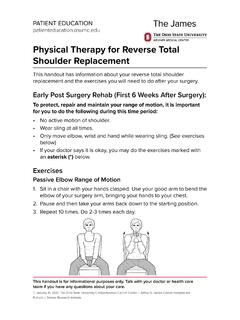
Physical Therapy for Reverse Total Shoulder Replacement
healthsystem.osumc.eduThis handout has information about your reverse total shoulder replacement and the exercises you will need to do after your surgery. Early Post Surgery Rehab (First 6 Weeks After Surgery): To protect, repair and maintain your range of motion, it is important for you to do the following during this time period: • No active motion of shoulder.

Care of Your Tracheostomy Stoma After Tube Removal
healthsystem.osumc.eduCare of Your Tracheostomy Stoma After Tube Removal • If needed, use two extra pieces of tape to secure the gauze in place. The last two pieces of tape should be placed up and down, next to each other. Important Things to Remember • Change your dressing and tape every day. • The dressing and tape should be dry and clean.
James Patient Education Handouts A-Z
healthsystem.osumc.eduJames Patient Education Handouts (A – Z) Click on the title to see the handout To narrow your search use “Ctrl + F” and enter a keyword . The Ohio State University Comprehensive Cancer Center – Arthur G. James Cancer Hospital and Richard J. Solove Research Institute

Anti-Inflammatory Diet
healthsystem.osumc.edu2 Anti-Inflammatory Diet wenermedical.osu.edu Avoid (continued) • Too much animal protein. Limit to 6 to 8 ounces by cooked weight per day and choose lean meat, such as skinless
PICC or Midline Catheter Sterile Dressing Change
healthsystem.osumc.edulocking clips. • Peel the paper backing off the anchor device. Place it on the skin to the side or just below the catheter exit site. • If the PICC catheter is long, you may need to curve the catheter up to make sure the anchor and all of the line is under the dressing. Note: If the PICC catheter is longer and the anchor device is not

Flexibility and Strengthening Exercises - osumc.edu
healthsystem.osumc.eduFlexibility and Strengthening Exercises Leg / Knee / Feet Exercises ☐ Exercise 9 • Sit in a chair with your knees bent and feet flat on the floor. • Breathe in and slowly kick out your leg, so your toes point up toward the ceiling. • Breathe out and slowly return your foot to starting position. • Repeat with your other foot.

Understanding Blood Cell Counts - osumc.edu
healthsystem.osumc.edupicks up oxygen in your lungs and carries it to your body’s cells. Hemoglobin also carries away carbon dioxide waste. Normal ranges are different for men and women ⊲ Normal range: 13.2 – 17.3 g/dL for men ⊲ Normal range: 11.7 – 15.5 g/dL for women Anemia is the medical term for a low red blood cell count. Anemia

Understanding Blood Tests - osumc.edu
healthsystem.osumc.eduA low platelet count can be caused by certain medicines, cancer treatments, bleeding disorders or other diseases. Comprehensive Metabolic Panel (CMP) A CMP is a group of blood tests that check your body’s balance of electrolytes, blood sugar, proteins and how well the liver and kidneys are working. • Sodium (Na) Normal range: 133 – 143 mmol/L

Exercises for a Frozen Shoulder (Adhesive Capsulitis)
healthsystem.osumc.edu(Adhesive Capsulitis) Adhesive capsulitis, or “frozen shoulder,” happens when the capsule of your shoulder joint becomes tight or thickened. These changes reduce the range of motion in your shoulder. This can make it hard for you to do activities that require you to reach your arm up and/or away from your side.

Vocal Hygiene - osumc.edu
healthsystem.osumc.eduVocal Hygiene • Stay away from caffeine. Do not drink more than 2 caffeinated products each day. Caffeine can cause your vocal cords to become dry and irritated. • Stay away from alcohol. Alcohol can cause your blood vessels to dilate (open) and cause mucus to build up. This can irritate your voice.
Related documents

NASOGASTRIC/OROGASTRIC TUBE: INSERTION, CARE OF, …
www.saskatoonhealthregion.ca2.2.1.2 For x-ray to confirm tube placement when unable to confirm tube placement with pH testing. Requisition MUST indicate reason for X- ray (i.e. Chest X-ray for confirmation of gastric tube placement). The MRP or designate may confirm placement based on a review of the x-ray. It is the responsibility of the MRP or designate to consult with ...
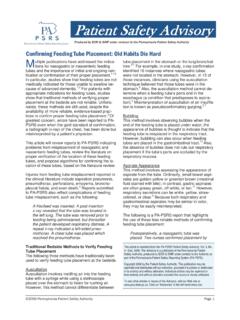
Confirming Feeding Tube Placement: Old Habits Die Hard
patientsafety.pa.govexposure, this technique is used for feeding tube placement only as a last resort.16 pH Testing Another reliable method for ongoing tube placement verification is determining the pH of the fluid aspi-rated from feeding tubes. Gastric fluid is usually acidic, …
Tracheostomy Tubes
rc.rcjournal.comangled tube, a tube with a flexible shaft, or a tube with extra length. Extra length tubes are constructed with extra proximal length (horizontal extra length) or with extra distal length (vertical extra length). Extra proximal length facilitates tracheostomy tube placement in patients with a large neck (eg, obese pa-tients).

Nasogastric/Orogastric Tube Insertion, Verification, and ...
www.childrensmn.orgii. pH measurement, external tube length, and/or clinical condition of patient will be used for both initial and ongoing verification of tube placement. iii. If x-ray is obtained for another clinical reason, NG/OG location should be verified. 2. pH verification steps (initial and ongoing verification of tube placement) a.

Chest Tube Placement (Adult) - UCSF Health
medstaff.ucsfmedicalcenter.orgCHEST TUBE PLACEMENT (Adult) 1 I. Definition Chest tube insertion is a common therapeutic procedure used to provide evacuation of abnormal collections of air or fluid from the pleural space. Tube thoracostomy may be indicated for pleural effusions associated with malignancy, infection, or hemothorax in the post-surgical setting.

Nasogastric Tube: Inserting and Verif ying Placement in ...
www.ebscohost.comNasogastric Feeding Tube: Insertion and Placement Verification in the Pediatric Patient ). Caution must be observed when suction is applied to this tube because the negative air pressure can create a vacuum (if the proximal tip of the tube rests against tissue) and injure the stomach lining through trauma or erosion—intermittent

Nasogastric Tube Insertion
www.omao.noaa.govTesting Placement Wash hands and put on clean gloves Draw up 30cc of air into the syringe and attach to end of the NG tube. Flush tube with 30cc of air prior to attempting to aspirate fluid. Draw back on the syringe to obtain 5 to 10 cc of gastric aspirate.

Positioning and Tube Feeding - University of New Mexico
coc.unm.edutube 30% of tracheostomies 12.5% of neurological patients . Aspiration Aspiration of secretions Secretions colonized with bacteria . ... Head placement and managing oral secretions 30° of elevation and rib cage . Hip Deformities and Positioning Fixed adduction Fixed abduction