Example: tourism industry
Depression - Mind
Dysthymia – continuous mild depression that lasts for two years or more. Also called persistent depressive disorder or chronic depression. Prenatal depression – depression that occurs during pregnancy. This is sometimes also called antenatal depression. Postnatal depression (PND) – depression that occurs in the weeks and months
Tags:
Information
Domain:
Source:
Link to this page:
Documents from same domain
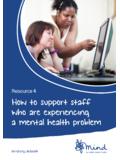
Resource 4 How to support staff who are ... - Mind
www.mind.org.ukResource 4 How to support staff who are experiencing a mental health problem mind.org.uk/work

Understanding depression understanding - Mind
www.mind.org.ukUnderstanding depression If you are depressed, you may feel that nothing can help. But this is untrue. Most people recover from bouts of depression, and some even look
Making sense of dialectical behaviour therapy …
www.mind.org.ukMaking sense of dialectical behaviour therapy This booklet is for anyone who is considering dialectical behaviour therapy (DBT), and would like
Making sense of dialectical behaviour therapy …
www.mind.org.ukMaking sense of dialectical behaviour therapy making sense dialectical behaviour therapy
Understanding borderline personality disorder ... - …
www.mind.org.ukUnderstanding borderline personality disorder This booklet is for anyone experiencing borderline personality disorder (BPD). It explains what the
Understanding self-harm understanding - Mind
www.mind.org.uk2 Understanding self-harm This booklet is for anyone who self-harms, and their friends and family. It explains what self-harm is, the reasons for …
How to manage stress how to - Mind
www.mind.org.ukHow to manage stress This booklet is for anyone who wants to learn how to manage stress. It explains what stress is, what might cause it and how it can affect you.
Sectioning - Mind, the mental health charity
www.mind.org.uk1 Sectioning Explains the rights that you have if you are sectioned and detained in hospital under the Mental Health Act 1983. Applies to England and Wales.
How to be mentally healthy at work how to - Mind
www.mind.org.ukHow to be mentally healthy at work This booklet is for anyone who is managing their mental health at work. It covers the relationship between work and mental health, managing stress
Open tin of fish, drain liquid, stir into Rinse dried ...
www.mind.org.ukGet professional support Sometimes the best way to improve your diet is with the help of a health professional. • Dietitians can help you work
Related documents
managing moods Managing Moods Workbook for Teens …
wholeperson.comDysthymia – Person has a mild depression that lingers for more than two years. For people with dysthymia, life has little pleasure. They tend to be cranky, irritable, and testy. • Postpartum Depression – Person experiences depression after childbirth. Sometimes called . baby blues

DSM-5 Depressive Disorders: Diagnostic and Treatment ...
www.lacounseling.org(Dysthymia) •Essential feature: Depressed mood plus at least two other depressive symptoms •Duration: The symptoms persist for at least two years (one year for children and adolescents) •May include periods of major depressive episodes (double depression) •Rule outs: Be sure it is not due to another
Disruptive Mood Dysregulation Disorder 296.99 (F34.8)
images.pearsonclinical.comdisorder, separation anxiety disorder, persistent depressive disorder [dysthymia]). Note: This diagnosis cannot coexist with oppositional defiant disorder, intermittent explosive disorder, or bipolar disorder, though it can coexist with others, including major depressive disorder, attention-deficit/

CDC Promotes Public Health Approach to Address Depression ...
www.cdc.govDysthymic disorder, or dysthymia, is a long-term (two years or longer) depressed mood for most of the day, for more days than not, accompanied by two or more of the following: poor appetite or overeating, insomnia or sleeping too much, low energy or fatigue, low self-esteem,
Behavioral Health Diagnoses, Symptoms, and Interventions ...
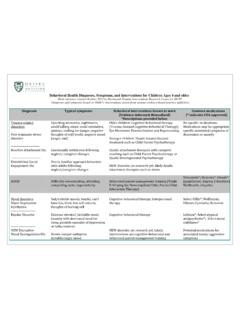
www.dhhs.nh.govDysthymia ----- Bipolar Disorder ----- NEW Disruptive . Mood Dysregulation Dis. Sad/irritable moods, tearful, can’t have fun, tired, low self-esteem, thoughts of hurting self ; Extreme elevated /irritable mood (mania) with decreased need for sleep, possible episodes of …
Caring for a person experiencing depression
www.health.qld.gov.aumajor depression, dysthymia (chronic and usually milder depression), and atypical depression. Depression that begins or occurs during or after pregnancy is referred to as a type of perinatal mood disorder (which includes ante-natal and post-natal depression). See the MIND Essentials resource ‘Caring for a person