Transcription of DISASTER-CONFLICT INTERFACE Comparative experiences
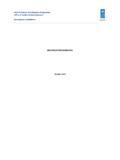
1 DISASTER-CONFLICT INTERFACE Comparative experiences BUREAU FOR CRISIS PREVENTION AND RECOVERYU nited Nations Development ProgrammeBureau for Crisis Prevention and RecoveryUnited Nations Development ProgrammeOne United Nations PlazaNew York, New York10017 2011 Bureau for Crisis Prevention and RecoveryUnited Nations Development ProgrammeAll rights reservedGraphic design: Graphi 4 - Bresson - FrancePhoto credits: Refugees Storm Haiti (UN/Photo) by Logan Abassi Sudan IDPs (UN/Photo) by Tim McKulka Gender Agriculture (UN/Photo) by Martine Perret Haiti Flood (UN/Photo) by Marco Dormino Cattle Sudan (UNCDF/Photo) by Adam Rogers Desertifi cation (UNDP/ Photo) by Evan INTERFACE Comparative experiencesBureau for Crisis Prevention and RecoveryUnited Nations Development Programme disaster -Confl ict Interface3 TABLE OF CONTENTSACRONYMS AND ABBREVIATIONS 4 ACKNOWLEDGEMENTS 6 EXECUTIVE SUMMARY 71. STUDY BACKGOUND 11 Rationale for the study 11 Purpose of the study and target group 11 Methodology 12 Constraints 12 Defi nitions of key terms 132.
2 Comparative experiences AND LESSONS LEARNED 15 Identifying common tendencies acros s different interfaces 15 Cross-cutting factors 20 Key conclusions 233. IMPLICATIONS OF THE INTERFACE FOR UNDP 25 Implications for UNDP programming 25 Key recommendations for UNDP 29 ANNEX 1: CASE STUDY FINDINGS 31 1. Bolivia 31 2. Haiti 34 3. Indonesia (Aceh) 37 4. Kenya 42 5. Kyrgyzstan 45 6. Papua New Guinea 49 7. Sri Lanka 52 8. Sudan 56 9. Zimbabwe 61 ANNEX 2. GLOSSARY OF KEY TERMS 65 ANNEX 3. BIBLIOGRAPHY 674 disaster -Confl ict InterfaceACRONYMS AND ABBREVIATIONSASALs Arid and semi-arid lands BCPR Bureau for Crisis Prevention and RecoveryCARE Cooperative for American Relief EverywhereCCA UN Common Country AssessmentCDA Confl ict-related development analysisCO Country Offi ceCPAP Country programme action planCPD Country programme documentCPR Crisis prevention and recoveryCPRU Crisis Prevention and recovery UnitCRED Centre for Research on the Epidemiology of DisastersDEX Direct executionDFID UK Department for International DevelopmentDM disaster managementDRR disaster risk reductionDPA Department of political affairsDPKO Department of Peacekeeping OperationsENVSEC Environment and Security InitiativeFAO Food and Agriculture Organization of the United NationsFDI Foreign direct investmentGAM Free Aceh MovementGBV Gender-based violenceGEF
3 Global Environment FacilityGLOF Glacial lake outburst fl oodHDR Human Development ReportHIV/AIDS Human Immunodefi ciency Virus/Acquired Immune Defi ciency SyndromeIASC Inter-Agency Standing CommitteeIDP Internally displaced peopleIFRC International Federation of Red Cross and Red Crescent SocietiesIISD International Institute for Sustainable Development ILO International Labor OrganizationDisaster-Confl ict Interface5 INGO International nongovernmental organizationIOM International Organization for MigrationISDR International Strategy for disaster ReductionLPACs Local project approval committeesLTTE Liberation Tigers of Tamil EelamM&E Monitoring and evaluationMINUSTAH United Nations Stabilization Mission in HaitiNATO North Atlantic Treaty OrganizationNEX National executionNGO Nongovernmental OrganizationOCHA Offi ce for the Coordination of Humanitarian AffairsOSCE Organization for Security and Co-operation in EuropeODI/HPG Overseas Development Institute/Humanitarian Policy GroupPAPEP Short-term Political Analysis and Prospective Scenarios for Improved Governance in Latin America PCNA Post-confl ict needs assessmentPDA Peace and development analysisPDNA Post- disaster needs assessmentPNG Papua New GuineaSALW Small arms and light weaponsUNCT United Nations Country TeamUNDAF United Nations Development Assistance FrameworkUNDP United Nations Development ProgrammeUNEP United Nations Environment ProgrammeUN HABITAT United Nations Human Settlements ProgrammeUNHCR United Nations High Commission for RefugeesUNICEF United Nations Children s FundUNIFEM United Nations Development Fund for WomenUNMIS UN Mission in SudanUSAID United States Agency for International DevelopmentWFP World Food Programme6 disaster -Confl ict InterfaceACK NOWLEDGEMENTSTh is disaster -Confl ict INTERFACE analysis
4 Was commissioned by the Global Mainstreaming Initiative for disaster Risk Reduction of UNDP s Bureau for Crisis Prevention and recovery (BCPR) and developed in close consultation with colleagues from UNDP Country Offi ces and Regional would like to acknowledge and give special thanks to the main authors from Aguaconsult - Anissa Toscano (team leader), Charlotte Scawen (confl ict expert), Tim Heath (confl ict expert), Jane Barham ( disaster expert) and Jan Gelfand. We would also thank Harold Lockwood, overall project manager for Aguaconsult. Additional analysis on gender dimensions of the INTERFACE was undertaken by Yvonne thanks to the external peer review team which gave crucial feedback on the initial analysis: Mark Pelling (University of London, UK), Kaz Kuroda (World Bank), Michael Renner (World Watch Institute) and Mark Halle (International Institute for Sustainable Development). Within BCPR, the project was overseen by Maxx Dilley, UNDP/BCPR s former Team Leader of the disaster Risk Reduction and recovery Team, Peter Batchelor, former Team Leader of the Confl ict Prevention and recovery Team and Jennifer Worrell, former Team Leader of the Early recovery Team, who also initiated the work.
5 A BCPR Steering Committee supervised the initial analysis and included Jennifer Worrell, Fenella Frost, Celine Moyroud, Devanand Ramiah, Awa Dabo, Gaela Roudy-Fraser, Valeria Izzi, Shefali Juneja and Kai Stabell. A mid-term review meeting yielded very useful advice and feedback from Judith Karl, Nescha Teckle, Sanaka Samarashina, Kamal Kishore, Rocio Chain, Ozonnia Ojielo, Bernard Choulai and Ferdinand von Frost and C line Moyroud coordinated and fi nalized the analysis with critical support from Caroline Borchard, Shefali Juneja, Marjolein Righarts, Rahul Sengupta and Eva would also like to express our gratitude to UNDP Country Offi ce staff in Bolivia, Haiti, Indonesia, Kenya, Kyrgyzstan, Papua New Guinea, Sri Lanka, Sudan and Zimbabwe who shared their experiences , provided input and reviewed the case studies. Th is Comparative analysis would not have been possible without their support. Th anks also to the individuals in partner agencies, governments, nongovernmental organizations and academia in these countries that have taken the time and interest to contribute their ict Interface7 EXECUTIVE SUMMARYMany developing countries experience both disasters and confl ict at the same time.
6 Th e interaction between the two creates and perpetuates vulnerabilities that place communities at risk, further entrenching poverty and inequality. Development trends such as climate change and unsustainable urbanization likely will make these issues makes intuitive sense to assume that the geographical overlap of both disaster and confl ict worsens the impact of crises, but evidence for this is limited. Analyses of concrete case study observations are also limited, and those that do exist come from diff erent unconnected , contexts in which confl icts and disasters overlap are daily realities for people who are aff ected, as well as for many humanitarian and development practitioners. Eff ective programmes to manage crisis interventions need to refl ect confl ict- disaster complexities and respond to them in a holistic and integrative manner. experience has also shown that development interventions that do not recognize the link between disasters and confl ict in at-risk countries can worsen tensions and increase s Bureau for Crisis Prevention and recovery (BCPR) initiated this study with a strong empirical focus on exploring the INTERFACE between confl icts and disasters.
7 disaster -confl ict INTERFACE contexts are defi ned as those settings where disasters (risks, events and recovery ) have a relationship with confl icts (risks, events and recovery ) and/or vice versa, beyond simple geographic/demographic co-location. Th e study aims to achieve a Comparative analysis of tendencies and experiences that stem from the relationship between disasters and confl ict. It also analyses the relative success of existing relevant programming approaches adopted in-country. Th is Comparative analysis aims to: contribute to the body of knowledge on the interactions between disaster and confl ict; better understand the importance of these interactions for development programming in crisis contexts; and create improved programming that responds to the relationships between disasters and confl ict. Th e intention is to help identify practical approaches and disseminate good practice thereby helping to better equip UNDP Country Offi ce staff who operate in complex environments in which disaster and confl ict overlap.
8 Th e study is based on experiences from nine selected case-study countries to try and capture the broad spectrum of possible relationships between disasters and confl icts. Th e country case studies included: Bolivia, Haiti, Indonesia (Aceh), Kenya, Kyrgyzstan, Papua New Guinea (PNG), Sri Lanka, Sudan and Zimbabwe. Each case study analyses the dynamics of the INTERFACE , as well as strategies and interventions across agencies, and particularly focuses on UNDP approaches and good practices. Th e main target audience is UNDP staff , particularly policy advisors. In addition, the fi ndings of the report may be relevant for UNDP programme offi cers, staff from other UN agencies, UNDP development partners and other stakeholders including nongovernmental (NGO) and academic communities involved in crisis prevention and recovery . 8 disaster -Confl ict InterfaceFindingsDisasters and confl icts do not follow a simple logic of disaster X leads to confl ict Y or vice versa.
9 Each INTERFACE is a complex phenomenon in its own right. At any given time, individual countries may experience several diff erent and potentially contradictory relationships between confl ict and disasters. Th e comparison of two very similar cases Sri Lanka and Aceh in Indonesia demonstrates this strikingly. Both countries faced protracted confl icts, and were aff ected by the 2004 tsunami and the overwhelming international response to cope with it. In fact, the disaster response in Aceh contributed to resolving the long confl ict between the Free Aceh Movement (GAM) and the national Government. In Sri Lanka, the response made tensions worse between the Tamil Tigers and the national Government. Common tendencies reoccur across the cases examined in this study however. In all case studies, confl ict had an overall adverse impact on disaster impact or risk. In most instances, the disaster -confl ict INTERFACE increased the risk of future crises and hampered crisis recovery eff orts.
10 Th is was particularly obvious at the local level, with widespread examples of problematic interactions between disasters and confl ict. Common tendencies include: yDisasters and confl ict that happen at the same time intensify risk of future crises and damage people s lives which further undermines their coping capacities and increases their poverty levels. yDisasters particularly those associated with drought and desertifi cation, and rapid-onset disasters are more likely to contribute to confl icts over limited natural resources than any other type of confl ict. ySmall-scale rapid onset disasters are less likely to contribute to national level/widespread confl ict, but can have a signifi cant impact on local-level confl ict, particularly when they (re)-occur in highly vulnerable and resource-scarce contexts. ySlow onset protracted disasters such as those involving drought can deepen confl ict over resources across large areas when they occur in places where people face high levels of poverty and competition over limited natural resources.