Example: air traffic controller
Fatigue Severity Scale (FSS)
The scale addresses fatigue’s effects on daily functioning, querying its relationship to motiva-tion, physical activity, work, family, and social life, and asking respondents to rate the ease with which they are fatigued and the degree to which the symptom poses a problem for them. Population or f Testing The scale was initially
Tags:
Information
Domain:
Source:
Link to this page:
Documents from same domain
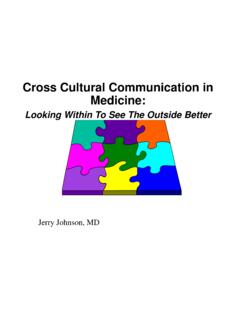
Cross Cultural Communication in Medicine
www.med.upenn.eduCross Cultural Communication in Medicine: Looking Within To See The Outside Better Jerry Johnson, MD
DEPARTMENT OF BIOCHEMISTRY AND BIOPHYSICS …
www.med.upenn.eduprotein form and function friday research discussions department of biochemistry and biophysics spring 2014 from the shorter lab department of biochemistry and biophysics
Symptom Management at the End of Life
www.med.upenn.eduSymptom Management at the End ... • Employ existing knowledge base to provide excellent symptom management to patients • Support skill set of geriatrics fellow on call. Symptoms and Symptom Management ... Smith. Management of hiccups in the palliative care population.
Pennsylvania Department of Health - Cancer Evaluation ...
www.med.upenn.eduThe Pennsylvania Department of Health (PADOH) and the federal Agency for Toxic Substances and Disease Registry (ATSDR) conclude that, based on available data, residents are not currently being exposed to asbestos at a
SEDATION AND PAIN MANAGEMENT/ORIGINAL RESEARCH …
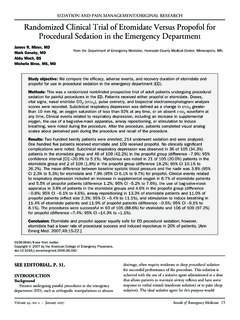
www.med.upenn.eduSEDATION AND PAIN MANAGEMENT/ORIGINAL RESEARCH Randomized Clinical Trial of Etomidate Versus Propofol for Procedural Sedation in the Emergency Department

NIST SP 800-66
www.med.upenn.eduThis Special Publication 800 series reports on ITL’s research, guidelines, and outreach efforts in information system security and its ... SP 800-66 Page 1. DRAFT 2. DRAFT 800-66 assists all agencies seeking further information on the security safeguards discussed in the HIPAA . • • ...
Pain Management for the Geriatric Patient
www.med.upenn.eduAmerican Geriatrics Society, Pharmacologic Management of Persistent Pain in Older Persons. JAGS 2009. Patient controlled analgesia •Barriers •The built in safety • Negated by proxy dosing • Consider provider administered bolus •Hospital • Post op • Pain crisis ...
Benign Paroxysmal Positional Vertigo
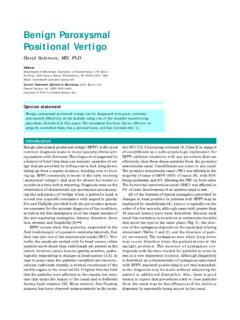
www.med.upenn.eduBenign Paroxysmal Positional Vertigo Solomon 421 Figure 2. The Epley maneuver. A, Turn the head 45 degrees toward the affected ear. B, Deliberately move the patient into the supine position, maintaining the head turn. Extend the neck just enough so that the downward ear is below the shoulder.
Cold Weather Outdoor Play Boosts Immune System!
www.med.upenn.eduEmpty water bottle 2 spoonfuls of baking soda 1 spoonful dish soap A few drops of food coloring (red makes it look like lava) 1 ounce of vinegar Next steps: Make a volcano in the snow with hole in the center to hold the water bottle. Add everything except the vinegar to the water bottle.
Coping With and Responding to Psychosis Symptoms
www.med.upenn.edu• Show understanding of the persons feelings about the hallucinations • Can ask about the experience if the person wants to talk about what they are seeing/hearing • Can say when something is not real, while acknowledging they seem real to your relative • Can help him/her tell the difference between real and imaginary (e.g., “it’s your
Related documents

NIH Stroke Scale - National Institutes of Health
www.stroke.nih.govPerson Administering Scale _____ Administer stroke scale items in the order listed. Record performance in each category after each subscale exam. Do not go back and change scores. Follow directions provided for each exam technique. Scores should reflect what the patient does, not what the clinician thinks the patient can do.

Nursing Guidelines of Care for the Hemorrhagic Stroke ...
www.rsfh.comNursing Guidelines of Care for the Hemorrhagic Stroke Patient page 1 of 2 . Inclusion criteria: All patients with Subarachnoid and Intracerebral Hemorrhages. Nursing Information Only • NIHSS (National Institute of Health Stroke Scale) is a noninvasive and …

BERG BALANCE SCALE
www.chiropractic.on.caWood-Dauphinee S, Berg K, Bravo G, Williams JI: The Balance Scale: Responding to clinically meaningful changes. Canadian Journal of Rehabilitation, 10: 35-50,1997. Berg K, Wood-Dauphinee S, Williams JI: The Balance Scale: Reliability assessment for elderly residents and patients with an acute stroke. Scand J Rehab Med, 27:27-36, 1995.
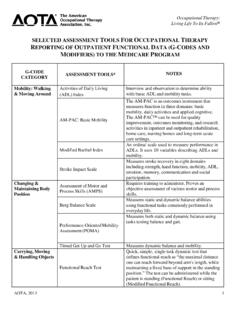
SELECTED ASSESSMENT TOOLS FOR OCCUPATIONAL …
www.aota.orgStroke Impact Scale stroke recovery in eight domains including strength, hand function, mobility, ADL, emotion, memory, communication and social participation. Changing & Maintaining Body Position Assessment of Motor and Process Skills (AMPS) Requires training to administer. Proves an objective assessment of various motor and process skills ...

Stroke Impact Scale - Boston Medical Center
www.bmc.orgStroke Impact Scale VERSION 3.0 The purpose of this questionnaire is to evaluate how stroke has impacted your health and life. We want to know from YOUR POINT OF VIEW how stroke has affected you. We will ask you questions about impairments and disabilities caused by your stroke, as well as how stroke has affected your quality of life.