Transcription of First aid fact sheet Diabetes emergency
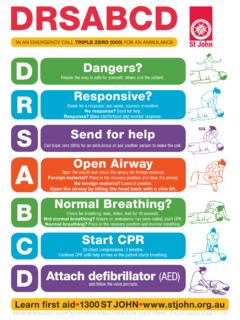
1 First aid fact sheetIn a medical emergency call Triple Zero (000) DRSABCD Danger Response Send for help Airway Breathing CPR DefibrillationYou could save a life with First aid training 1300 360 455 St John Ambulance Australia Ltd, 2020. St John First aid protocols are for the Australian market only. All care has been taken in preparing the information but St John takes no responsibility for its use by other parties or individuals. This information is not a substitute for First aid training. St John recommends attending First aid training courses. Not for commercial and symptomsHigh blood sugar excessive thirst tiredness blurred vision hot, dry skin smell of acetone on breathLow blood sugar weakness, shaking sweating headache faintness, dizziness lack of concentration teariness or crying irritability or altered behaviour hunger numbness around the lips and fingersThese may progress quickly to: slurred speech confusion loss of consciousness to doHigh blood sugar (hyperglycaemia)1 If the patient has medication, ask if they need assistance administering it.
2 Only help the patient if they request Encourage the patient to drink Seek medical aid if symptoms If the patient has not yet been diagnosed with Diabetes , encourage them to seek medical blood sugar (hypoglycaemia)1 Help the patient to sit or lie in a comfortable Reassure the Loosen any tight Give the patient sugar, such as fruit juice or a soft drink (NOT diet eg Coke Zero, Pepsi Max), sugar, jellybeans, glucose Continue giving sugar every 15 minutes until the patient Follow with carbohydrates, eg a sandwich, milk, fresh or dry fruit, or dry biscuits and If there is no improvement in symptoms or the patient becomes unconscious, call triple zero (000) for an you are unsure whether the patient has low or high blood sugar, give them a drink containing sugar (DO NOT use diet soft drinks, eg Coke Zero, Pepsi Max). Giving any form of sugar can save a patient s life if blood sugar is low, and will not cause undue harm if blood sugar is emergency !