Example: stock market
Gene Cloning - CHERIC
Introduction to Gene Cloning zLet's suppose that we wish to construct a bacterium that produces human insulin. zIt might be thought that all that is required is to introduce the human insulin gene into its new host. zCase A : The enzyme DNA polymerase, which makes copies of the DNA, does not initiate the process at random but at selected
Tags:
Information
Domain:
Source:
Link to this page:
Documents from same domain
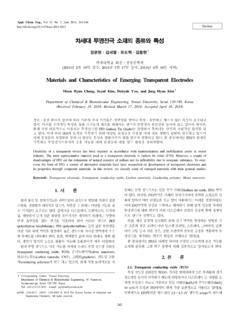
차세대 투명전극 소재의 종류와 특성 - cheric.org
www.cheric.org244 정문현⋅김세열⋅유도혁⋅김중현 공업화학, 제25 권 제3 호, 2014 (a) (b) Figure 2. (a) Schematic of graphene transfer process[14], (b) Graphene
GPC 분석에서 중요한 핵심포인트들 - cheric.org
www.cheric.org556 Polymer Science and Technology Vol. 19, No. 6, December 2008 1. 서론 고분자의 분자량 측정은 우리가 신체 검사시 제일 먼저 키와 몸무 게를 재는 것과 같이 고분자분야에서 가장 기본적이고 중요한 분석중
터치 스크린 패널용 광학 접착소재 - cheric.org
www.cheric.org일반총설 | 터치 스크린 패널용 광학 접착소재 314 Polymer Science and Technology Vol. 26, No. 4, August 2015 그림 1. TSP의 시장 전망.1 …
주사전자현미경의 기본원리와 응용(Part Ⅱ
www.cheric.org주사전자현미경의 기본원리와 응용(Part Ⅱ) KIC News, Volume 13, No. 1, 2010 53 Figure 3. 전자총 외부, Wehnelt 실린더, 텅스턴 필라멘트 사진.
Modified Soave-Redlich-Kwong Equations of State Applied …
www.cheric.orgThe Soave-Redlich-Kwong EoS (SRK) is probably the most wide- ly employed model to correlate and predict fluid properties and phase equilibria in the process industry.

Introduction to Safety in Chemical Process Industry
www.cheric.orgPetrochemicals, "Black Gold, Texas Tea": Form many useful products from petroleum by developing processes like catalytic cracking gasoline, lubricating oils, plastics, synthetic rubber, and synthetic fibers 9/28/2011 METU 39
Poly(lactic acid) 기반 생분해성 복합소재의 연구동향
www.cheric.orgPoly(ethylene terephthalate) 69 265 48–72 30–300 Poly(lactic acid) 45–60 150–162 21–60 2.5–6.0 Poly(butylene adipate-co-terephthalate) -34 115–125 21 670 Poly(caprolactone) -60 to -65 58–65 21–42 300–1,000 표 1. 비분해성 고분자와 생분해성 고분자의 열적, 기계적 물성 그림 1. PLA의 화학 구조 ...
Synthesis of metal-organic frameworks: A mini review
www.cheric.orgMetal organic frameworks (MOFs) are a class of crystalline or-ganic-inorganic hybrid compounds formed by coordination of metal clusters or ions with organic linkers, in which bivalent or trivalent aromatic carboxylic acids or N-containing aromatics are commonly used to form frameworks with zinc, copper, chromium, aluminum,

P 129 Chapter 6. Transition Temperature
www.cheric.orgex> polystyrene (Mn=10000, Tg=88° C ) Polystyrene (Mn>50000, Tg=100 °C ) c) crosslinking increases the Tg of a polymer. Large shifts of Tg with increased cross-linking are observed, (ex) epoxy or phenolic thermosetting resin. d) The free volume of the polymer Vf. - free volume is the volume of the polymer mass not actually occupied by the

Lecture 11 Binary distillation (1)
www.cheric.orgL V V F V V V F Boilupratio Reflux ratio VVV LDV LLL V BL L F F F R L VBL F DD F B V LDV V BB L V L L L F DD For the specification of distillation operation, R or R/Rminis used traditionally because the distillate pproduct is often the more imppportant product Feed condition Value of q Subcooled liquid >1
Related documents

The Ethical Implications of Human Cloning
scholar.harvard.eduuneasy with human cloning try to cast their objections in the language of auton-omy and rights, arguing that choosing the traits of one’s children, by cloning or otherwise, violates their rights.The European Assembly has maintained, for example,that human cloning is wrong because it is a violation of human rights.

CLONING HUMAN BEINGS - Georgetown University
bioethicsarchive.georgetown.eduhuman cloning is a negative right, that is, a right to use assisted reproductive technologies without interference by the government or others when made available by a willing provider. The choice of an assisted means of reproduction, such as …
pENTR™ Directional TOPO® Cloning Kits
assets.thermofisher.comFor Research Use Only. Not intended for any animal or human therapeutic or diagnostic use. pENTR™ Directional TOPO® Cloning Kits Five-minute, directional TOPO® Cloning of blunt-end PCR products into an entry vector for the Gateway® System Catalog numbers K2400-20, K2420-20, K2525-20, K2535-20, K2435-20, and K2635-20 Revision Date 29 March 2012

INTRODUCTION TO HUMAN DEVELOPMENT
www.columbia.educloning of the entire spectrum of human genes as well as the continuous development of molecular methods to prevent congenital malformations has revolutionized the entire field of modern embryology. The majority of these lectures will focus on the first eight weeks of life (known as the embryonic period) when the organ systems develop.

WebGPT: Browser-assisted question-answering with human ...
cdn.openai.comcloning and rejection sampling. We also find reinforcement learning to provide some benefit when inference-time compute is more limited. We evaluate our best model in three different ways. First, we compare our model’s answers to answers written by our human demonstrators on a held-out set of questions. Our model’s answers are preferred

The Human Genome Project
www.academy.ac.il(The Human Genome Project, Am Scientist 76, 488-493, 1988), and Renate Dulbecco (1986, president of the Salk Institute). 3. A National Research Council (NRC) Committee was asked, in September 1986, to determine whether the Human Genome Project (i.e., sequencing the Human Genome) should be advanced. In

Animal cloning offers great benefits
www.bio.orgCloning is the most recent evolution of selective assisted breeding in animal husbandry. Cloning animals is a reliable way of reproducing superior livestock genetics and ensuring herds are maintained at the highest quality possible. It’s important to remember that cloning does not manipulate the animal’s

Gibson Assembly Cloning Guide, second edition
www.biocat.comThe Gibson Assembly® method is a cloning procedure that allows the cloning of two or more fragments without the need for restriction enzyme digestion or compatible restriction sites. Instead, user-defined overlapping ends are incorporated into the fragments to allow the seamless joining of adjacent fragments.