Transcription of GREAT STREETS - Ioby
1 GREAT STREETS CHALLENGE GRANTTOOL KIT FOR APPLICATION MANUALThis page intentionally left blankINTRODUCTION Mayor Eric Garcetti s GREAT STREETS Initiative challenges you to re-imagine our STREETS as vibrant public spaces! In 2015, we re awarding individual applicants up to $20,000 in city funds for projects that propose creative and innovative ways of using our GREAT grant program will provide a guaranteed $10,000 to successful applicants, with the opportunity to leverage another $10,000 through a dollar-for-dollar fundraising match, totaling $20,000 in city funds. Matching funds will be raised in partnership with ioby (In Our Backyard), a crowd-resourcing platform for citizen-led, neighbor-funded projects. Up to $200,000 will be awarded through the GREAT STREETS Challenge Grant. Projects will focus on community engagement, data collection, creativity/innovation, and long-term impacts of projects. This Challenge Grant will help showcase our GREAT STREETS and their potential to serve our communities as vibrant public spaces!
2 INTRODUCTION | 1 WHAT IS THE CITY BUT THE PEOPLE? - William ShakeSpeareBEFORE YOU toolkit is intended to help applicants through the GREAT STREETS Challenge Grant process. Before reading through this toolkit, please be sure you ve read through the GREAT STREETS Application Manual on _s sNj s Nj _s s goals, objectives and requirements of this grant program. KEY DATESMay Applications are Open!May Recommended Application Workshop at City HallJune Recommended Application Conference CallJune Application window closesJuly City Announces RecipientsAug Grantees sign contract with the City and begin project reporting. Feb Deadline to Execute ProjectsApril Grantees Submit Post-Project Evaluation122722132122222 | BEFORE YOU BEGINREVIEW KEY REQUIREMENTS Projects must be located on a designated GREAT Street (See Page 5 for a map of the GREAT STREETS Corridors). Projects must involve community engagement in the proposal. Projects must be grounded in a creative re-thinking of STREETS as public spaces.
3 Projects must collect meaningful data that will help the GREAT STREETS Initiative evaluate the successes and failures of each project and approach. Projects must consider any long-term impacts on future investments that the project might have. O Nj s Nj O O OOs s obligations of the grant, including ability to raise funds. Projects are subject to a feasibility analysis from City REQUIREMENTS | 3 Pop-Up MANGO Event in Santa MonicaPhoto by: LA STREETS -blog, Damien NewtonASSESS ELIGIBILITYThe following types of organizations are eligible to apply for this grant program. If you think that you are not eligible or have questions about eligibility, please contact Community-Based Organizations Nj Nj Schools and Universities Business Improvement Districts Chambers of Commerce Business Owners Property OwnersNow you re ready to start your application!Market Street Prototyping Festival Peep Show, Source: | ASSESS ELIGIBILITYSTEP 1: IDENTIFY YOUR TEAMThe most important step in your application process (and in the success of your project) is identifying a strong team of dedicated people.
4 To help identify team members, ask yourself the following questions: Who do I know with project management experience? Who do I know with fundraising experience? Do I know anyone with experience working with local governments? Do I know anyone who has ever applied for a permit with the City? Do I know anyone who has ever community organized or had to do community outreach before? Who do I know with experience in data collection and analysis? Who do I know with GREAT ideas about the built environment?Your team should have at least three people dedicated to spending a few hours each week on project fundraising and implementation. Team members with a history in project management, organizing, and fundraising will be regarded favorably. Teams with one person under age 35 and one person responsible for digital content will also be highly regarded. Play street on Central Ave. designed by KDI. Photo credit: Bryce RosauroIDENTIFY YOUR TEAM | 5 STEP 2: IDENTIFY YOUR SITE Sites should be located on (or adjacent to) a GREAT Street corridor (see Es ss_ Os O O Nj N O ^ Nj O Os Nj potential sites that are suitable for project proposals.)
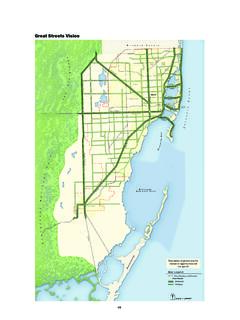
5 Review the Helpful Links section for Los Angeles Maps, neighborhoods, and community plans that may help inform your : North Figueroa St between Avenue 50 & Avenue 60CD2: Lankershim Blvd between Chandler & VictoryCD3: Sherman Way between Wilbur & LindleyCD4: Western Ave between Melrose & 3rdCD5: Westwood Blvd between Le Conte & WilshireCD6: Van Nuys Blvd between Victory & OxnardCD7: Van Nuys Blvd between Laurel Canyon & BradleyCD8: Crenshaw Blvd between 78th & FlorenceCD9: Central Ave between Adams & VernonCD10: Pico Blvd between Fairfax & BurnsideCD11: Venice Blvd between Beethoven & InglewoodCD12: Reseda Blvd between Plummer & PartheniaCD13: Hollywood Blvd between La Brea & GowerCD14: Cesar Chavez Ave between Evergreen & St LouisCD15: Gaffey St between 15th & the 110 Freeway6 | IDENTIFY YOUR SITE123456789101112131415 STEP 2: IDENTIFY YOUR SITE IDENTIFY YOUR SITE | 7 STEP 3: IDENTIFY ENGAGEMENT STRATEGY To be eligible, applicants must show how they are working with their neighbors who live, work, and play near the GREAT Street.
6 Partnering with local organizations is a GREAT way to ensure community support and engagement. To help you get started: Review the list of Los Angeles Neighborhood Councils in the Helpful Links section. Approach local businesses, organizations, and entrepreneurs to develop a collaborative, community-driven project. Encourage participation among long-time residents and neighbors. Consider community dynamics and local history in your area. Raise awareness by notifying other groups in your neighborhood about your project. Ask community partners for input on potential project ideas. Contact local schools and universities to seek volunteers. 8 | IDENTIFY ENGAGEMENT STRATEGYM ayor s Volunteer Corps and City Plants volunteers planting trees along LA GREAT Street Cesar ChavezSTEP 4: IDENTIFY YOUR PROJECT IDEAA pplicants must propose a project that inspires people to re-imagine how we use our STREETS as public spaces. Some examples to consider: Nj s Njss NjsO Nj s s Njs Street segments that prioritizes pedestrian travel.
7 To test your idea s Njss _ Es NjsO Njs_ s Nj want to host a weekend event on the street using planters and street paint to mimic the effects of pedestrian enhancements like bulb outs and protected crosswalks. You should research the work of the City of Santa Monica and its Pop-Up MANGo event. See more here: You may want to propose a pop-up library on one of the GREAT Street segments. To implement your project idea, you might propose using a vacant parking lot to display books lent by community members. You should research a similar project done for the Market Street Prototyping Festival here: more project ideas, please see the Helpful Links section. However, do not limit yourself to the ideas in that section. Think creatively and dream big! Bookmark design for Market Street Prototyping Festival. Source: YOUR PROJECT IDEA | 9 STEP 5: IDENTIFY DATA TO COLLECTA pplicants must identify the information needed to demonstrate a measurable impact on each community.
8 Njs Njss _s s_ s following seven goals to measure success in our communities: Increase Economic Activity Improve Access and Mobility Improve Health Outcomes Enhance Neighborhood Character Increase Community Engagement Improve Environmental Resilience Provide Safer and More Secure Communities O _ O sO O O s s Nj Njs s s goals that their projects will achieve. LADOT will work with recipients to design successful data collection activities, but your application should initially: 1) factor data collection into their existing work plans; 2) give thought to the kinds of data that they should collect; and 3) explain why this data is meaningful. Examples of data collection include: Counting the number of people walking on the street before, during and after the project has implemented. Surveying business operators about their perceptions of an area near their business before, during, and after a project has been implemented.
9 Making observations of how people are using an area. For instance, s s Njs E _Nj sO O s See the Helpful Links Section for more information on Data Collection. 10 | IDENTIFY DATA TO COLLECTSTEP 6: CONSIDER LONG-TERM IMPACTS Successful applicants will consider how their project will support future long-term investments on each street. Applicants should have some idea in mind for how their project can help the City make more informed infrastructure investments in the future. In the end, projects should fundamentally inspire long-term change that make the street safer, more accessible, and more desirable for the local community. By supporting projects that activate the street as a public space and then collecting data to measure success, this program will inform decisions in the long run. You might want to ask yourself: Can my project be turned into a permanent installation? If so, how? How will my project inform the City about the way people currently use the street and how people might want to use the street in the future?
10 Will my project highlight my community s needs, like increased transit mobility or access to more cultural activities?STEP 7: BRAINSTORM FUNDRAISINGThe Challenge Grant will guarantee recipients $10,000 upfront; however, recipients will also crowd-fund their projects on The Challenge Grant will match funds raised on up to $10,000. Please see the next page for a sample budget. To help give you a better sense of how works, and other resources for fundraising, please see the Helpful Links section of this toolkit. CONSIDER LONG-TERM IMPACTS | 11 STEP 8: CREATE A BUDGET All applicants must submit a budget for project proposals. Applicants must also show how much they are committed to raising through We will require grant recipients to fundraise a percentage of their remaining budgets and will work with grant recipients to determine the amount of fundraising needed for each project. EXAMPLE ONE SAMPLE BUDGETB elow is a sample budget to help you create your own. Let s say you have a project proposal for a pop-up library event that will cost $25,000.