Transcription of Guidelines on Continuous Professional Training - SFC
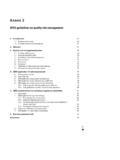
1 A. Guidelines on Continuous Professional Training January 2022. Table of Contents 1. Introduction 3. 2. Application and interpretation 4. 3. Objectives of CPT 5. 4. Requirements for corporations 6. 5. Requirements for individuals 7. 6. Relevant activities 10. 7. Relevant topics 11. 8. Seeking approval as a recognised institution for providing CPT 12. 2. 1. Introduction In a fast changing and highly competitive financial market, persons engaging in regulated activities should continuously update their knowledge and skills through Continuous Professional Training (CPT) in order to maintain their Professional competence to remain fit and proper.
2 The spirit of the CPT requirements is to ensure that a person engaging in regulated activities remains fit , by undergoing Training that enhances his or her technical skills and Professional expertise, and proper , by periodically refreshing himself or herself about the relevant ethical standards and regulatory knowledge. The Guidelines on Continuous Professional Training ( Guidelines ) are published under section 399 of the Securities and Futures Ordinance, Cap. 571 (SFO) by the Securities and Futures Commission (SFC). They provide general guidance for persons to comply with the CPT requirements.
3 The Guidelines do not have the force of law and should not be interpreted in a way that would override the provisions of any applicable laws, codes or other regulatory requirements. Failure to follow these Guidelines may reflect adversely on the fitness and properness of a person to continue to carry on the regulated activities. The Guidelines should be read in conjunction with the Fit and Proper Guidelines and the Guidelines on Competence. 3. 2. Application and interpretation The Guidelines are applicable to the following persons carrying on any regulated activities under Part V of the SFO: (a) a licensed corporation (LC).
4 (b) a registered institution (RI);. (c) a licensed representative (LR);. (d) a licensed representative who is approved as a responsible officer (RO);. (e) a relevant individual (ReI) whose name is entered in the register maintained by the Hong Kong Monetary Authority (HKMA) under section 20 of the Banking Ordinance; and (f) a person who has been given consent to act as an executive officer (EO) of an RI under section 71C of the Banking Ordinance. For the purposes of the Guidelines , persons in paragraphs (a) and (b) above are named corporations while persons in paragraphs (c), (d), (e) and (f) above are known as individuals.
5 4. 3. Objectives of CPT. CPT is the systematic maintenance, improvement and broadening of knowledge and skills to enable individuals carrying on regulated activities to perform their duties competently and professionally. The objectives of the CPT programme are: (a) to maintain and enhance their technical knowledge and Professional expertise;. (b) to provide reasonable assurance to investors at large that they have the technical knowledge, Professional skills and ethical standards required to perform the regulated activities efficiently, effectively and fairly; and (c) to maintain and enhance Hong Kong's international reputation for high Professional standards.
6 The SFC takes the view that the objectives of CPT could not be achieved solely through work experience or on-the-job Training . It will generally be necessary for individuals to undertake CPT if they are to remain fit and proper. The requirements for CPT will vary according to the size and nature of the business and the nature of the responsibilities to be undertaken by an individual. Rather than mandating particular programmes, these Guidelines describe the general attributes of the CPT programme. LCs, ROs and LRs are required to confirm their compliance (or explain non- compliance) with the applicable CPT requirements annually with the SFC.
7 SFC. licensees shall provide such confirmation for the previous calendar year when they submit their annual returns electronically1. Failure to satisfy any applicable CPT requirements will cast doubt on the fitness and properness of corporations and individuals to remain licensed or registered and may lead to disciplinary action by the SFC or the HKMA (as the case may be). Nevertheless, the SFC or the HKMA will adopt a pragmatic approach taking into account the circumstances and the facts of the breach before taking any action. 1. For example, in their electronic submission of an annual return with an anniversary date in 2020, they would confirm their compliance (or non-compliance) with the CPT requirements for calendar year 2019.
8 5. 4. Requirements for corporations Corporations are held primarily responsible for planning and implementing a Continuous education programme best suited to the Training needs of the individuals they engage which will enhance their industry knowledge, skills and professionalism. The apportioning of Training costs will be a matter between the corporations and the individuals. Corporations should at least annually evaluate their Training programmes and make commensurate adjustments to cater for the Training needs of the individuals they engage.
9 In developing the Training programmes, consideration should be given to the corporation's size, organisational structure, risk management system and scope of business activities as well as the prevailing regulatory framework and market development. The Training programmes can be provided internally or the corporations can make use of appropriate external sources. In selecting Training courses, corporations should satisfy themselves of the quality of the trainers and the standard of the Training programmes. They should also ensure that the contents of such courses are appropriately structured and of benefit to the individuals in performing their functions.
10 Subjects which are relevant to the individuals' functions and may help to enhance the performance of their functions would meet the CPT purpose. Neither the SFC nor its Academic and Accreditation Advisory Committee (AAAC)2. would endorse any Training courses, whether provided internally or externally. Corporations should keep the details of the Training conducted, the attendance records and materials provided for individuals who have completed the Training . Sufficient records of the programmes and the CPT activities undertaken by the individuals should be kept for a minimum of three years and be made available for inspection or upon request by the SFC (for Training undertaken by LRs and ROs of LCs) or the HKMA (for Training undertaken by ReIs and EOs of RIs).