Transcription of Hepatitis C and Injection Drug Use
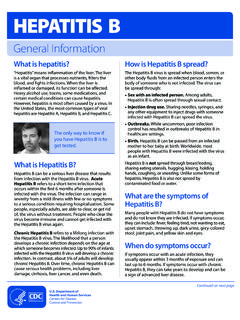
1 Hepatitis C & Injection drug USEWhat is Hepatitis C? Hepatitis C is a serious liver disease caused by the Hepatitis C virus. Some people get only a short term, or acute, infection and are able to clear the virus without treatment. If someone clears the virus, this usually happens within 6 months after infection. However, about 80% of people who get infected develop a chronic, or lifelong, infection. Over time, chronic Hepatitis C can cause serious health problems including liver damage, liver failure, and even liver cancer. What are the symptoms? Symptoms of Hepatitis C can include: fever, feeling tired, not wanting to eat, upset stomach, throwing up, dark urine, grey-colored stool, joint pain, and yellow skin and eyes. However, many people who get Hepatitis C do not have symptoms and do not know they are infected. If symptoms occur with acute infection, they can appear anytime from 2 weeks to 6 months after infection.
2 Symptoms of chronic Hepatitis C can take decades to develop, and when symptoms do appear, they often are a sign of advanced liver disease. Should I get tested?Yes. If you have ever injected drugs, you should get tested for Hepatitis C. If you are currently injecting, talk to your doctor about how often you should be tested. The Hepatitis C Antibody Test is a blood test that looks for antibodies to the Hepatitis C virus. A reactive or positive Hepatitis C Antibody Test means that a person has been infected at some point in time. Unlike HIV, a reactive antibody test does not necessarily mean a person still has Hepatitis C. An additional blood test called a RNA test is needed to determine if a person is currently infected with Hepatitis C. All equipment used to prepare and inject drugs can spread Hepatitis C when contaminated and on next pageHow is Hepatitis C spread among people who inject drugs?
3 The Hepatitis C virus is very infectious and can easily spread when a person comes into contact with surfaces, equipment, or objects that are contaminated with infected blood, even in amounts too small to see. The virus can survive on dry surfaces and equipment for up to 6 weeks. People who inject drugs can get Hepatitis C from: Needles & Syringes. Sharing or reusing needles and syringes increases the chance of spreading the Hepatitis C virus. Syringes with detachable needles increase this risk even more because they can retain more blood after they are used than syringes with fixed-needles. Preparation Equipment. Any equipment, such as cookers, cottons, water, ties, and alcohol swabs, can easily become contaminated during the drug preparation process. Fingers. Fingers that come into contact with infected blood can spread Hepatitis C. Blood on fingers and hands can contaminate the Injection site, cottons, cookers, ties, and swabs.
4 Surfaces. Hepatitis C can spread when blood from an infected person contaminates a surface and then that surface is reused by another person to prepare Injection equipment. Are there other ways Hepatitis C can spread? Hepatitis C can also spread when tattoo, piercing, or cutting equipment is contaminated with the Hepatitis C virus and used on another person. Although rare, Hepatitis C can be spread through sex. Hepatitis C seems to be more easily spread through sex when a person has HIV or a STD. People who have rough sex or numerous sex partners are at higher risk of getting Hepatitis C. Hepatitis C can also be spread from a pregnant woman to her Hepatitis C be prevented?Yes. The best way to prevent Hepatitis C is to stop injecting. drug treatment, including methadone or buprenorphine, can lower your risk for Hepatitis C since there will no longer be a need to inject. However, if you are unable or unwilling to stop injecting drugs, there are steps you can take to reduce the risk of becoming infected.
5 Do not share any equipment used to inject drugs with another person. Always use new, sterile needles, syringes and preparation equipment cookers, cottons, water, ties, and alcohol swabs for each Injection . S et up a clean surface before placing down your Injection equipment. Do not divide and share drug solution with equipment that has already been used. A void using syringes with detachable needles to reduce the amount of blood remaining in the syringe after injecting. T horoughly wash hands with soap and water before and after injecting to remove blood or germs. Clean Injection site with alcohol or soap and water prior to injecting. A pply pressure to Injection site with a sterile pad to stop any bleeding after injecting. Only handle your own Injection equipment. If you do inject with other people, separate your equipment from others to avoid accidental new syringes and equipment with every Hepatitis C virus is difficult to kill.
6 The best way to prevent Hepatitis C is to use new, sterile syringes and equipment with every Injection . If using a new syringe is not possible, bleach has been found to kill the Hepatitis C virus in syringes when used as a solution of one part bleach to 10 parts water for two minutes. Bleach, however, may not be effective when used to clean other types of equipment used to prepare or inject drugs. Although boiling, burning, or using common cleaning fluids, alcohol, or peroxide can reduce the amount of virus, this may not prevent you from getting infected. Cleaning previously used equipment and syringes should only be done if new, sterile equipment is not Hepatitis C be treated? Yes. New and improved treatments are available that can cure most people with Hepatitis C. Most of the new treatments are taken as pills and do not require interferon injections. However, treatment for Hepatitis C depends on many different factors, so it is important to talk to a doctor about options.
7 Can someone get re-infected with Hepatitis C?Yes. Someone who clears the virus, either on their own or from successful treatment, can become infected injecting put you at risk for other types of Hepatitis ?Yes. People who inject are more likely to get Hepatitis A and Hepatitis B. Getting vaccinated for Hepatitis A and B will prevent these types of Hepatitis . There is currently no vaccine for Hepatitis More InformationTalk to your health professional, call your health department, or visit