Transcription of Identify, Isolate, Inform: Emergency Department Evaluation ...
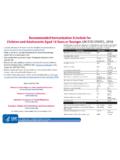
1 Identify, isolate , inform : Emergency Department Evaluation and management of patients Under Investigation for Ebola Virus Disease 1 Identify exposure history: Has patient lived in or traveled to a country with ongoing Ebola Continue with usual triage and NO assessment transmission or had contact with an individual with confirmed Ebola Virus Disease within the previous 21 days? YES. 2. 1 Identify signs and symptoms: A. Continue with usual triage and assessment Fever or Ebola-compatible symptoms: headache, weakness, muscle B. Notify relevant health Department NO C. Monitor for fever and symptoms for 21 days after pain, vomiting, diarrhea, abdominal pain, or hemorrhage last exposure in consultation with the relevant health Department YES YES. 3 isolate and determine personal protective equipment (PPE) needed 4 inform Place patient in private room or separate enclosed area with private bathroom or covered, bedside commode.
2 Only essential personnel with designated roles should evaluate patient and A. IMMEDIATELY notify the hospital provide care to minimize transmission risk. The use of PPE should be determined based on the infection control program and patient's clinical status: other appropriate staff Is the patient exhibiting obvious bleeding, vomiting , copious diarrhea or a clinical condition B. IMMEDIATELY report to the health that warrants invasive or aerosol-generating procedures ( , intubation, suctioning, active Department resuscitation)? . NO YES. For clinically stable patients that do not have bleeding, vomiting, or diarrhea, healthcare workers should use A. Use PPE designated for the care of hospitalized patients PPE outlined in CDC's guidance found here: B. If the patient requires active resuscitation, this should be done in a pre-designated area using pre-designated equipment. 5 Further Evaluation and management A. Complete history and physical examination; decision to test for Ebola should be made in consultation with relevant health Department B.
3 Perform routine interventions ( placement of peripheral IV, phlebotomy for diagnosis) as indicated by clinical status C. Evaluate patient with dedicated equipment ( stethoscope). Developed in collaboration with American College of Emergency Physicians and Emergency Nursing Association For 508 compliance , please visit: January , 13 2015 CS_252252-A.