Transcription of LOR and PMGI Resists - MicroChem
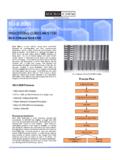
1 LOR and pmgi Resists DESCRIPTION LOR and pmgi Resists are based onpolydimethylglutarimide. Its unique properties enableLOR and pmgi products to perform exceptionally wellwhen used, either as a sacrificial layer, or as an undercutlayer in bi-layer lift-off processing. LOR and pmgi resistsare designed for applications requiring high resolutionimaging, easy process tuning, high yields and superiordeposition line width control. Mainstream applicationsutilizing LOR or pmgi Resists include GMR & MR heads,wireless devices, opto-electronics, MEMs, and 1: SFG2 w/TOK Resist 80 nmline BENEFITS Sub m lift-off processing.
2 Film thicknesses for depositions from <20nm - >5 m. Dissolution Rate optimized for maximum undercut control. Simple bi-layer processing without extra flood exposure, develop, amine treatment or toxic chemical soak steps required. Superior adhesion to Si, NiFe, GaAs, InP and many other III-V materials. Compatible with g-, h-, i-line, DUV, 193nm and E-beam Resists . Compatible with TMAH and metal-ion bearing developers.
3 High thermal stability. Excellent conformal and/or planarizing formulation s available. Optically transparent formulations available. Figure 2: pmgi w/SPR 660 3 um line Figure 3: LOR 30B w/SPR 220 -5 um lines Figure 4: Substrate preparation LOR/ pmgi Resists exhibit excellent adhesion to most semiconductor, GaAs, and thin-film head substrates. Primers such as HMDS (hexamethyldisilazane) are typically NOT required to promote adhesion with pmgi /LOR products when used as recommended.
4 To obtain maximum process reliability, substratesshould be clean and dry prior to applying LORresist. Start with solvent cleaning, or rinse withdilute acid, followed by DI water rinse. Todehydrate the surface, bake at 200 C for 5 minuteson a contact hot plate or 30 minutes in aconvection oven. 1. Coat and Soft-bake pmgi or LOR. 2. Coat and Soft-bake Imaging Resist. Coating process LOR and pmgi Resists are designed to provide lowdefect level coatings over a broad filmthickness range using a variety of spin-coatconditions.
5 For clean lift-off processing,LOR/ pmgi films should be thicker than thedeposited metal film, typically by25%. Film thicknesses versus spin speed plots areincludedin the technical data section. Spin speeds between2,500 and 4,500 rpm generate maximum coatinguniformity. The Spin speed needs to be optimizedfor the substrate size and shape. Generally, higherspeeds are used for smaller substrates and lowerspeeds for larger substrates. Substrates with deeptopography or irregular shape will need to be spunslower for improved coverage.
6 Coating equipment should be compatible withcyclopentanone to minimize coater-bowl exhaustvariability and drain-line clogging associated withmixing conventional and pmgi /LOR Resists . Adedicated coat-bowl and drainage system isrecommended but not mandatory. When MicroChem EBR PG is used for clean up oredge bead removal, LOR/ pmgi and conventionalresists may be employed in the same system. 3. Expose Imaging Resist. 4. Develop resist and pmgi /LOR. 5. Deposit film. 6. Lift-off Bi-layer stack and residual deposition.
7 Figure 5a: Edge Bead Removal MicroChem EBR PG effectively removes both edge- beads and whiskers, and is designed specifically for LOR/ pmgi Resists . EBR PG is compatible with most conventional positive Resists and commercially available coating tracks. Acetone and conventional resist edge-bead removers are NOT recommended with LOR/ pmgi products. See the EBR PG data sheet for more details Effect of Soft-bake Temperature on Undercut Ratey = -x + ( C)Rate (nm/s)LOR 10B Soft- bake/Prebake Process The pre-bake process enables precise andreproducible control of undercut to providemaximum process windows.
8 Pre-bake temperatureshows the greatest influence on undercut rate,although pre-bake time, exposure dose forthepatterning resist, choice of developer, develop modeand develop time are also influential. Refer toFigures 5a, 5b and 6. Hot plates are the preferred tool for the pre-bake; however, LOR/ pmgi Resists are also compatible with convection oven processes. The recommended bake temperature range is 150 C - 200 C, although some pmgi products may be baked to 250 C. Ultimately, a matrix design varying pre-bake temperature and time is recommended for process fine-tuning.
9 Figure 5b:Effect of Soft-bake Time on Undercut Ratey = + Time (s)Rate (nm/s)LOR 10B Application and Processing the Patterning ResistLayer Refer to the patterning resist manufacturer processrecommendations for specific processing products are compatible with typical g-line, i-line, broadband, deep UV, 193nm, and e-beamphotoresists. The resist can be applied and pre-bakeddirectly over pmgi without need for barrier layers orplasma de-scum steps. LOR or pmgi does not requirean exposure step when using the simple bi-layer lift-offprocess.
10 pmgi can also be used in a Cap-On processin which the pmgi layer must be deep-UV (240-290nm) flood exposed. The Cap-On process istypically used to obtain straighter sidewall profiles inthe pmgi resist layer. For more detailed informationregarding the Cap-On process, please contact yourMicroChem Technical Sales Representative, or refer tothe pmgi Process Notes, which are available on ourwebsite, Figure 6:020406080100120 Dissolution Rate @180 C (nm/s)1 Relative Dissolution Rates of MC C LO R/P MGI ProductsLOR_BLOR_ASF SeriesSF Slow Series 0246810121416 Dissolution Rate (nm/s)170180190200 Temperature (C) Effect of Developer Type on Dissolution TMAH ( ) TMAH w/surfactant ( )SF11 TheFigure 7.