Transcription of Material Safety Data Sheet Bromoethane - Central Campus
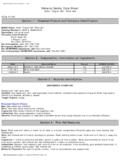
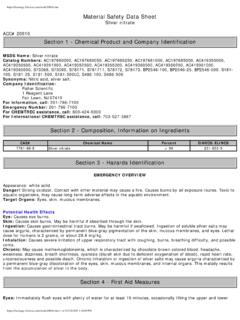
1 Material Safety Data Sheet Bromoethane ACC# 69668. Section 1 - Chemical Product and Company Identification msds Name: Bromoethane Catalog Numbers: AC154210010, AC154215000, AC330350050, AC330351000. Synonyms: Ethyl bromide; Bromic ether; Monobromoethane; Hydrobromic ether. Company Identification: Acros Organics One Reagent Lane Fair Lawn, NJ 07410. For information in North America, call: 800-ACROS-01. For emergencies in the US, call CHEMTREC: 800-424-9300. Section 2 - Composition, Information on Ingredients CAS# Chemical Name Percent EINECS/ELINCS. 74-96-4 Bromoethane >98 200-825-8. Section 3 - Hazards Identification EMERGENCY OVERVIEW. Appearance: colorless liquid. Flash Point: 26 deg F. Danger! Extremely flammable liquid. Causes respiratory tract irritation. Harmful if swallowed, inhaled, or absorbed through the skin.
2 Causes eye and skin irritation. Inhalation of a mist of this Material may cause irritation of the lungs. May cause cardiac disturbances. May cause liver and kidney damage. Target Organs: Kidneys, heart, liver, lungs. Potential Health Effects Eye: Causes eye irritation. Skin: Causes skin irritation. Exposure may cause irritation characterized by redness, dryness, and inflammation. Ingestion: May cause gastrointestinal irritation with nausea, vomiting and diarrhea. May cause respiratory failure. May cause systemic toxic effects on the heart, liver, and kidneys. Inhalation: Causes respiratory tract irritation. Irritation may lead to chemical pneumonitis and pulmonary edema. May cause effects similar to those described for ingestion. Causes narcotic effects including headache, dizziness, weakness, unconsciousness, and possible death.
3 Chronic: Prolonged or repeated skin contact may cause irritation. Chronic inhalation and ingestion may cause effects similar to those of acute inhalation and ingestion. May cause cancer in humans. Section 4 - First Aid Measures Eyes: Immediately flush eyes with plenty of water for at least 15 minutes, occasionally lifting the upper and lower eyelids. Get medical aid imme diately. Skin: Get medical aid. Immediately flush skin with plenty of water for at least 15 minutes while removing contaminated clothing and shoes. Ingestion: If victim is conscious and alert, give 2-4 cupfuls of milk or water. Never give anything by mouth to an unconscious person. Get medical aid immediately. Inhalation: Get medical aid immediately. Remove from exposure and move to fresh air immediately. If not breathing, give artificial respiration.
4 If breathing is difficult, give oxygen. Notes to Physician: Treat symptomatically and supportively. (1 of 5)7/23/2007 10:35:03 AM. Section 5 - Fire Fighting Measures General Information: As in any fire, wear a self-contained breathing apparatus in pressure-demand, MSHA/NIOSH. (approved or equivalent), and full protective gear. During a fire, irritating and highly toxic gases may be generated by thermal decomposition or combustion. Extremely flammable liquid and vapor. Vapor may cause flash fire. Extinguishing Media: Use water spray, dry chemical, carbon dioxide, or appropriate foam. Flash Point: 26e deg F ( deg C). Autoignition Temperature: 511 deg C ( deg F). Explosion Limits, Upper: NFPA Rating: (estimated) Health: 2; Flammability: 3; Instability: 0. Section 6 - Accidental Release Measures General Information: Use proper personal protective equipment as indicated in Section 8.
5 Spills/Leaks: Absorb spill with inert Material ( vermiculite, sand or earth), then place in suitable container. Clean up spills immediately, observing precautions in the Protective Equipment section. Scoop up with a nonsparking tool, then place into a suitable container for disposal. Section 7 - Handling and Storage Handling: Wash thoroughly after handling. Wash hands before eating. Remove contaminated clothing and wash before reuse. Use with adequate ventilation. Keep away from heat, sparks and flame. Do not get on skin or in eyes. Do not ingest or inhale. Storage: Keep away from sources of ignition. Store in a cool, dry place. Store in a tightly closed container. Section 8 - Exposure Controls, Personal Protection Engineering Controls: Use process enclosure, local exhaust ventilation, or other engineering controls to control airborne levels below recommended exposure limits.
6 Facilities storing or utilizing this Material should be equipped with an eyewash facility and a Safety shower. Exposure Limits Chemical Name ACGIH NIOSH OSHA - Final PELs 5 ppm TWA; Skin - potential significant contribution to Bromoethane 2000 ppm IDLH 200 ppm TWA; 890 mg/m3 TWA. overall exposure by the cutaneous r oute OSHA Vacated PELs: Bromoethane : 200 ppm TWA; 890 mg/m3 TWA. Personal Protective Equipment Eyes: Wear chemical splash goggles. Skin: Wear appropriate protective gloves to prevent skin exposure. Clothing: Wear appropriate protective clothing to prevent skin exposure. Respirators: Follow the OSHA respirator regulations found in 29 CFR or European Standard EN 149. Use a NIOSH/MSHA or European Standard EN 149 approved respirator if exposure limits are exceeded or if irritation or other symptoms are experienced.
7 Section 9 - Physical and Chemical Properties (2 of 5)7/23/2007 10:35:03 AM. Physical State: Liquid Appearance: colorless Odor: Perceptible odor @ 200 ppm. pH: Not available. Vapor Pressure: 400 mm Hg @ 20 deg C. Vapor Density: (air=1). Evaporation Rate:Not available. Viscosity: Not available. Boiling Point: deg C. Freezing/Melting Point:-119 deg C. Decomposition Temperature:Not available. Solubility: Slightly soluble in water. Specific Gravity/ Molecular Formula:C2H5Br Molecular Section 10 - Stability and Reactivity Chemical Stability: Stable under normal temperatures and pressures. Conditions to Avoid: Ignition sources, excess heat. Incompatibilities with Other Materials: Strong oxidizing agents. Hazardous Decomposition Products: Carbon monoxide, carbon dioxide, hydrogen bromide. Hazardous Polymerization: Has not been reported Section 11 - Toxicological Information RTECS#: CAS# 74-96-4: KH6475000.
8 LD50/LC50: CAS# 74-96-4: Inhalation, mouse: LC50 = 16230 ppm/1H;. Inhalation, mouse: LC50 = 36000 mg/m3/2H;. Inhalation, rat: LC50 = 26980 ppm/1H;. Inhalation, rat: LC50 = 534000 mg/m3/4H;. Oral, rat: LD50 = 1350 mg/kg;.. Carcinogenicity: CAS# 74-96-4: ACGIH: A3 - Confirmed animal carcinogen with unknown relevance to humans California: carcinogen, initial date 12/22/00. NTP: Not listed. IARC: Not listed. Epidemiology: No data available. Teratogenicity: No data available. Reproductive Effects: No data available. Mutagenicity: No data available. Neurotoxicity: No data available. Other Studies: Section 12 - Ecological Information (3 of 5)7/23/2007 10:35:03 AM. No information available. Section 13 - Disposal Considerations Chemical waste generators must determine whether a discarded chemical is classified as a hazardous waste.
9 US EPA. guidelines for the classification determination are listed in 40 CFR Parts Additionally, waste generators must consult state and local hazardous waste regulations to ensure complete and accurate classification. RCRA P-Series: None listed. RCRA U-Series: None listed. Section 14 - Transport Information US DOT Canada TDG. Shipping Name: ETHYL BROMIDE ETHYL BROMIDE. Hazard Class: UN Number: UN1891 UN1891. Packing Group: II II. Section 15 - Regulatory Information US FEDERAL. TSCA. CAS# 74-96-4 is listed on the TSCA inventory. Health & Safety Reporting List None of the chemicals are on the Health & Safety Reporting List. Chemical Test Rules None of the chemicals in this product are under a Chemical Test Rule. Section 12b None of the chemicals are listed under TSCA Section 12b. TSCA Significant New Use Rule None of the chemicals in this Material have a SNUR under TSCA.
10 CERCLA Hazardous Substances and corresponding RQs None of the chemicals in this Material have an RQ. SARA Section 302 Extremely Hazardous Substances None of the chemicals in this product have a TPQ. SARA Codes CAS # 74-96-4: immediate, delayed, fire. Section 313 No chemicals are reportable under Section 313. Clean Air Act: This Material does not contain any hazardous air pollutants. This Material does not contain any Class 1 Ozone depletors. This Material does not contain any Class 2 Ozone depletors. Clean Water Act: None of the chemicals in this product are listed as Hazardous Substances under the CWA. None of the chemicals in this product are listed as Priority Pollutants under the CWA. None of the chemicals in this product are listed as Toxic Pollutants under the CWA. OSHA: None of the chemicals in this product are considered highly hazardous by OSHA.