Example: marketing
Organic Answer Keys - Commack Schools
Introduction to Organic Chemistry Organic chemistry is the study of carbon-containing compounds, usually bonded to hydrogen, oxygen and sometimes nitrogen. There are many types of organic molecules. Hydrocarbons are an example of some of the more simple organic compounds since they only contain carbon & hydrogen.
Tags:
Information
Domain:
Source:
Link to this page:
Documents from same domain

SAT SUBJECT TESTS (SAT II) BIOLOGY E/M
www.commackschools.orgWhy take the SAT Subject Test? Some highly competitive colleges use the Subject Tests for admission and course placement.
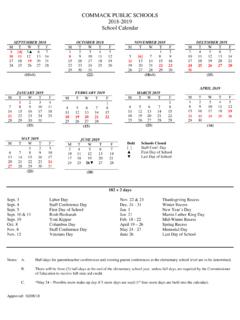
COMMACK PUBLIC SCHOOLS 2018-2019 School …
www.commackschools.orgcommack public schools . 2018-2019 . school calendar . september 2018. m t w t f 3 {4} 5 6 7 10 11 12 13 14 17 18 19 20 21 24 25 26 27 28 (15+1) january 2019 . m t w t f
Chapter 2 Resource Masters - commackschools.org
www.commackschools.orgThis is an alphabetical list of the key vocabulary terms you will learn in Chapter 2. As you study the chapter, complete each term’s definition or description. Remember to …

Chapter 1 Resource Masters - commackschools.org
www.commackschools.orgPDF Pass Teacher’s Guide to Using the Chapter 1 Resource Masters .....iv Chapter Resources Chapter 1 Student-Built Glossary .....1
HAMLET A UNIT PLAN - Commack Schools
www.commackschools.orgyears Shakespeare wrote his earliest sonnets and two long narrative poems, 'Venus and Adonis' and 'The Rape of Lucrece'. Both were printed by Richard Field, a boyhood friend from Stratford. They were well received and helped establish him as a poet. Shakespeare Prospers Until 1598 Shakespeare's theater work was confined to a district northeast ...
Chapter 3 Resource Masters - Commack Schools
www.commackschools.orgChapter 3 Resource Masters The Chapter 3 Resource Masters includes the core materials needed for Chapter 3. These materials include worksheets, extensions, and assessment options. The answers for these pages appear at the back of this booklet. All of the materials found in this booklet are included for viewing, printing, and editing at ...
Chapter 4 Resource Masters - Commack Schools
www.commackschools.orgThe Chapter 4 Resource Masters includes the core materials needed for Chapter 4. These materials include worksheets, extensions, and assessment options. The answers for these pages appear at the back of this booklet. All of the materials found in this booklet are included for viewing, printing, and

The Strange Case of Dr. Jekyll and Mr. Hyde
www.commackschools.org2 THE STRANGE CASE OF DR.JEKYLL AND MR.HYDE pleasure, but even resisted the calls of business, that they might enjoy them uninterrupted. It chanced on one of these rambles that their way led them down a
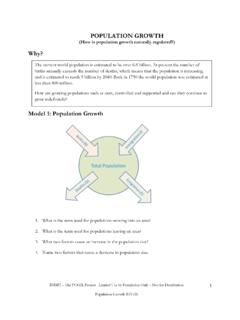
Population Growth B1YvM - Commack Schools
www.commackschools.org©HSPI – The POGIL Project Limited Use by Permission Only – Not for Distribution Population Growth B1YvM 8 Target Answers: 1. What is the term used for populations moving into an area? Immigration 2. What is the term used for populations leaving an area? Emigration. 3. What two factors cause an increase in the population size? Births ...
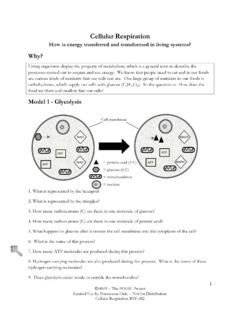
Cellular Respiration Pogil - Commack Schools
www.commackschools.orgCellular Respiration B1YvM2 Extension: Two different processes of anaerobic respiration are shown below. Fermentation (no O 2 present in cell) OR 23. List the final products of the breakdown of glucose if no oxygen is present. 24. Recall that two molecules of ATP are formed during glycolysis. Neither fermentation processes
Related documents

Short Summary of IUPAC Nomenclature of Organic …
www.angelo.eduShort Summary of IUPAC Nomenclature of Organic Compounds Introduction The purpose of the IUPAC system of nomenclature is to establish an international standard of naming compounds to facilitate communication. The goal of the system is to give each structure a unique and unambiguous name, and to correlate each name with a unique and unambiguous ...

An Introduction to Organic Chemistry
www.cnm.manchester.ac.ukAn Introduction to Organic Chemistry 82 Organic Chemistry Organic chemistry is the study of compounds containing carbon with the exception of simple compounds e.g. carbonates (CO 3 2-), carbon dioxide (CO 2) and carbon monoxide (CO). Nomenclature There are over 6 million known organic compounds. Nomenclature is therefore very important.

1 Chemistry 1110 – Organic Chemistry IUPAC Nomenclature
www.kpu.caChemistry 1110 – Organic Chemistry IUPAC Nomenclature Of the approximately 32 million unique chemical compounds presently known, over 95% of them can be classified as organic; i.e., containing carbon. The IUPAC system of nomenclature was established at the end of the 19th century in order for chemists to have a common method of naming ...

IUPAC nomenclature for organic chemistry
web.iit.eduWhat is IUPAC nomenclature? •A systematic method of naming organic chemical compounds as recommended by the International Union of Pure and Applied Chemistry (IUPAC). •It provides an unambiguous structure. •Official IUPAC naming recommendations are not always followed in practice, and the common or trivial name may be used.

NOMENCLATURE OF ORGANIC COMPOUNDS
chymist.comthese compounds had to come from a living organism, now they are synthesized in the laboratory. The simplest organic compounds are composed of carbon and hydrogen and are known as hydrocarbons. There are four types, or classes, of hydrocarbons: Alkanes: contain all C-C single bonds. These are known as saturated hydrocarbons.

NOMENCLATURE IN ORGANIC CHEMISTRY
scilearn.sydney.edu.aufor naming organic compounds - some have had limit scope or become embedded in common us age and some have persisted over time The International Union of Pure and Applied Chemistry (I.U.P.A.C.) periodically reviews naming practice, attempting to standardise nomenclature. The following guidelines for organic nomenclature are based on the def

Nomenclature of Carboxylic Acids
www.angelo.eduCHEM 2353 Fundamentals of Organic Chemistry Organic and Biochemistry for Today (Seager & Slabaugh) ... Nomenclature of Carboxylic Acids 4 Nomenclature of Carboxylic Acids ... • Name the following compounds: CH3CHCH2 COH Br O CH3CHCH2 COH CH2CH2CH3 CH3 O COH O CH3CH2CHCH3.

Naming Rules for Organic Compounds
web.viu.caNaming Rules for Organic Compounds The names of organic molecules are divided into three parts; 1. the ‘root’ name, indicative of the number of carbon atoms in the longest continuous chain, which includes the highest priority functional group. 2. the suffix name, which indicates the position and identity of the highest priority functional ...
Related search queries
Short Summary of IUPAC Nomenclature of Organic, Short Summary of IUPAC Nomenclature of Organic Compounds, Nomenclature, Compounds, An Introduction to Organic Chemistry, Organic, Organic Compounds, IUPAC nomenclature, NOMENCLATURE OF ORGANIC COMPOUNDS, Organic nomenclature, Carboxylic Acids, Of organic