Example: bankruptcy
Organic Answer Keys - Commack Schools
are an example of some of the more simple organic compounds since they only contain carbon & hydrogen. A Molecule containing only carbon & hydrogen, bonded together by covalent bonds. Hydrocarbons differ from each other in two ways: 1 ) Number of carbon atoms & 2) The type of bond between the carbon atoms (single, double or triple bond). WDtS or
Tags:
Information
Domain:
Source:
Link to this page:
Documents from same domain

SAT SUBJECT TESTS (SAT II) BIOLOGY E/M
www.commackschools.orgWhy take the SAT Subject Test? Some highly competitive colleges use the Subject Tests for admission and course placement.
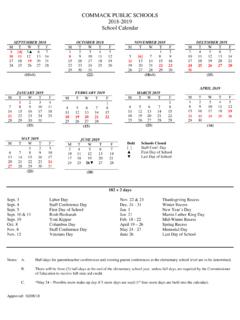
COMMACK PUBLIC SCHOOLS 2018-2019 School …
www.commackschools.orgcommack public schools . 2018-2019 . school calendar . september 2018. m t w t f 3 {4} 5 6 7 10 11 12 13 14 17 18 19 20 21 24 25 26 27 28 (15+1) january 2019 . m t w t f
Chapter 2 Resource Masters - commackschools.org
www.commackschools.orgThis is an alphabetical list of the key vocabulary terms you will learn in Chapter 2. As you study the chapter, complete each term’s definition or description. Remember to …

Chapter 1 Resource Masters - commackschools.org
www.commackschools.orgPDF Pass Teacher’s Guide to Using the Chapter 1 Resource Masters .....iv Chapter Resources Chapter 1 Student-Built Glossary .....1
HAMLET A UNIT PLAN - Commack Schools
www.commackschools.orgyears Shakespeare wrote his earliest sonnets and two long narrative poems, 'Venus and Adonis' and 'The Rape of Lucrece'. Both were printed by Richard Field, a boyhood friend from Stratford. They were well received and helped establish him as a poet. Shakespeare Prospers Until 1598 Shakespeare's theater work was confined to a district northeast ...
Chapter 3 Resource Masters - Commack Schools
www.commackschools.orgChapter 3 Resource Masters The Chapter 3 Resource Masters includes the core materials needed for Chapter 3. These materials include worksheets, extensions, and assessment options. The answers for these pages appear at the back of this booklet. All of the materials found in this booklet are included for viewing, printing, and editing at ...
Chapter 4 Resource Masters - Commack Schools
www.commackschools.orgThe Chapter 4 Resource Masters includes the core materials needed for Chapter 4. These materials include worksheets, extensions, and assessment options. The answers for these pages appear at the back of this booklet. All of the materials found in this booklet are included for viewing, printing, and

The Strange Case of Dr. Jekyll and Mr. Hyde
www.commackschools.org2 THE STRANGE CASE OF DR.JEKYLL AND MR.HYDE pleasure, but even resisted the calls of business, that they might enjoy them uninterrupted. It chanced on one of these rambles that their way led them down a
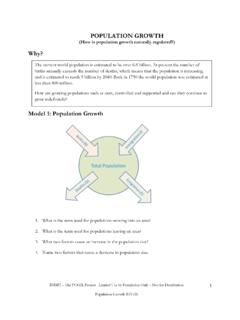
Population Growth B1YvM - Commack Schools
www.commackschools.org©HSPI – The POGIL Project Limited Use by Permission Only – Not for Distribution Population Growth B1YvM 8 Target Answers: 1. What is the term used for populations moving into an area? Immigration 2. What is the term used for populations leaving an area? Emigration. 3. What two factors cause an increase in the population size? Births ...
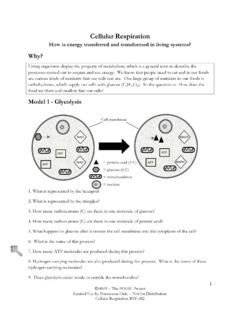
Cellular Respiration Pogil - Commack Schools
www.commackschools.orgCellular Respiration B1YvM2 Extension: Two different processes of anaerobic respiration are shown below. Fermentation (no O 2 present in cell) OR 23. List the final products of the breakdown of glucose if no oxygen is present. 24. Recall that two molecules of ATP are formed during glycolysis. Neither fermentation processes
Related documents

Rules for naming compounds 2010 - Creighton University
mattson.creighton.eduNaming covalent molecular compounds: Left then right, use prefixes. First name the element that is leftmost on the periodic table. Use just the element name. If both elements are in the same column (e.g. sulfur and oxygen), name the lower one first. Name the second element as if it were an anion that uses the –ide ending.
Rules for naming compounds 2010 - Creighton University
mattson.creighton.eduNaming covalent molecular compounds: Left then right, use prefixes. First name the element that is leftmost on the periodic table. Use just the element name. If both elements are in the same column (e.g. sulfur and oxygen), name the lower one first. Name the second element as …

Naming Covalent Compounds Worksheet - My Chemistry Class
mychemistryclass.netNaming Covalent Compounds - Key Write the formulas for the following covalent compounds: 1) Nitrogen tribromide NBr 3 2) hexaboron silicide B 6 Si 3) chlorine dioxide ClO 2 4) hydrogen iodide HI 5) iodine pentafluoride IF 5 6) dinitrogen trioxide N 2 O 3 7) ammonia (nitrogen trihydride) NH 3 8) phosphorus triiodide PI 3
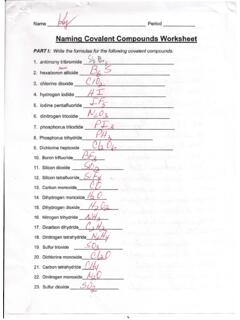
Naming Covalent Compounds Worksheet Key
www.humbleisd.netList 5 Properties of Covalent Com ounds: List 5 Properties of Ionic Compounds: List 5 Properties of Metallic Compounds: c. 00 PART IV. Determine whether the following compounds are covalent or ionic and give them their proper names or Formulas C 2. CO 3. PC13 C CF4 u 8. 9. Mgo cus S02 NC13
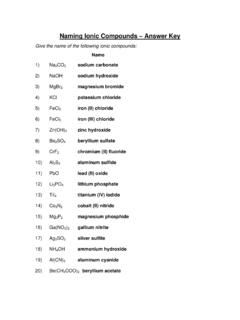
Naming Ionic Compounds – Answer Key
siemianowski.weebly.comNaming Mixed Ionic and Covalent - Answers Name the following compounds. Remember, they may be either ionic or covalent compounds, so make sure you use the right naming method! 1) NaF sodium fluoride 2) NF 3 nitrogen trifluoride 3) Li 2O lithium oxide 4) Al 2S 3 aluminum sulfide 5) MgSO 4 magnesium sulfate 6) SiH 4 silicon tetrahydride 7) KNO 3 ...

Basic organic chemistry and mechanisms revision from M ...
warwick.ac.ukNomenclature of Organic Compounds IUPAC has defined systematic rules for naming organic compounds. These will have already been covered in detail at A-level and will only be mentioned briefly here. The naming system (and the resulting names) can become very long with complex molecules, therefore this section will be restricted to simple compounds.
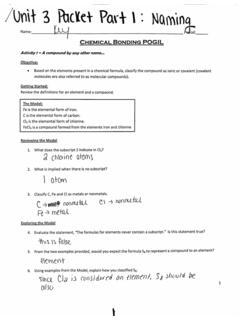
Naming Packet Answer Key - Ms. Demonte's Chemistry Classes
msdemonte.weebly.comBased on the elements present in a chemical formula, classify the compound as ionic or covalent (covalent molecules are also referred to as molecular compounds). Getting Started: Review the definitions for an element and a compound. The Model: Fe is the elemental form of iron. C is the elemental form of carbon. C12 is the elemental form of ...

1 Chemistry 1110 – Organic Chemistry IUPAC Nomenclature
www.kpu.cathe end of the 19th century in order for chemists to have a common method of naming compounds. Most introductory chemistry courses have a small section on simple organic molecules and naming is usually restricted to hydrocarbons. This summary contains an introduction to the recognition and naming of the

Naming Compounds Practice Worksheet
www.lcps.orgSolutions for the Naming Ionic Compounds Practice Worksheet 1) ammonium chloride 2) iron (III) nitrate 3) titanium (III) bromide 4) copper (I) phosphide 5) tin (IV) selenide 6) gallium arsenide 7) lead (IV) sulfate 8) beryllium bicarbonate 9) manganese (III) sulfite 10) aluminum cyanide 11) Cr(PO 4) 2 12) V(CO 3) 2 13) Sn(NO 2) 2 14) Co 2 O 3

Naming and Writing Formulas for Acids!
www.germainium.netMolecular Compounds! 1. Molecular compounds are made from two (or more) non-metals. 2. Molecular Compound Naming Rules. a. Prefixes are used to denote the number of atoms in each element in the compound mono penta nona di hexa deca tri hepta hendeca tetra octa dodeca