Example: marketing

PRINCIPLES OF LEARNING - FNESC

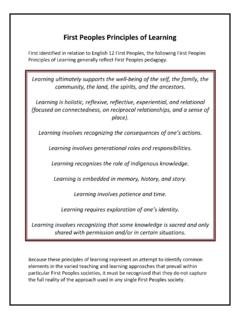
PRINCIPLES . First peoples OF LEARNING . LEARNING ultimately supports the well-being of the self, the family, the community, the land, the spirits, and the ancestors. LEARNING is holistic, reflexive, reflective, experiential, and relational (focused on connectedness, on reciprocal relationships, and a sense of place). LEARNING involves recognizing the consequences of one's actions. LEARNING involves generational roles and responsibilities. LEARNING recognizes the role of indigenous knowledge. LEARNING is embedded in memory, history, and story. LEARNING involves patience and time. LEARNING requires exploration of one's identity. LEARNING involves recognizing that some knowledge is sacred and only shared with permission and/or in certain situations.

First peoples Learning ultimately supports the well-being of the self, the family, the community, the land, the spirits, and the ancestors. Learning is holistic, reflexive, reflective, experiential, and relational (focused on connectedness, on reciprocal relationships, and a sense of place). Learning involves recognizing the consequences of one ...

Tags:

  Principles, Learning, Principles of learning

Information

Domain:

Source:

Link to this page:

Please notify us if you found a problem with this document:

Other abuse

Advertisement

Transcription of PRINCIPLES OF LEARNING - FNESC

1 PRINCIPLES . First peoples OF LEARNING . LEARNING ultimately supports the well-being of the self, the family, the community, the land, the spirits, and the ancestors. LEARNING is holistic, reflexive, reflective, experiential, and relational (focused on connectedness, on reciprocal relationships, and a sense of place). LEARNING involves recognizing the consequences of one's actions. LEARNING involves generational roles and responsibilities. LEARNING recognizes the role of indigenous knowledge. LEARNING is embedded in memory, history, and story. LEARNING involves patience and time. LEARNING requires exploration of one's identity. LEARNING involves recognizing that some knowledge is sacred and only shared with permission and/or in certain situations.

2 For First Peoples classroom resources visit.


Related search queries