Transcription of Problems of Solid Waste Management in Indian …
1 International Journal of Scientific and Research Publications, Volume 3, Issue 3, March 2013 1. ISSN 2250-3153. Problems of Solid Waste Management in Indian Cities Vijay Kumar*, Dr **. *. Professor, Faculty of Architecture and Planning University of Science and Technology, Murthal, Sonepat , Haryana **. Professor, Department of Architecture, Gwalior I. INTRODUCTION. S olid Waste refers to the refuse , the Solid and semi III. GENERATION OF Solid Waste . Solid Waste matters of a community except the night Following are the major sources of generation of soil . Solid Waste contains organic as well as inorganic Waste at urban level matters . Solid Waste Management includes the entire process 1- Solid Waste from Residential Areas , Institutional/. of dealing with Solid Waste ,starting from the collection from Community areas the primary source to ultimately disposing off it 2- Solid Waste from vegetables markets (retail $ wholesale).
2 Hygienically, so that it may not be a nuisance or create 3- Solid Waste from Hotels , and restaurants any harmful effect on near by community .The Solid Waste 4- Solid Waste from commercial areas Management involves , Management at Waste generation level 5- Biomedical Waste from hospitals and dispensaries , storage at the source of generation , primary collection , 6- Waste from domestic / stray animals /dairies street cleansing , temporary storage at locality level , regular 7- Solid Waste from Industries and periodic transportation of this temporarily collected 8- Waste from street cleanising Waste to disposing sites and treatment plants. 9- Miscellaneous As per Municipal Solid Waste Management and Handling rules -2000 , Solid Waste Management is in the obligatory function of urban local bodies , but in actual IV. QUANTITY OF GENERATION OF WASTES IN. practice the Solid Waste Management is given the last Indian CITIES.
3 Priority and the duties are either not performed or poorly The per capita Solid Waste generation in few performed consequently the city has to face numerable Indian cities Problems related to environment and sanitation .. As per the reports of the committee constituted by the City Waste Generation Rates: Hon'ble Supreme Court of India in March 99 , the lack of o Delhi .60 Kg Per Capita Per Day financial resources , inefficient institutional arrangement , o Banglore .53 Kg Per Capita Per Day inappropriate technology , weak legislative measures and o Calcutta .51 Kg Per Capita Per Day unawareness in public towards Solid Waste Management has o Hyderabad .35 Kg Per Capita Per Day made the service most unsatisfactory and inefficient . o Sonepat .343 Kg Per Capita Per Day The Solid Waste Management approach in India is o Hardwar .40 Kg Per Capita Per Day extremely inefficient , using old and obsolete system , o Meerut.
4 45 Kg Per Capita Per Day technology for storage collection processing ,treatment and disposal . There is no formal organized system of segregation Source: Reports concerned Municipal of biodegradable and non biodegradable Solid Waste . The Corporations/Committees recovery and recycling of Waste is only done by scavengers and scrap dealers which is highly hazardous to those which are involved in this job . The Waste generation in small cities is lesser than larger cities . The amount of Solid Waste generation is also II. THE ENTIRE Solid Waste Management CAN directly related to the economic status of families . BE DIVIDED IN FOLLOWING ACTIONS As per studies conducted by Tata Energy Research Institute , higher income group generate more 1. Generation of Solid Waste Solid Waste than middle and lower income 2. Collection of Solid Waste at primary source groups . 3. Street Cleansing The lower income groups in New Delhi generate 3.
5 Transportation of Solid Waste to the secondary/ locality less than 1/3rd of Solid Waste than their higher storage/community bins income counter parts . 4. Storage of Solid Waste at locality level As per studies conducted , in smaller cities of 5. Transport of Solid Waste to dumping sites and treatment plants population about 3 lakhs 6. Treatment and Dumping of Solid Waste the generation of biodegradable Waste ( 50 65% ) is approaches of dealing with Solid Waste more than non biodegradable Waste (35 50 % ) . The International Journal of Scientific and Research Publications, Volume 3, Issue 3, March 2013 2. ISSN 2250-3153. biodegradable Waste can be easily reduced to manures by that the organic matter in India Solid Waste is higher , compositing plant due to the presence of a large percentage of vegetative matter . This is attributed to the fact that indians eat fresh vegetables and fruits in contrast to the consumption of V.
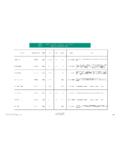
6 COMPOSITION OF Solid Waste IN INDIA tinned / pre cooked food in developed countries . The comparative study of the Solid wastes composition for cities in industrialized countries and Indian cities reveals VI. COMPOSITION OF WASTES OF LARGE CITIES IN INDIA. Component % by Ahmedabad Bangalore Bombay Calcutta Delhi Kanpur Wet weight 1. Paper and card 2. Metals 3. Glass 0 .24 4. Textile 5. Plastic , leather - 6. And Rubber 7. Wooden matter - 8. Husk and straw 9. Bones etc 10. Stones etc - 11. Fine earth, ash 12. Fermentable Density of Refuse - 578 - 600 - 500. ( kg ). Source: Reports concerned Municipal Corporations/Committees,Nath, Ash and fine earth 30-50. Total organic fractions 30-50. VII. COMPOSITION OF WASTES OF SMALL CITIES IN. INDIA Source: Reports Municipal Committee, Sonipat Case Study of ingredients of Waste Generated at Sonepat Component Percentage Paper Plastic Metals Glass Case study of Waste Generated at Hardwar Components PercentageQuantity Produced per day ( Metric Tonnes).
7 Paper 10 Plastics Metals Glass Source: Reports Municipal Committee, Hardwar Case study of Waste Generated at Hardwar: Cost /ValueOf Recyclable Items International Journal of Scientific and Research Publications, Volume 3, Issue 3, March 2013 3. ISSN 2250-3153. Component Recyclable Rate Per kg Total value Quantity /day ( in Rs ) ( in Rs ). ( in kgs). Paper 1,420 Plastic Metal 142 Glass 142 Total Source: Reports Municipal Committee, Hardwar ( 2004). VIII. SOURCES OF Waste GENERATION IN THE CITY OF SONEPAT. S. No. Sources of Waste generation Waste generation Percentage to the Total Per day (MP). A Local Inhabitation 1 House holds 2 Shops and commercial Establishment 3 Grain and vegetable Markets 4 Construction and Demolition Waste 5 Institutional and Medical 6 Industrial Sub Total ( A ) B Floating Population Sub Total ( B ) Grand Total Source: Reports Municipal Committee, Sonipat Quantity of Waste generation in Indian Cities Population Range Average per Capita Value ( Grams/Capita/Day).
8 Less than one lakh 210. One lakh to five lakhs 210. Five lakhs to ten lakhs 250. Ten lakhs to twenty lakhs 270. Twenty lakhs to fifty lakhs 350. More than fifty lakhs 500. also, the city can not be kept clean for more than IX. Problems OF STORAGE OF Solid Waste AT 2-3 hours . THE SOURCE OF GENERATION At sources people generally don't arrange to In most of the cities in India , the scientific and provide proper dustbins , in residential , institutional systematic storage of Waste at source is not in and commercial areas . practice . In case of open drains and large drains passing The Waste is normally thrown in nearby vacant across the city , people throw Waste and these areas ,government vacant land ,drains, streets etc drains are clogged , width of large drains are . reduced because of continuous dumping Because of Waste thrown on the street the People generally use following items to collect environment becomes ugly and unhygienic , so even Waste at source : buckets ,polythene packets, plastic in case of regular cleaning be Municipal Workers bins , metal bins with and without lids.
9 International Journal of Scientific and Research Publications, Volume 3, Issue 3, March 2013 4. ISSN 2250-3153. People generally don't take the Waste to the As per the provision of state Municipal acts the designated points they carry it to nearby roads , sweepers are required to collect Waste from the railway tracks , open plots etc and generally people door step during street sweeping on daily basis . avoid walking to the designated disposal points . No initiative are generally taken in monitoring So when wind blows the heap of Solid Waste get the community and citizen to cooperate with the carried away by wind and spread in large areas municipal sweepers by bringing the Waste produced and when there are rain the problem get in the households and commercial establishments to aggravated. the sweepers or up to the community bins. There is no system of keeping the Bio degradable and Municipal rules engage workers for eight hours in non Bio degradable Waste separately a day with a provision of cleaning in morning as No processing of the Waste is done in well as in the evening where as in actual practice most cities.
10 Very few cities have the only cleaning happens in one time ie. Morning and organizational and administrative set up to work is generally done from 2-3 hours . subject the Waste to treatment process like Municipal manpower and financial resources are composting and that too on a very limited very less contextual to the gravity of problem , and scale . Most of the wastes are disposed by available resources are not properly used. the concerned agency at an open dump without going in to the details of either site TRANSPORTATION OF Waste TO THE COMMUNITY. or wastes. There is no adherence to any BINS. standards or norms for disposal and the Transportation of Waste from the source to the community sites is not scientifically managed . bin is the responsibility of scavengers deployed for the purpose The land filling practice in most Indian and door to door collection is required to be done but in actual cities is one of the most unscientific and situation this work is either done by people themselves or by unhygienic practices with serious privately employed workers, scavengers.