Transcription of Risk Management in Construction Projects - InTech
1 Chapter 19 2012 Banaitiene and Banaitis, licensee InTech . This is an open access chapter distributed under the terms of the Creative Commons Attribution License ( ), which permits unrestricted use, distribution, and reproduction in any medium, provided the original work is properly cited. Risk Management in Construction Projects Nerija Banaitiene and Audrius Banaitis Additional information is available at the end of the chapter 1. Introduction The financial and economic crisis has had an adverse impact on the Lithuania s economy and Construction industry.
2 The GDP of Lithuania grew slightly in 2010, in contrast to a decrease of in 2009. Lithuania s GDP increased from in 2010 to in 2011. Annual GDP growth decreased from its highest point of , reached in the third quarter, to in the last quarter of 2011 [1,2]. Some industries, such as Construction ; trade, transport and communications; and the industry sectors were most affected by the crisis. In 2010, the gross value added within the Construction sector decreased by , and in the trade, transport and communications sector by In 2011, a positive change in the gross value added was observed in all groups of economic activities.
3 The largest growth in the gross value added was observed in enterprises engaging in Construction (by 15%) and trade, transport and communication services ( ) [1,3]. The Construction sector, one of the engines of economic growth in Lithuania over the last decade, is now facing with serious challenges as companies closures, rising unemployment, and postponed or even cancelled investments. These events also have changed the clients and Construction companies behaviour. A reduced demand and shortage of orders dramatically increased a competition between companies of the Construction sector.
4 This increased pressure to improve quality, productivity and reduce costs, and the need for project strategies and Management that can appropriately and effectively manage project risk. Risk Management is one of the nine knowledge areas propagated by the project Management Institute [4]. Furthermore, risk Management in the Construction project Management context is a comprehensive and systematic way of identifying, analyzing and responding to risks to achieve the project objectives [5,6].
5 The benefits of the risk Management process include identifying and analyzing risks , and improvement of Construction project Management processes and effective use of resources. Construction Projects can be extremely complex and fraught with uncertainty. Risk and uncertainty can potentially have damaging consequences for the Construction Projects [7,8]. Risk Management Current Issues and Challenges 430 Therefore nowadays, the risk analysis and Management continue to be a major feature of the project Management of Construction Projects in an attempt to deal effectively with uncertainty and unexpected events and to achieve project success.
6 Construction Projects are always unique and risks raise from a number of the different sources [9,10]. Construction Projects are inherently complex and dynamic, and involving multiple feedback processes [11,12]. A lot of participants individuals and organisations are actively involved in the Construction project , and they interests may be positively or negatively affected as a result of the project execution or project completion [4]. Different participants with different experience and skills usually have different expectations and interests [13].
7 This naturally creates problems and confusion for even the most experienced project managers and contractors. Cost of risk is a concept many Construction companies have never thought about despite the fact that it is one of the largest expense items [14]. Risk Management helps the key project participants client, contractor or developer, consultant, and supplier to meet their commitments and minimize negative impacts on Construction project performance in relation to cost, time and quality objectives.
8 Traditionally, practitioners have tended to associate Construction project success with these three aspects of time, cost and quality outcomes. The current economic downturn and challenges in a highly competitive Lithuania s Construction sector require contractors to manage risks by themselves. This paper reports the research that aims to examine the risk analysis and risk Management practices in the Lithuanian Construction companies. 2. Literature review In today s post-crisis economy effective risk Management is a critical component of any winning Management strategy.
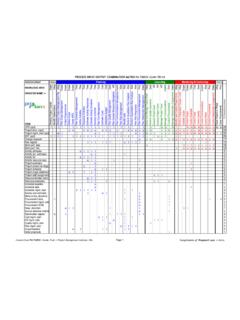
9 Risk Management is one of the nine knowledge areas propagated by the project Management Institute (PMI). The PMBOK Guide recognises nine knowledge areas typical of almost all Projects . The nine knowledge areas are [4]: 1. project integration Management . 2. project scope Management . 3. project time Management . 4. project cost Management . 5. project quality Management . 6. project human resource Management . 7. project communications Management . 8. project risk Management . 9. project procurement Management . Although these knowledge areas are all equally important from a project manager s point of view, in practice a project manager might determine the key areas which will have the greatest impact on the outcome of the project .
10 Risk Management in Construction Projects 431 Each PMI knowledge area in itself contains some or all of the project Management processes. For example, project risk Management includes [4]: Risk Management planning; Risk identification; Qualitative risk analysis; Quantitative risk analysis; Risk response planning; Risk monitoring and control. Risk Management is probably the most difficult aspect of project Management . A project manager must be able to recognise and identify the root causes of risks and to trace these causes through the project to their consequences.