Transcription of SAFETY DATA SHEET
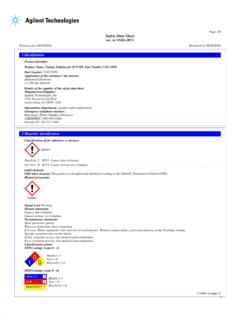
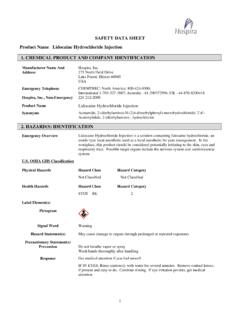
1 Section 1. IdentificationPhosphate Buffered Saline-PBSCHEMTREC : 1-800-424-9300 SAFETY DATA SHEETP roduct nameIn case of emergency::Supplier/Manufacturer:Agilent Technologies, Stevens Creek BlvdSanta Clara, CA 95051, USATel: +1 800 227 9770 Agilent Technologies Singapore (International) Pte 1 Yishun Avenue 7 Singapore, 768923 Tel. (65) 6276 2622 Agilent Technologies Denmark ApS Produktionsvej 422600 Glostrup,Denmark Tel. +45 44 85 95 00 Buffered Saline-PBSC onforms to US OSHA Hazard Communication :Part uses:Laboratory useContainer type: BottleS3024 // Phosphate Buffered Saline (PBS) // 6 x gReference number: SDS211 Validation date:7/28 Relevant identified uses of the substance or mixture and uses advised Product Details of the supplier of the SAFETY data Emergency telephone numbere-mail address of person responsible for this 2. Hazards identificationClassification of the substance or GHS label elementsOSHA/HCS status:This material is considered hazardous by the OSHA Hazard Communication Standard (29 CFR ).
2 H319 EYE IRRITATION - Category Classification of the substance or mixture1/12 Date of issue :07/28/2020 Phosphate Buffered Saline-PBSS ection 2. Hazards identificationSignal word:WarningHazard statements:H319 - Causes serious eye pictograms:Precautionary statementsPrevention:P280 - Wear eye or face - Wash hands thoroughly after :P305 + P351 + P338 - IF IN EYES: Rinse cautiously with water for several contact lenses, if present and easy to do. Continue + P313 - If eye irritation persists: Get medical :Not :Not not otherwise classified:None Other hazardsSection 3. Composition/information on ingredientsSodium chloride 75 - 907647-14-5 Disodium hydrogenorthophosphate 10 - 257558-79-4 Sodium dihydrogenorthophosphate 107558-80-7 Ingredient nameCAS number%Substance/mixture:Occupational exposure limits, if available, are listed in Section concentration shown as a range is to protect confidentiality or is due to batch are no additional ingredients present which, within the current knowledge of the supplier and in the concentrations applicable, are classified as hazardous to health or the environment and hence require reporting in this flush eyes with plenty of water, occasionally lifting the upper and lower eyelids.
3 Check for and remove any contact lenses. Continue to rinse for at least 10 minutes. Get medical contaminated skin with plenty of water. Remove contaminated clothing and shoes. Get medical attention if symptoms occur. Wash clothing before reuse. Clean shoes thoroughly before victim to fresh air and keep at rest in a position comfortable for breathing. If not breathing, if breathing is irregular or if respiratory arrest occurs, provide artificial respiration or oxygen by trained personnel. It may be dangerous to the person providing aid to give mouth-to-mouth resuscitation. Get medical attention if adverse health effects persist or are severe. If unconscious, place in recovery position and get medical attention immediately. Maintain an open airway. Loosen tight clothing such as a collar,tie, belt or 4. First aid measuresEye contactSkin Description of necessary first aid measures2/12 Date of issue :07/28/2020 Phosphate Buffered Saline-PBSS ection 4.
4 First aid measuresWash out mouth with water. Remove dentures if any. Remove victim to fresh air and keep at rest in a position comfortable for breathing. If material has been swallowed and the exposed person is conscious, give small quantities of water to drink. Stop if the exposed person feels sick as vomiting may be dangerous. Do not induce vomiting unless directed to do so by medical personnel. If vomiting occurs, the head should be kept low so that vomit does not enter the lungs. Get medical attention if adverse health effects persist or are severe. Never give anything by mouth to an unconscious unconscious, place in recovery position and get medical attention an open airway. Loosen tight clothing such as a collar, tie, belt or :Protection of first-aiders:No action shall be taken involving any personal risk or without suitable training. It may be dangerous to the person providing aid to give mouth-to-mouth to physician:Treat symptomatically.
5 Contact poison treatment specialist immediately if large quantities have been ingested or treatments:No specific Most important symptoms/effects, acute and delayedInhalation:Exposure to airborne concentrations above statutory or recommended exposure limits may cause irritation of the nose, throat and known significant effects or critical hazards.:IngestionSkin contact:No known significant effects or critical serious eye irritation.:Eye contactOver-exposure signs/symptomsSkin contactIngestionInhalationAdverse symptoms may include the following:respiratory tract irritationcoughingNo specific specific data.:::Eye contact:Adverse symptoms may include the following:pain or irritationwateringrednessPotential acute health effectsSee toxicological information (Section 11) Indication of immediate medical attention and special treatment needed, if necessarySection 5. Fire-fighting measuresHazardous thermal decomposition productsSpecific hazards arising from the chemicalDecomposition products may include the following materials:phosphorus oxideshalogenated compoundsmetal oxide /oxidesNo specific fire or explosion an extinguishing agent suitable for the surrounding Extinguishing media::None extinguishing media:Unsuitable extinguishing Special hazards arising from the substance or mixture3/12 Date of issue :07/28/2020 Phosphate Buffered Saline-PBSS ection 5.
6 Fire-fighting measuresPromptly isolate the scene by removing all persons from the vicinity of the incident if there is a fire. No action shall be taken involving any personal risk or without suitable should wear appropriate protective equipment and self-contained breathing apparatus (SCBA) with a full face-piece operated in positive pressure protective equipment for fire-fighters:Special protective actions for fire- Advice for firefightersSection 6. Accidental release Environmental Personal precautions, protective equipment and emergency procedures::No action shall be taken involving any personal risk or without suitable surrounding areas. Keep unnecessary and unprotected personnel from entering. Do not touch or walk through spilled material. Avoid breathing dust. Provide adequate ventilation. Wear appropriate respirator when ventilation is inadequate. Put on appropriate personal protective dispersal of spilled material and runoff and contact with soil, waterways, drains and sewers.
7 Inform the relevant authorities if the product has caused environmental pollution (sewers, waterways, soil or air).Move containers from spill area. Avoid dust generation. Using a vacuum with HEPA filter will reduce dust dispersal. Place spilled material in a designated, labeled waste container. Dispose of via a licensed waste disposal for cleaning Methods and materials for containment and cleaning upFor non-emergency personnelFor emergency responders:If specialized clothing is required to deal with the spillage, take note of any information in Section 8 on suitable and unsuitable materials. See also the information in "For non-emergency personnel".Section 7. Handling and storageAdvice on general occupational Conditions for safe storage, including any incompatibilitiesEating, drinking and smoking should be prohibited in areas where this material is handled, stored and processed. Workers should wash hands and face before eating,drinking and smoking.
8 Remove contaminated clothing and protective equipment before entering eating areas. See also Section 8 for additional information on hygiene in accordance with local regulations. Store in original container protected from direct sunlight in a dry, cool and well-ventilated area, away from incompatible materials (see Section 10) and food and drink. Keep container tightly closed and sealed until ready for use. Containers that have been opened must be carefully resealed and kept upright to prevent leakage. Do not store in unlabeled containers. Use appropriate containment to avoid environmental contamination. See Section 10 for incompatible materials before handling or use.::Protective measuresPut on appropriate personal protective equipment (see Section 8). Do not ingest. Avoid contact with eyes, skin and clothing. Avoid breathing dust. Keep in the original container or an approved alternative made from a compatible material, kept tightly closed when not in use.
9 Empty containers retain product residue and can be not reuse container. Precautions for safe handlingRecommendations:Industrial applications, Professional Specific end use(s)Specific storage conditions: Please consult the of issue :07/28/2020 Phosphate Buffered Saline-PBSS ection 7. Handling and storage:Industrial sector specific solutionsNot 8. Exposure controls/personal protectionIngredient nameExposure limitsHand protectionBased on the hazard and potential for exposure, select a respirator that meets the appropriate standard or certification. Respirators must be used according to a respiratory protection program to ensure proper fitting, training, and other important aspects of , impervious gloves complying with an approved standard should be worn at all times when handling chemical products if a risk assessment indicates this is necessary. Considering the parameters specified by the glove manufacturer, check during use that the gloves are still retaining their protective properties.
10 It should be noted that the time to breakthrough for any glove material may be different for different glove manufacturers. In the case of mixtures, consisting of several substances, the protection time of the gloves cannot be accurately eyewear complying with an approved standard should be used when a risk assessment indicates this is necessary to avoid exposure to liquid splashes, mists,gases or dusts. If contact is possible, the following protection should be worn, unless the assessment indicates a higher degree of protection: chemical splash goggles. If operating conditions cause high dust concentrations to be produced, use dust protectionRespiratory protection:::Body protectionPersonal protective equipment for the body should be selected based on the task being performed and the risks involved and should be approved by a specialist before handling this product.:Environmental exposure controls:Emissions from ventilation or work process equipment should be checked to ensure they comply with the requirements of environmental protection legislation.