Transcription of Six Key Human Needs – Summary - 321insight.com
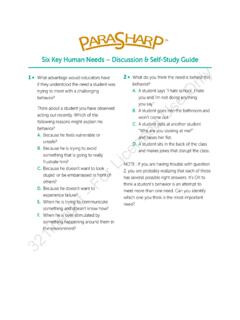
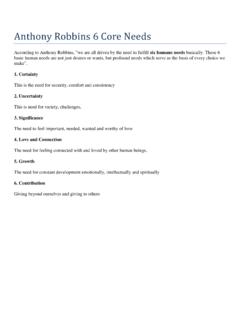
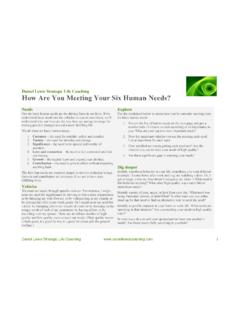
1 1. Be Safe and Feel Safe All students need to be and feel safe. Feeling safe is a matter of perception. Many students histories make them feel unsafe or threatened easily. When students feel unsafe they may posture, act aggressively, or To Be Happy (and avoid negative emotions) All students want to be happy but also avoid negative emotions such as anger, frustration, worry and embarrassment. Many students with behavior challenges have a hard time managing negative feelings. When students are having a hard time coping with negative feelings, you may see them avoid anything that may bring up emotions (such as their school work).3. Belonging (and avoiding rejection) All students want to belong, be accepted and avoid being embarrassed or rejected.
2 Many students with challenging behaviors also have deficits in skills that help them Six Key Human Needs Summaryrelate to others. These types of skill deficits might include following social rules, relating appropriately to others or taking another persons perspective. Challenging behaviors can be attempts to be get attention or acceptance from peers or staff To Be Successful (and avoid failure) All students want to be successful and avoid failure even though they might not always make it evident through their behavior. When students are concerned about being successful and avoiding failure you may see them avoid tasks that are challenging and be overly sensitive to criticism. They may avoid completing or turning in To Communicate and Feel Understood A lot of challenging behavior occurs as an attempt to express something or communicate an unmet need.
3 Students who exhibit challenging behavior often lack skills to communicate appropriately, especially when they are this segment you learned about SIX Needs all people have. Meeting those Needs is often the underlying motive behind challenging behavior serves a purpose. When you can recognize the need a student has instead of just focusing on the behavior you can address the cause, not the symptom of the - For Licensed Use Only Students trying to communicate may not always say what they mean. They may say things like I don t care when they really mean something else (I d like a break, or some help.) Students acting out behaviors are also ways they To Regulate Stimulation and Arousal All students have a need to regulate stimulation to not become over aroused or under-aroused (bored.)
4 Many students with challenging behavior have difficulty regulating stimulation. Students with ADHD, Autism, trauma and other conditions respond differently to the stimulation of the school environment. Students who are over-stimulated can shut down, become hyperactive or hostile. Students who are under-stimulated may seek stimulation in other ways (like being disruptive) or escape into something more Do It !Think about a student you work with that engages in a particular challenging behavior. See if you can identify which of the six Needs this student is trying to meet through his behavior. HINT: There may be more than one! MYTH: Every kid that acts out wants : There are a lot of reasons kids engage in challenging behavior.
5 Getting attention isn t the only reason!321insight - For Licensed Use Only