Transcription of Summary Document for Interim Clinical Considerations
1 1CS321571-WSummary Document for Interim Clinical Considerations for Use of COVID-19 Vaccines Currently Authorized or Approved in the United StatesCategoryPfizer-BioNTechModerna Janssen Preferential recommendationmRNA COVID-19 vaccines (Pfizer-BioNTech and Moderna) are preferred over Janssen COVID- 19 vaccine for the primary series and booster doses. Age groups5 through 11 years of age12 years of age and older18 years of age and older 18 years of age and older vaccine typemRNAmRNAmRNAR eplication-incompetent adenovirus type 26 vectorDose10 g (orange cap) 30 g (purple cap) 30 g (gray cap) 100 g (primary series and additional primary dose) 50 g (booster dose)5 1010 viral particlesDosage (volume) mL mL (primary series and additional dose formoderately or severely immunocompromised persons) mL (booster dose)
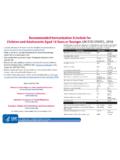
2 MLPrimary series doses 2 22 1 Additional doses for moderately or severely immunocompromised persons111n/aOnly mRNA vaccines are approved for additional dosesBooster doses n/a 111mRNA vaccines are preferredCOVID-19 vaccination scheduleCOVID- 19 vaccine Interim COVID-19 Immunization Schedule for Ages 5 Years and Older ( ) currently authorized or approved COVID-19 vaccinesPre-vaccination counseling Prior to vaccination: Provide the vaccine -specific Fact Sheet for Recipients and Caregivers Pfizer-BioNTech ( ), Moderna ( ), Janssen ( ). Inform vaccine recipients mRNA vaccines are preferred over Janssen COVID- 19 vaccine .
3 Counsel COVID- 19 vaccine recipients, parents, or guardians about expected reactions post-vaccination ( , pain and swelling at the injection site, fever, fatigue, headaches). Inform persons receiving mRNA COVID-19 vaccines, especially males ages 12-39 years, of the rare risk of myocarditis and/or pericarditis following receipt of mRNA COVID-19 vaccines and the benefit of COVID-19 vaccination in reducing the risk of severe outcomes from COVID-19.* Counseling should also include the need to seek care if symptoms of myocarditis or pericarditis occur after vaccination, particularly in the week following vaccination.
4 Inform persons interested in or receiving Janssen COVID- 19 vaccine of the risk and symptoms of thrombosis with thrombocytopenia syndrome (TTS), as well as the need to seek immediate medical care should symptoms develop after receiving Janssen vaccine .* A 3-week (Pfizer-BioNTech) or 4-week (Moderna) interval between the first and second dose continues to be the recommended interval for people who are moderately or severely immunocompromised, persons ages 65 years and older, and others who need rapid protection due to increased concern about community transmission. The small risk of myocarditis associated with mRNA COVID-19 vaccines, particularly in males ages 12-39 years, might be reduced and peak antibody responses and vaccine effectiveness may be increased with a longer interval; up to 8 weeks between Document for Interim Clinical Considerations for Use of COVID-19 Vaccines Currently Authorized or Approved in the United StatesAll currently authorized or approved COVID-19 vaccinesInterchangeability of vaccines In general, the same mRNA vaccine product should be used for all doses in the primary series.
5 In exceptional situations, for people 18 years of age or older, such as a contraindication to a second dose of mRNA vaccine or when the previous product cannot be determined or is not available, another FDA-approved or -authorized COVID- 19 vaccine may be used (administer at a minimum of 28 days). Only Pfizer-BioNTech vaccine products can be used in persons 5-17 years of age. The Pfizer-BioNTech formulation for children ages 5-11 years (orange cap) is not interchangeable with the Pfizer-BioNTech formulation for persons ages 12 years and older (purple or gray cap). Any FDA-authorized or -approved COVID- 19 vaccine can be used for the booster dose; mRNA vaccines are preferred.
6 When a different product is used the eligible population and dosing intervals are those of the vaccine used for the primary series ( #Interchangea). Coadministration with other vaccines COVID-19 vaccines may be administered without regard to timing of other vaccines, including simultaneous administration. Administer each injection in a different injection Severe allergic reaction ( , anaphylaxis) after a previous dose or to a component of the COVID- 19 vaccine History of a known diagnosed allergy to a component of the COVID- 19 vaccine Contraindication to one type of COVID- 19 vaccine (mRNA) is a precaution to other types of COVID-19 vaccines (Janssen) For the Janssen COVID- 19 vaccine , TTS following receipt of a previous Janssen vaccine (or other COVID-19 vaccines not currently authorized in the United States that are based on adenovirus vectors, , AstraZeneca)Precautions Immediate (within 4 hours exposure)
7 Non-severe allergic reaction to a previous dose or known (diagnosed) allergy to a component of the vaccine Immediate allergic reaction to any other vaccine or injectable therapy ( , intramuscular, intravenous, or subcutaneous vaccines or therapies [excluding subcutaneous immunotherapy for allergies, , allergy shots ]) For mRNA COVID-19 vaccines, history of myocarditis or pericarditis after a dose of an mRNA COVID- 19 vaccine For Janssen COVID- 19 vaccine , a history of GBSC onsiderations for all FDA-authorized or -approved COVID-19 vaccinesPersons receiving HCT and CAR-T-cell therapyPersons receiving immunosuppressive therapiesPersons with prior or current SARS-CoV-2 infection If received doses of COVID- 19 vaccine prior to or during HCT or CAR-T cell therapy, should be revaccinated with a primary series at least 3 months (12 weeks)
8 After transplant or CAR-T-cell therapy Whenever possible, COVID-19 vaccines should be administered at least 2 weeks before initiation or resumption of immunosuppressive therapies Defer vaccination until person has recovered from acute illness and criteria ( #CoV-19-vaccination) have been met for them to discontinue isolationPersons with history of multisystem inflammatory syndrome (MIS-C and MIS-A) from SARS-CoV-2 infection COVID-19 vaccines can be given. For persons who have had MIS-C or MIS-A from SARS-CoV-2 infection who have not yet received COVID- 19 vaccine , a conversation between the vaccine recipient, guardian, and Clinical team to discuss benefits and risks of receiving a COVID- 19 vaccine is encouraged.
9 Clinical recovery, including return to normal cardiac function, is an important factor when considering COVID-19 vaccination. Although CDC provides Considerations for a mixed series in exceptional circumstances for a primary or additional dose, this is still considered an administration error that requires VAERS reporting. Heterologous booster doses are allowed (mRNA vaccines preferred) and are not considered a vaccine Document for Interim Clinical Considerations for Use of COVID-19 Vaccines Currently Authorized or Approved in the United StatesConsiderations for all FDA-authorized or -approved COVID-19 vaccinesPersons who received passive antibody therapy (convalescent plasma/monoclonal antibodies) COVID-19 vaccination can be given at any interval following receipt of passive antibody therapy.
10 Persons should wait 2 weeks after COVID-19 vaccination before receiving tixagevimab/cilgavimab (EVUSHELD) for pre-exposure prophylaxis. Persons with a known SARS-CoV-2 exposure COVID-19 vaccines are not recommended for post-exposure prophylaxis. Persons should defer vaccination until quarantine period has ended. In certain circumstances to avoid missed opportunities for vaccination, vaccination during quarantine could be considered if they do not have COVID-19 symptoms or current infection, and appropriate infection and control procedures are in place. Persons who are pregnant, breastfeeding, trying to get pregnant, or might become pregnant in the future Are recommended to receive a COVID- 19 vaccine primary series, additional mRNA doses (if indicated) and a booster doseChildren and adolescents Are only eligible for Pfizer-BioNTech COVID- 19 vaccine Should receive the age-appropriate vaccine formulation.