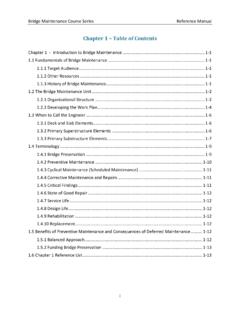
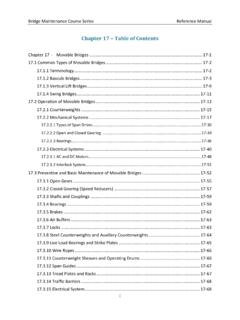
Transcription of Table of Contents CHAPTER 2: EXPLORING LINEAR …
1 8WB2 - 1 2014 University of Utah Middle School Math Project in partnership with the Utah State Office of Education. Licensed under Creative Commons, cc-by. Table of Contents CHAPTER 2: EXPLORING LINEAR RELATIONS (4 WEEKS) .. 2 ANCHOR PROBLEM: PROPORTIONALITY AND UNIT RATE .. 7 SECTION : ANALYZE PROPORTIONAL RELATIONSHIPS .. 9 Class Activity: Proportional Relationships .. 10 Homework: Proportional Relationships.. 15 Class Activity: Comparing Proportional Relationships .. 21 Homework: Comparing Proportional Relationships.
2 25 Class Activity: Proportional Relationships as LINEAR Relationships .. 28 Homework: Proportional Relationships as LINEAR Relationships .. 31 Self Assessment: Section .. 34 SECTION : LINEAR RELATIONS IN PATTERN AND 38 Class Activity: Connect the Rule to the 39 Homework: Connect the Rule to the Pattern .. 43 Class Activity: Representations of a LINEAR 45 Homework: Representations of a LINEAR Pattern .. 48 Class Activity: Representations of a LINEAR Context .. 51 Homework: Representations of a LINEAR Context.
3 54 Class Activity: Rate of Change in a LINEAR Relationship .. 57 Homework: Rate of Change in a LINEAR Relationship .. 60 Class Activity: More Representations of a LINEAR Context .. 63 Homework: More Representations of a LINEAR Context .. 68 Self-Assessment: Section .. 73 SECTION : INVESTIGATE THE SLOPE OF A LINE .. 77 Class Activity: Building Stairs and Ramps.. 78 Homework: Measuring the Slope of Stairs and Ramps .. 80 Class work: Dilations and 84 Homework: Dilations and Proportionality .. 87 Class Activity: Proportional Triangles and Slope.
4 90 Homework: Similar Triangles and Slope .. 93 Class Activity: Finding Slope from Graphs .. 94 Homework: Finding Slope from 96 Class Activity: Finding Slope from Two Points .. 98 Homework: Finding Slope from Two Points .. 102 Class Activity: Practice Finding the Slope of a Line .. 103 Homework: Practice Finding the Slope of a Line .. 104 Class Activity: Finding Slope from a 106 Homework: Finding Slope from a Context .. 108 Class Activity: The Equation of a LINEAR Relationship .. 110 Homework: The Equation of a LINEAR Relationship.
5 113 Class Activity: Use Dilations and Proportionality to Derive the Equation .. 116 Homework: Use Dilations and Proportionality to Derive the Equation .. 119 Class Activity: Use Dilations and Proportionality to Derive the Equation .. 120 Homework: Use Similar Triangles to Derive the Equation .. 124 Self-Assessment: Section .. 125 8WB2 - 2 2014 University of Utah Middle School Math Project in partnership with the Utah State Office of Education. Licensed under Creative Commons, cc-by. CHAPTER 2: EXPLORING LINEAR Relations (4 weeks) Utah Core Standard(s): Graph proportional relationships, interpreting the unit rate as the slope of the graph.
6 Compare two different proportional relationships represented in different ways. For example, compare a distance-time graph to a distance-time equation to determine which of two moving objects has a greater speed. ( ) Use similar triangles to explain why the slope m is the same between any two distinct points on a non-vertical line in the coordinate plane; derive the equation y mx for a line through the origin and the equation y mx b for a line intercepting the vertical axis at b. ( ) Construct a function to model a LINEAR relationship between two quantities.
7 Determine the rate of change and initial value of the function from a description of a relationship or from two (x, y) values, including reading these from a Table or from a graph. Interpret the rate of change and initial value of a LINEAR function in terms of the situation it models, and in terms of its graph or a Table of values. ( ) Academic Vocabulary: proportional relationship, proportional constant, unit rate, rate of change, LINEAR relationship, slope(m), translation, dilation, y-intercept(b), LINEAR , right triangle, origin, rise, run, graph, Table , context, geometric model, constant difference, difference Table , initial value, slope-intercept form.
8 CHAPTER Overview: Students begin this CHAPTER by reviewing proportional relationships from 6th and 7th grade, recognizing, representing, and comparing proportional relationships. In eighth grade, a shift takes place as students move from proportional LINEAR relationships, a special case of LINEAR relationships, to the study of LINEAR relationships in general. Students explore the growth rate of a LINEAR relationship using patterns and contexts that exhibit LINEAR growth. During this work with LINEAR patterns and contexts, students begin to surface ideas about the two parameters of a LINEAR relationship: constant rate of change (slope) and initial value (y-intercept) and gain a conceptual understanding of the slope-intercept form of a LINEAR equation.
9 This work requires students to move fluently between the representations of a LINEAR relationship and make connections between the representations. After EXPLORING the rate of change of a LINEAR relationship, students are introduced to the concept of slope and use the properties of dilations to show that the slope is the same between any two distinct points on a non-vertical line. Finally, students synthesize concepts learned and derive the equation of a line. 8WB2 - 3 2014 University of Utah Middle School Math Project in partnership with the Utah State Office of Education.
10 Licensed under Creative Commons, cc-by. Connections to content : Prior Knowledge: This CHAPTER relies heavily on a student s knowledge about ratios and proportional relationships from 6th and 7th grade. Students should come with an understanding of what a unit rate is and how to compute it. In addition they need to be able to recognize and represent proportional relationships from a story, graph, Table , or equation. In addition they must identify the constant of proportionality or unit rate given different representations. Future Knowledge: After this CHAPTER students continue to work with LINEAR relationships and begin work with functions.



![MISSISSIPPI [TABLE OF CONTENTS FOR CHAPTER 1: GENERAL]](/cache/preview/8/6/7/c/2/3/f/c/thumb-867c23fc8844610ce92dcaf0d67646c3.jpg)