Transcription of Understanding the Difference
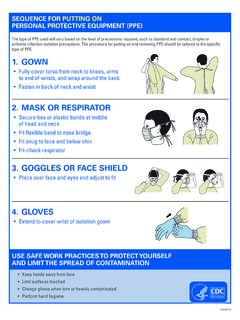
1 Understanding the DifferenceWARNING!Lorem ipsum dolor sit amet, consectetur adipiscing elit. Nullam scelerisque leo et eros convallis condimentum. Phasellus tincidunt, volutpat MaskN95 RespiratorTesting and ApprovalCleared by the Food and Drug Administration (FDA)Evaluated, tested, and approved by NIOSH as per the requirements in 42 CFR Part 84 Intended Use and PurposeFluid resistant and provides the wearer protection against large droplets, splashes, or sprays of bodily or other hazardous fluids. Protects the patient from the wearer s respiratory wearer s exposure to particles including small particle aerosols and large droplets (only non-oil aerosols).Face Seal FitLoose-fittingTight-fittingFit Testing RequirementNoYesUser Seal Check RequirementNoYes.
2 Required each time the respirator is donned (put on)FiltrationDoes NOT provide the wearer with a reliable level of protection from inhaling smaller airborne particles and is not considered respiratory protectionFilters out at least 95% of airborne particles including large and small particlesLeakageLeakage occurs around the edge of the mask when user inhalesWhen properly fitted and donned, minimal leakage occurs around edges of the respirator when user inhalesUse LimitationsDisposable. Discard after each patient should be discarded after each patient encounter and after aerosol-generating procedures. It should also be discarded when it becomes damaged or deformed; no longer forms an effective seal to the face; becomes wet or visibly dirty; breathing becomes difficult; or if it becomes contaminated with blood, respiratory or nasal secretions, or other bodily fluids from information provides clarification regarding respirator and mask use in workplaces in which employees are exposed to respiratory hazards, it is not specific for the COVID-19 for Disease Controland PreventionNational Institute for Occupational Safety and Health