Transcription of What is Depression? - Psychoeducation: Depression
1 Copyright 2013 The Regents of the University of Michigan. All Rights edited: 08/16/2021 PSYCHOEDUCATION: Depression What is Depression ?What is Depression ?Information for Clients and their FamiliesDepression is when normal feelings like being sad, down, grumpy, or irritable are very intense, go on too long and get in the way of normal life. Depressed feelings happen to everyone sometimes, especially after a loss or disappointment. When they happen too much and interfere with life get in the way of doing things you want to do and need to do is when it is important to get can be a specific episode or repeated episodes that are out of the ordinary for the person. The episode can be mild, moderate or severe. Severe depressions usually involve suicidal thoughts or behaviors.
2 In some cases, Depression can be is a very common mental health problem 5-10% of children have a major depressive episodeCauses of DepressionDepression isn t caused by any one thing but usually happens because of a combination of factors. It can be caused by stress, chronic illness, or chemicals in the brain (not working like they should). Stressful life events like the death of a loved one, a divorce, a move to a new area, or a breakup with a girlfriend or boyfriend can bring on depressive feelings. Certain times of life when there are many changes, like entering the teenage years, can be especially stressful and lead to Depression . Sometimes, Depression can seem to come out of the blue. Depression sometimes runs in families, so someone with a close relative who has Depression may be more likely to experience Self-critical thoughts of not being worth anything or not being lovable Thinking things can t change, are pointless and nothing is good enough Ruminating on negative thoughts, pessimism Thinking others can t or won t understand what you re going through Slow thinking, difficulty making decisions and remembering thingsSigns & SymptomsFeelings Sad mood, feelings of worthlessness, guilt, despair, hopelessness Irritability, anger, or hostility Feeling tired often, no energy, no motivation, boredom Extreme sensitivity to (and easily upset about)
3 Things that happen Difficulty concentrating, feeling sluggish or slow, not caring about things you used to care about Physical aches and pains such as headaches or stomach achesBehavior Difficulty sleeping or sleeping too much Avoiding friends, not socializing as much Crying about little things or crying lot Not doing things you used to enjoy, not being physically active Withdrawing, isolating, not communicating with others Unintentionally gaining or losing weight or a change in appetite Absences from school or a drop in school performance Talking about or trying to run away from home Using alcohol or substances Hurting self on purpose, attempting suicidePSYCHOEDUCATION: Depression What is Depression ? Copyright 2013 The Regents of the University of Michigan.
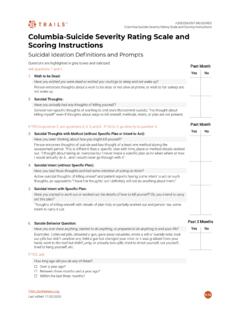
4 All Rights edited: 08/16/2021 When to Get Help for DepressionSince everyone feels sad or down sometimes, it is important to pay attention when the feelings, thoughts and behaviors are very intense, go on too long and get in the way of life. Some symptoms can be dangerous or risky so it is very important to talk to someone a parent, trusted adult, school counselor, doctor or nurse right help right away You have thoughts about killing yourself or thinking it would be better to be dead. You are doing things on purpose to hurt yourself. You are drinking and taking drugs to block out negative Depression comes back, so part of therapy is learning warning signs and having a plan to put into place. It also really helps when a caregiver is part of therapy and available to help support the new thoughts and behaviors.
5 If there is concern about safety, this will be a priority of your treatment. There will be a safety a Good Consumer1. Ask the therapist what kind of therapy is available; get a description of what is involved in the therapy ( , how long, how to know when better, what skills are learned).2. Is there practice? Remember, learning new thoughts and behaviors is the cure. therapy should include practice between Treatment for Depression always involves getting out in the world and doing activities. If the treatment does not involve help to be more active and involved it is not likely to If you don t start feeling better, start asking questions and consider for DepressionThree Types that Work1. Cognitive behavioral therapy (CBT). CBT is a time-limited, problem-focused intervention that teaches how to change unhelpful thoughts and how to learn new behaviors like taking steps toward goals, spending more time doing positive activities, and learning how to problem solve.
6 The therapist and client identify unhelpful thoughts and behaviors and come up with new ones to practice and try interpersonal therapy (IPT). IPT is a time-limited, problem-focused intervention that focuses on patterns of interactions with other people and teaches more positive ways to have relationships and friendships. The therapist and client identify unhelpful patterns of interactions and come up with new ones to practice and try Antidepressant medicine. These medicines work on the brain and uplift and calm down moods. Medicine is usually not the only treatment but can be taken along with doing majority of people who are depressed can recover and be back to normal with 10-20 sessions of therapy , often without medication. It is important to know that CBT and ITP are treatments that require active participation and practicing new ways of thinking and behaving, outside of the therapy sessions, in order to work.
7 Just like medicine only works when it is taken, therapy only works when people do things a new way. Treatment takes work, but it will pay off! Adapted from CBT Plus: Washington State Common Elements Initiative (Dorsey & Berliner)