Transcription of WRITING YOUR DECLARATION - Sikh Coalition
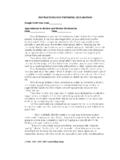
1 Asylum, Withholding of Removal, and Convention Against Torture FIRRP 04/07/03 1 WRITING your DECLARATION What is a DECLARATION ? A DECLARATION is a written statement that you can and should include with your application for Asylum, Withholding of Removal and Convention Against Torture. While the application asks you to answer specific questions about why you fear returning to your home country, a written DECLARATION will allow you to tell your entire story of what happened in your home country and why you fear returning, without being interrupted. You want to give the Judge detailed information about your claim, so that he can make a good decision about whether or not to give you protection in the United States.
2 A Good DECLARATION Will: Be specific and detailed to help paint a picture of your story for the Judge Be well organized and easy to understand Explain how you meet the legal definition of asylum, withholding of removal, or Convention Against Torture Contain facts that you are certain of, so that you will not contradict facts in the DECLARATION at your court hearing It should end with a statement that if you returned to your home country, you will be harmed, mistreated, tortured and killed (or whatever your circumstances would be.) After the conclusion, you must make a statement under penalty of perjury saying that everything is true. The DECLARATION does not need to be notarized What should be in the DECLARATION ?
3 A DECLARATION is really just a detailed story, explaining certain events which occurred during your life. your job is to make the Judge understand why you are afraid to return to your home country. your words must paint a picture for the Judge. He must be able to imagine through your words the torture, violence and fear that you suffered. When WRITING a DECLARATION you should be as detailed and specific as possible. Try to use descriptive words. your DECLARATION should be like a book or movie that tells the story of our life. Like a book or movie, it starts at the beginning with when and where you were born. After that, the story continues in a logical order, passing from one important event in your life to the next, showing experiences that you had.
4 It should continue to the present. You need to talk about your whole life, but you also have to choose the most important events and describe them in great detail. The judge, who is going to read your story, doesn t know anything about you, and probably has never been to your country and knows little or nothing about it. When you describe an important event in your life for example, a time when you were threatened, detained, tortured or hurt or that someone made you feel afraid you want to make the judge feel, see, smell, and hear what you saw, smelled and heard. Asylum, Withholding of Removal, and Convention Against Torture FIRRP 04/07/03 2 For example, suppose you lived in a small village in the mountains, in an area where there is a lot of fighting.
5 One night, a group of men came. They went into the houses and ordered all the people to come out. They mistreated people and told all the men they would have to join their group or that they would come back and kill them. Before describing this event in your DECLARATION , you should talk about your village and what started this whole problem to begin with. Who is involved in the fighting? What is it about? How did it affect your village before this event? How did it affect you? Did it affect your relatives? your neighbors? Which family members, and how? When you speak about the event, you should describe it in great detail. *When did it occur? *At what time? *What were you doing when these men came? *How were the men dressed?
6 *How many were they? *Had you seen them before? *When and where? *Were they armed? *What type of arms did they have? *Who were they? *Soldiers? *Guerrillas? *How do you know? *What did they look like? *What did the men do when they arrived? *Exactly what did they say? *How did they mistreat people? *Did they threaten you? *What threats did they make? *Did they touch or speak to you, your relatives, or your neighbors? How? *How much time did this incident last? *What happened afterwards? *How did it affect you and others in the village? Describe everything you saw, everything that happened, and everything you felt. What should the DECLARATION look like? You can type or print your DECLARATION on separate pieces of paper, and it may be anywhere from two to ten pages long.
7 It can be any length as long as it contains all the important information. Remember that if you use blank sheets of paper, you have to put your name, A number, the date, and your signature on each page. Also, write DECLARATION at the top. You should include it at the end of your Application. How do I answer the questions in the Application using the DECLARATION ? On the application form, when you answer each of the questions in Part C, you can answer in a few sentences and then write Please see DECLARATION . This way, you will have answered all these questions in one DECLARATION . Be sure that there is information in the DECLARATION that answers each of the questions in Part C. Where can I get more information about how to write a DECLARATION ?
8 Read the packet called HOW TO APPLY FOR ASYLUM AND WITHHOLDING OF REMOVAL which you can find in the library, especially pages 25, 26 and 27. Asylum, Withholding of Removal, and Convention Against Torture FIRRP 04/07/03 3 If you are applying for Asylum and Withholding of Removal: The purpose of Asylum and Withholding of Removal is to protect those who have been or are in danger of being threatened or harmed because of their political opinion, race, nationality, religion, or social group. You have to show that the harm was inflicted by the government, or groups that the government cannot or will not control. When you are WRITING your DECLARATION , remember that you need to explain who will harm you and why.
9 For example, if armed men dressed as soldiers beat you it is more likely that it has to do with something political. If you don t mention that the men wore uniforms or don t explain how you knew they were soldiers, the judge may think that it was a beating committed by ordinary criminals, and had nothing to do with politics or persecution. You should also mention everything that you said or did that drew or may draw the attention of the people you are afraid of. For example, if you participated in some group that is considered to be against the government, it is important to explain in detail the activities in which you participated. It is also important to explain that the government considers this group to be against the government and how you know this.
10 In addition, you should include facts that show that someone in the government is aware that you participated in this group, or that it is likely that they will find out. Without these facts, the judge may decide that the persecution you are afraid of is not for one of the reasons discussed above and you may lose your case. Try to answer the following questions in WRITING your DECLARATION : *What is the past harm that you or other people like you suffered. Be specific and detailed. *Why were you harmed in the past or why do you fear harm in the future? What was this persecution was based on? Was it because of your race, religion, nationality, membership in a particular social group, or political opinion?