11. Hypersonic Aerodynamics
W.H. Mason Hypersonic Aerodynamics 11-7 7/31/16 Figure 11-6. Sketch defining the hypersonic directional stability problem Now, for a high-speed flow, we will assume that the vertical tail is a two-dimensional surface with a constant pressure on each side, so that . We will consider two cases, one supersonic, the other hypersonic.
Download 11. Hypersonic Aerodynamics

Information
Domain:
Source:
Link to this page:
Documents from same domain

Chapter 4 Attitude Determination - Virginia Tech
www.dept.aoe.vt.eduEssentially all control systems require two types of hardware ... Sensors are used to sense or measure the state of the ... 4-6 CHAPTER 4. ATTITUDE DETERMINATION
Introduction to LabVIEW - Virginia Tech
www.dept.aoe.vt.eduIntroduction to LabVIEW. Course Goals •Become comfortable with the LabVIEW environment and data flow execution •Ability to use LabVIEW to solve problems
8. Introduction to Computational Fluid Dynamics
www.dept.aoe.vt.edu3/17/98 8 -1 8. Introduction to Computational Fluid Dynamics We have been using the idea of distributions of singularities on surfaces to …
Seven Steps of Systems Engineering (horizontal axis of ...
www.dept.aoe.vt.eduSeven Steps of Systems Engineering (horizontal axis of Activity Matrix) noi t inmie Df•Plebor Problem Definition Problem Definition – What is the problem, really? ... • System Analysis System Analysis System Analysis – How do each of these alternatives ... mechanical systems, colors on a map, contour lines on a map, physical model ...
Standard Test Method for Tensile Properties of Plastics1
www.dept.aoe.vt.edu4.1 This test method is designed to produce tensile property data for the control and specification of plastic materials.These data are also useful for qualitative characterization and for
Standard Test Method for Compressive Properties of Rigid ...
www.dept.aoe.vt.eduStandard Test Method for Compressive Properties of Rigid Plastics1 ... D6641/D6641M Test Method for Compressive Properties of Polymer Matrix Composite Materials Using a Combined ... 6.2 The standard test specimen for strength measurements, except as indicated in …
Chapter 3 Landing Gear Concept Selection - Virginia Tech
www.dept.aoe.vt.edu14 Chapter 3 Landing Gear Concept Selection 3.1. Introduction The design and positioning of the landing gear are determined by the unique characteristics associated with each aircraft, i.e., geometry, weight, and mission requirements.
Chapter 8 Weight Estimation - Virginia Tech
www.dept.aoe.vt.eduChapter 8 Weight Estimation 8.1. Introduction ... landing gear weight, and to establish crucial weight gradients to be used in the optimization ... The locations of structural components are established by means of known length and/or point locations, and each point-to-point
General guidelines for technical writing - Virginia Tech
www.dept.aoe.vt.eduGeneral Guidelines For Technical Writing Chris Hall 1. Avoid passive voice: The rocket has wings to produce lift rather than It was decided that the rocket would have wings to produce lift. Whenever you use the word “it” make sure that it refers to an object.
Chapter 5 Shock Absorber Design - Virginia Tech
www.dept.aoe.vt.edu41 Axle Piston Air Valve Upper Bearing Lower Bearing Seal Upper Chamber (Air) Metering Pin Orifice Orifice Support Tube Lower Chamber (Oil) Figure 5.1 Single-acting shock absorber…
Related documents

SAVONIUS VERTICAL WIND TURBINE: DESIGN, SIMULATION, …
www.aui.maThis project consists of designing, and testing the performance of a Savonius Vertical Wind Turbine. The project compares the performance of two designs: a classic barrel Savonius design, and the innovative design of Icewind, an Icelandic startup that …

SHEAR AND TORSION - MIT
web.mit.edu3Ludwig Prandtl (1875{1953) is best known for his pioneering work in aerodynamics. 4 J.P. Den Hartog, Advanced Strength of Materials, McGraw-Hill, New York, 1952 12
Principles of Helicopter Aerodynamics
assets.cambridge.orgof helicopter and rotating-wing aerodynamics. Dr. J. Gordon Leishman is the Minta Martin Chair of Engineering and Professor of Aerospace Engineering at the University of Maryland. He is a former aero-dynamicist at Westland Helicopters and has written extensively on topics in heli-copter aerodynamics. Dr.

Roberto!A.Bunge AA241X April132015 StanfordUniversity
adl.stanford.eduAerodynamics is harder, especially viscous effects: lifting surface drag, propeller & fuselage aerodynamics AA241X, April 13 2015, Stanford University Roberto A. Bunge . Flight Dynamics and Navigation Decoupling ... (e.g. symmetric flight with large vertical motion)
Chapter 2 Aircraft Structure - University of Florida
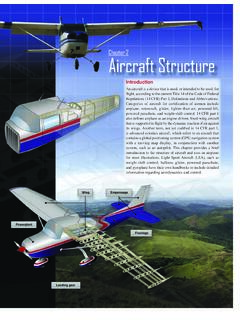
mae.ufl.eduIllustrates the pitch, roll, and yaw motion of the aircraft along the lateral, longitudinal, and vertical axes, respectively. Figure 2-1. The four forces. Lift and Basic Aerodynamics In order to understand the operation of the major components and subcomponents of an aircraft, it is important to understand basic aerodynamic concepts.

Axes / Control Surfaces - NASA
www.nasa.govVertical Axis. al Axis. For additional information on aerodynamics and the principles of flight in general, please refer to the Museum in a Box . lessons “Four Forces” and “Bernoulli Principle”.

Application of wind energy - An-Najah National University
www.najah.eduVertical wind turbines have a higher airfoil pitch angle, giving improved aerodynamics while decreasing drag at low and high pressures. Disadvantages of vertical wind turbines There may be a height limitation to how tall a vertical wind turbine can be built and how much swept
Chapter 3 Aerodynamics of Flight
www.faa.govAerodynamics of Flight Chapter 3. 3-2 Figure 3-1. Vector components of lift, drag, and weight (gravity). a Lift Thrust Vertical Weight Flightpath a a Horizontal Drag Aircraft angle Forces of Flight There are four forces that act upon an aircraft during straight-and-level flight. They are lift, gravity, thrust, and drag. Lift

Race Car Aerodynamics - KTH
www.mech.kth.seRace Car Aerodynamics - May 21st, 2010 Company LOGO Aerodynamic Tools •Barge boards and side boards •Bargeboard is a vertical panel situated longitudinally, between the front wheels and the sidepods •Bargeboards act primarily as flow conditioners, smoothing and redirecting the turbulent (or dirty)