CAUSATIVE FORM - Risorse didattiche
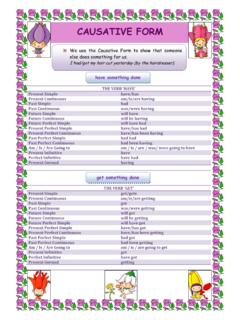
To form the present simple of the causative form, we use the present simple of the verb have, the object of the sentence and the past participle of the main verb Ex.: Peter has his flat cleaned once a week. For the other tenses, we do the same but using the corresponding tense of the verb have with that which we want to form.
Download CAUSATIVE FORM - Risorse didattiche

Information
Domain:
Source:
Link to this page:
Documents from same domain
LE CIVILTÀ DELLA MESOPOTAMIA - Risorse didattiche
www.risorsedidattiche.netELM EDI Discovery 4,pagina 26 Le civiltà della Mesopotamia 5 LA CITTÀ SUMERA Le città sorgevano vicino ai fiumi. Sulle rive dei fiumi i Sumeri costruivano: i moli, dove approdavano le barche, i magazzini, dove depositavano le merci. Alte mura di mattoni …
CHE COS’È LA STORIA? - Risorse didattiche
www.risorsedidattiche.netLa carta a pagina 8 del tuo libro, per esempio, mostra dove si è diffusa l’agricol-tura nella Preistoria. La legenda della carta ti spiega che cosa significano i segni, i disegni e i colori che vedi sulla carta, per esempio indica quali prodotti erano coltivati e in quale momento è iniziata la loro coltivazione.
lLe Regole e i Fondamentali del Basket
www.risorsedidattiche.netgiocatori) e le infrazioni(gli errori nel controllo del pallone, l'uscita dai limiti del campo, ecc.). Ad ogni violazione corrisponde una sanzione la perdita del possesso di palla per le infrazioni (svariate e di diversa entità in relazione alla gravità per …
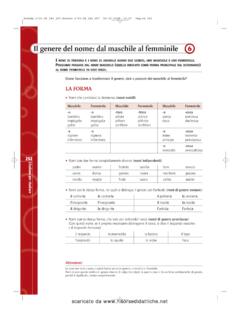
Il genere del nome: dal maschile al femminile 6
www.risorsedidattiche.net250 L italiano per studiare Il genere del nome T UTTI I NOMI IN ITALIANO HANNO UN GENERE GRAMMATICALE, CIOÈ SONO MASCHILI OPPURE FEMMI- NILI.QUANDO IL NOME INDICA UNA PERSONA O UN ANIMALE, È FACILE SAPERE QUAL È IL GENERE GRAMMATICALE, PERCHÉ QUASI SEMPRE COINCIDE CON IL SESSO REALE. Sono di genere maschile i …
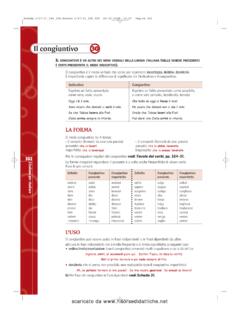
Il congiuntivo 30 - Risorse didattiche
www.risorsedidattiche.netIl congiuntivo Il congiuntivo è il modo verbale che serve per esprimere incertezza , dubbio , desiderio . È importante capire la differenza di significato tra l indicativo e il congiuntivo. Indicativo Congiuntivo Esprime un fatto presentato Esprime un fatto presentato come possibile, come vero, reale, sicuro o come solo pensato, desiderato ...
LE PROIEZIONI ASSONOMETRICHE - Risorse didattiche
www.risorsedidattiche.netArchitetti e ingegneri continuarono ad applicare l’assonometria nei disegni di rilievo e nei progetti di costruzioni militari . L’uso frequente nel campo militare è proprio all’origine del nome di assonometria militare, le cui caratteristiche sono state ereditate dall’attuale assonometria planometrica. Alla stessa matrice
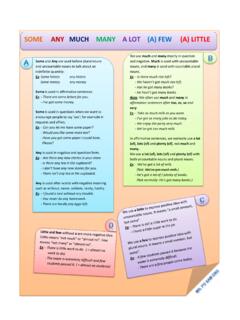
SOME ANY MUCH MANY A LOT (A) FEW (A) LITTLE
www.risorsedidattiche.neta little – has a positive meaning and in used for uncountables (a little milk) few - has a negative meaning - and is used for countables (few friends) little - has a negative meaning - and is used for uncountables (little time) Fill in a little or little 1. There’s just …
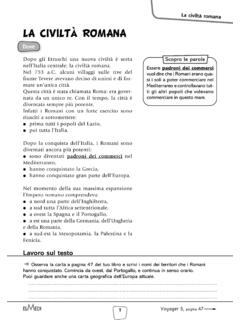
omana LA CIVILTÀ ROMANA - Risorse didattiche
www.risorsedidattiche.netQuando doveva prendere le decisioni più importanti, però, il re era aiutato dal Senato. Durante il periodo della monarchia i cittadini di Roma erano uomini liberi ed erano divisi in due classi sociali: i patrizi, che erano i nobili, e i plebei. I patrizi erano proprietari di terreni agricoli (campi da coltivare), pascoli, mandrie e greggi.
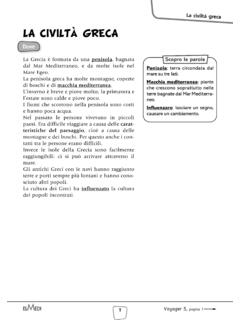
eca LA CIVILTÀ GRECA - Risorse didattiche
www.risorsedidattiche.netNell’antica Grecia l’esercito era formato da: la cavalleria, cioè quelli che combattevano a cavallo. la fanteria(gli opliti), cioè quelli che combattevano a piedi, Una squadra di opliti forma-va una falange. A pagina 12 del tuo libro puoi vedere la stauta di un oplita.
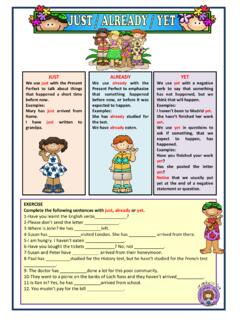
JUST ALREADY YET - Risorse didattiche
www.risorsedidattiche.netperfect tenses. you a message. negative sentences. Task 2 Write already, yet or Ø (if you do not have to put either of them). e.g.: _____. 5) picked _____? Yet Examples: o Have you seen it yet? o Kevin hasn’t eaten any cheese yet. Tenses We use it with perfect tenses. The sentence We use it in interrogative and It goes at the end of the ...
Related documents
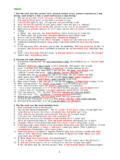
TENSES 1. Put the verb into the correct form, present ...
www.vrstevnice.com1 TENSES 1. Put the verb into the correct form, present simple (I do), present continuous (I am doing), past simple (I did) or past continuous (I was doing). 1 We can go out now. It isn´t raining (not/rain) any more. 2 Ann was waiting (wait) for me when I arrived (arrive). 3 I AM GETTING (get) hungry. Let's go and have something to eat.

Check Your English Vocabulary for Medicine
medicine.kaums.ac.irany form without the permission of the publishers. A CIP entry for this book is available from the British Library ISBN-10: 0 7136 7590 X ISBN-13: 978 0 7136 7590 0 eISBN-13: 978-1-4081-0238-1 Text typeset by A & C Black Printed in Italy by Legoprint A & C Black …
Basic Oxford - Oxford University Press
elt.oup.com1 Oxford Practice Grammar • Basic • Test A Potocoiae Oxford iersit Press 2019 Test A Tenses – present Kate and Amber are talking about their daily lives. Complete their conversation using the verbs in brackets ( ) in the Present Simple. Use short forms if you can.
Regular and Irregular Verbs ...
liduaeka.weebly.comEXERCISE 1 Selecting Verbs Underline the correct verb form. 1. In the twentieth century, two jilted men on opposite sides of the country (create, created) amazing structures to soothe their broken hearts. 2. In 1908, Baldasare Forestiere (built, builded) a four-room underground apartment in Fresno, California. 3.
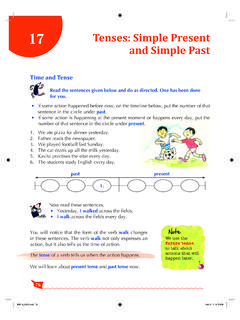
Tenses: Simple Present and Simple Past - Pearson
wps.pearsoned.comcorrect present tense form of the verb in brackets. 1. The elephant (use) its trunk to pick up things. 2. The boat (ferry) people to that island. 3. Cats (give) birth to many kittens at a time. 4. The old scientist (make) wonderful toys. 5. She (tidy) up the room every day. 6. The dog (obey) his master’s orders. 7.
Intermediate Oxford - Oxford University Press
elt.oup.comComplete the conversations. Put in the correct form of each verb. Use the Present Continuous or the Present Simple. ♦ A: Is Jessica in, please? B: Yes, but I think (I / think) she’s busy at the moment. She’s washing (she / wash) her hair. 1 A: (I / think) of buying a new car. B: But cars (cost) so much money.

Mixed Tenses 1 - Grammarbox
grammarbox.deTask 2: Two different tenses in one sentence. Put in the correct form of the verb in brackets. 1. Mary _____ (not, sleep) well since she _____ (visit) her grandma in the hospital last week. 2. At the moment they _____ (load) their cars because they _____ (leave) for Italy this evening
Related search queries
TENSES 1, Put the verb into the correct form, Present, 1 TENSES 1. Put the verb into the correct form, present simple (I do), present continuous, Check Your English Vocabulary for, Form, Oxford, 1 Oxford, Grammar, Tenses, The correct verb form, Correct present, The verb, The correct form, Verb, Mixed Tenses 1