
Environmental Control for Tuberculosis
The use of ultraviolet germicidal irradiation (UVGI) in the upper portion of rooms or areas is an environmental control measure that may be effective in killing or inactivating air-borne M. tuberculosis generated by persons with unknown or unsuspected infectious TB.
Download Environmental Control for Tuberculosis

Information
Domain:
Source:
Link to this page:
Documents from same domain
School Chemistry Laboratory Safety Guide
www.cdc.govSchool Chemistry Laboratory Safety Guide. October 2006. U.S. Consumer Safety Product Commission DEPARTMENT OF HEALTH AND HUMAN SERVICES. Centers for Disease Control and Prevention
Biosafety in Microbiological and Biomedical …
www.cdc.goviii. Foreword. Biosafety in Microbiological and Biomedical Laboratories (BMBL) quickly became the cornerstone of biosafety practice and policy in the United States upon first
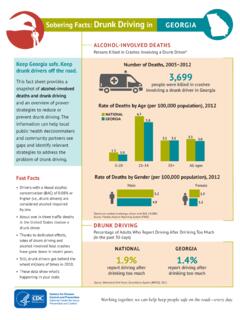
Sobering Facts: Drunk Driving in Georgia
www.cdc.govSobering Facts: Drunk Driving in GEORGIA Keep Georgia safe. Keep drunk drivers off the road. This fact sheet provides a snapshot of alcohol-involved deaths and drunk driving
ALCOHOLS III 1402
www.cdc.govALCOHOLS III: METHOD 1402, Issue 2, dated 15 August 1994 - Page 3 of 4 a. Remove and discard back sorbent section of a media blank sampler. b. Inject a known amount of analyte or DE stock solution directly onto front sorbent section
Fast Facts
www.cdc.govAny person working outdoors is at risk of exposure to poisonous plants, such as poison ivy, poison oak, and poison sumac. When in contact with skin, the sap oil (urushiol) of
Trans Fat: The Facts
www.cdc.gov• Read the Nutrition Facts label and ingredient list to compare foods. » Choose products with 0 grams trans fat. » Check the Ingredient List to see if there is any partially hydrogenated oil in the product.
ANTIBIOTIC RESISTANCE THREATS
www.cdc.govApr 23, 2013 · 6. ANTIBIOTIC RESISTANCE THREATS IN THE UNITED STATES, 2013. Executive Summary. Antibiotic Resistance Threats in the United States, 2013. is a snapshot of the complex problem
Chlorine Residual Testing
www.cdc.govChlorine Residual Testing Fact Sheet, CDC SWS Project 4 Methods to Test Free Chlorine in the Field in Developing Countries There are three main methods to test free chlorine residual in drinking water in the field
2018 Combined Recommended Immunization …
www.cdc.govRecommended Immunization Schedule for Children and Adolescents Aged 18 Years or Younger, UNITED STATES, 2018 Approved by the Advisory Committee on …
Traveling? Make Sure You Protect Yourself from …
www.cdc.govCS26201 Malaria transmission occurs throughout Malaria transmission occurs in some parts Malaria transmission is not known to occur Center for Global Health
Related documents
Experimenting with UV Sensitive Beads - Stanford University
solar-center.stanford.eduto ultraviolet A can results in the same damage as UV-B but to a lesser degree. Ultraviolet B light is needed for vitamin D synthesis in our bodies, but is a major cause of sunburn, skin cancer, cataracts, suppression of the immune systems, and photo-aging. Ultraviolet C light is extremely dangerous, but completely absorbed by the ozone in the

Laboratory Ultraviolet Light Sources - Princeton University
ehs.princeton.eduMany of the ultraviolet (UV) sources used in the laboratory emit high intensities of UV light, capable of producing painful eye and skin burns. This training presentation provides information about the hazards associated with UV exposure and the safety precautions to take when working with these sources.
60-2026 14 - C7027A, C7035A, C7044A, C7927A Minipeeper ...
esys.usThe C7027, C7035, and C7044 ultraviolet radiation sensing tubes have a life expectancy of 40,000 hours of continuous use within the flame detector's specified ambient temperature and voltage ratings. When an ultraviolet radiation sensing tube wears out, the UV sensor will fail to properly discriminate between flame conditions.
Agents Classified by the IARC Monographs
monographs.iarc.who.int000523-50-2 Angelicin plus ultraviolet A radiation 3 40, Sup 7 1987 000062-53-3 Aniline 3 27, Sup 7 1987 000090-04-0 ortho-Anisidine 2B Sup 7, 73 1999 000104-94-9 para-Anisidine 3 27, Sup 7 1987 000191-26-4 Anthanthrene 3 92, Sup 7 2010 000120-12-7 Anthracene 3 92, Sup 7 2010 000118-92-3 Anthranilic acid 3 16, Sup 7 1987

Pearson Edexcel International GCSE Physics
qualifications.pearson.comJan 11, 2018 · (c) Ultraviolet waves are used by bees to identify markings on flowers. (i) State another use of ultraviolet waves. (1)..... (ii) State a similarity and a difference between ultraviolet waves and visible light waves. (2) similarity

Space Based Astronomy Educator Guide pdf
www.nasa.govend through infrared, visible, ultraviolet, and x-rays to gamma rays on the high energy (short wavelength) end. Gases and other components of our atmosphere distort, filter, and block most of this radiation permitting only a partial pic-ture, primarily visible radiation and some radio waves, to reach Earth’s surface. Although many

Module 2 Spectroscopic techniques Lecture 3 Basics of ...
www.nptel.ac.inAbsorption of ultraviolet (UV) and visible radiation is one of the most routinely used analytical tools in life sciences research. The simplest application of UV/Visible radiation is to quantify the amount of a substance present in a solution.UV region of electromagnetic radiation encompasses the wavelengths ranging from ~10 nm ~400 –

紫外線防御剤としての酸化亜鉛の機能と開発
www.soc.co.jpAbstract : Recently the infuence of ultraviolet ray of UVA range (320 to 400nm) on human skin has been studied. So a sunscreen agent is expected to shield UVA as well as UVB (290 to 320nm). In this report, the transparency and the UV shielding properties of inorganic UV shielding agents are discussed. Consequently