Framework for Program Evaluation in Public Health
Division of Cancer Prevention and Control Aliki A. Pappas, M.P.H., M.S.W. Division of Oral Health National Center for Chronic Disease Prevention and Health Promotion Alison E. Kelly, M.P.I.A. Office of the Director National Center for Environmental Health Paul J. Placek, Ph.D. Office of Data Standards, Program Development, and Extramural Programs
Download Framework for Program Evaluation in Public Health

Information
Domain:
Source:
Link to this page:
Documents from same domain

School Chemistry Laboratory Safety Guide
www.cdc.govSchool Chemistry Laboratory Safety Guide. October 2006. U.S. Consumer Safety Product Commission DEPARTMENT OF HEALTH AND HUMAN SERVICES. Centers for Disease Control and Prevention
Biosafety in Microbiological and Biomedical …
www.cdc.goviii. Foreword. Biosafety in Microbiological and Biomedical Laboratories (BMBL) quickly became the cornerstone of biosafety practice and policy in the United States upon first
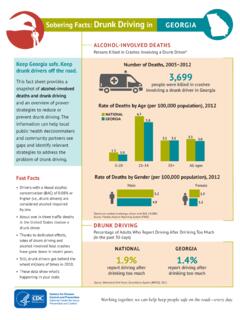
Sobering Facts: Drunk Driving in Georgia
www.cdc.govSobering Facts: Drunk Driving in GEORGIA Keep Georgia safe. Keep drunk drivers off the road. This fact sheet provides a snapshot of alcohol-involved deaths and drunk driving
ALCOHOLS III 1402
www.cdc.govALCOHOLS III: METHOD 1402, Issue 2, dated 15 August 1994 - Page 3 of 4 a. Remove and discard back sorbent section of a media blank sampler. b. Inject a known amount of analyte or DE stock solution directly onto front sorbent section
Fast Facts
www.cdc.govAny person working outdoors is at risk of exposure to poisonous plants, such as poison ivy, poison oak, and poison sumac. When in contact with skin, the sap oil (urushiol) of
Trans Fat: The Facts
www.cdc.gov• Read the Nutrition Facts label and ingredient list to compare foods. » Choose products with 0 grams trans fat. » Check the Ingredient List to see if there is any partially hydrogenated oil in the product.
ANTIBIOTIC RESISTANCE THREATS
www.cdc.govApr 23, 2013 · 6. ANTIBIOTIC RESISTANCE THREATS IN THE UNITED STATES, 2013. Executive Summary. Antibiotic Resistance Threats in the United States, 2013. is a snapshot of the complex problem
Chlorine Residual Testing
www.cdc.govChlorine Residual Testing Fact Sheet, CDC SWS Project 4 Methods to Test Free Chlorine in the Field in Developing Countries There are three main methods to test free chlorine residual in drinking water in the field
2018 Combined Recommended Immunization …
www.cdc.govRecommended Immunization Schedule for Children and Adolescents Aged 18 Years or Younger, UNITED STATES, 2018 Approved by the Advisory Committee on …
Traveling? Make Sure You Protect Yourself from …
www.cdc.govCS26201 Malaria transmission occurs throughout Malaria transmission occurs in some parts Malaria transmission is not known to occur Center for Global Health
Related documents

Human Papillomavirus: Biology and Pathogenesis - InTech
cdn.intechopen.comHuman Papillomavirus: Biology and Pathogenesis 5 The viral genome of the HPV consists of a single molecule of double-stranded and circular DNA, containing approximately 8000 base pairs and harboring an average of 8 open reading

2021 Adult Preventive Health Guidelines: Ages 19 through ...
content.highmarkprc.comThe USPSTF recommends screening for cervical cancer every 3 years with cervical ytology alone in women aged 21 to 29 years. For women aged 30 to 65 years, the USPSTF recommends screening every 3 years with cervical cytology alone, every 5 years with high-risk human papillomavirus (hrHPV) testing alone, or every 5 years with
Understanding Cervical Changes - National Cancer Institute
www.cancer.govNearly all cervical cancer is caused by a virus called . HPV (human papillomavirus). Cervical cell changes happen slowly. It can take many years for cells infected with HPV to develop into . cervical cancer. We have great tools to prevent cervical cancer. Cervical cancer . screening and HPV vaccination can prevent cervical cancer.
Cervical Cancer Causes, Risk Factors, and Prevention
www.cancer.orgNov 01, 2019 · factors to get regular screening tests to find cervical cancer early. Risk factors you can possibly change Human papillomavirus (HPV) infection Infection by the human papillomavirus1 (HPV)€is the most important risk factor for cervical cancer. HPV is a group of more than 150 related viruses. Some of them cause
Reproductive Tract Infections - Centers for Disease ...
www.cdc.govwomen are clearly at greater risk of infection and carry the greater burden of the disease. Each year thousands of women die from the sequelae of undiagnosed or untreated RTIs, including cervical cancer, ectopic pregnancy, acute and chronic infections of the uterus and fallopian tubes, and puerperal infections. Other sequelae include

Guidelines for Cervical Screening in New Zealand
www.health.govt.nzcause up to 70% of cervical cancer, are now registered for use in New Zealand. A publicly funded HPV immunisation programme will begin in September 2008 and it is expected that over time this will have a marked effect not only on the incidence of and mortality from cervical cancer, but also on the volumes
Your guide to Medicare preventive services.
www.medicare.govmonths if you’re at high risk for cervical or vaginal cancer, or if you’re of child-bearing age and had an abnormal Pap test in the past 36 months. Part B also covers Human Papillomavirus (HPV) tests (as part of Pap tests) once every 5 years if you’re 30-65 without HPV symptoms.
VIRUS DEL PAPILOMA HUMANO
www.medigraphic.comwarts or subclinical infection, and high-risk HPV types 16 and 18 common progressing to cervical cancer. As is known, the immune system is responsible for clarifying or clean most HPV infections, but in some cases can not get rid of it, this is where the most important is prevention by vaccination and early diagnosis Keywords: H.P.V, Human