Transcription of Correctional Industries in the Philadelphia Prisons …
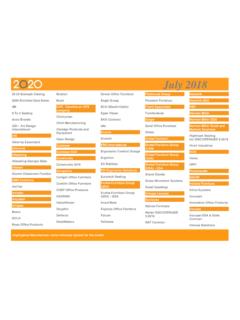
1 Correctional Industries in the Philadelphia Prisons today Page 2 Table of Contents seating Kitchen Carpentry Shop Embroidering Page 2 Table of Contents Call our friendly PhilaCor staff for furniture, catering, printing, dry-cleaning, laundering, engraving, rubber stamp, silk screening & embroidering needs. Furniture and Printing: 215-685-7256 Catering: 215-685-7122 Dry Cleaning: 215-685--8251 Fax: 215-338-3673 Call 215-685-7134 to visit our showroom at 8301 State Road and for all other services.
2 PhilaCor Mission Statement To train inmates within the Philadelphia Department of Prisons by providing real life work experiences, to equip them with transferable job skills and a work ethic that will help prepare them for post release reentry and employment, while operating in a business-like manner at minimal cost to the taxpayers. Philadelphia Department of Prisons Mission Statement To provide a secure Correctional environment that adequately detains persons accused or convicted of illegal acts: to provide programs, services, and supervision in a safe, lawful, clean, humane environment: and to prepare incarcerated persons for reentry into society in a frame of mind that will facilitate their becoming law-abiding citizens.
3 Page 4 prison Industry Correctional Industries in Philadelphia has been in existence since 1933. The first industry programs consisted of carpentry, printing & shoe-making shops and a farm at Holmesburg prison . During the depression, inmates produced clothes for the needy, and provided sheets, pillow cases and laundry services for city institutions. In 1975, the City of Philadelphia granted the Philadelphia Department of Prisons a one time lump sum of $1, to initiate a revolving fund for the industry program. Since that time the program s revenues have been deposited into the revolving fund and it s expenditures are paid out of it.
4 The program is not run with taxpayer dollars. In 1988, prison Industries was renamed PhilaCor in keeping with the state industry program (PENNCOR) and the federal industry program (UNICOR). In recent years, Correctional Industries has begun to recognize the importance of preparing the inmate to reenter society. With emphasis on acceptable work habits, the inmate workers in our shops are trained in the basic practices necessary to become good employees; such as learning to follow directions, working as a team, and becoming dependable . Many come to us having experienced little or no real success in life.
5 In our shops they have the opportunity to be successful at small tasks and build their skill level as they remain employed with us. After a set number of hours on the job, the workers are given a certificate of completion in recognition of their accomplishment. Today, PhilaCor produces more than 40,000 items a year for the prison , other city agencies and the school district. When you purchase goods and services from PhilaCor, you are getting quality products at competitive prices and you are also helping to provide opportunities for incarcerated adults to learn a viable trade that will increase their chances of success when they reenter our community.
6 We thank you for supporting our inmate training program. Correctional Industries in the Philadelphia Prisons in the 1950s Carpentry Shop Kitchen Print Shop Page 5 The Furniture Plant is divided into three main shops consisting of the Carpentry, Finishing and Upholstery Shops. There are an average of 55 inmates who work in these shops on a daily basis, produc-ing over 200 items per month. The casegoods manufactured in Phi-laCor s Furniture Plant are made of all wood with hardwood edging. We build three different styles of casegoods, use three wood species and five different finishes.
7 There are numerous fabric choices for seating . We have hand crafted many beautiful pieces of office furniture for various city agencies. We would like the opportunity to handcraft your office furniture. Custom pieces are available. The Graphics Plant has two main components, the Printing and the Bindery Operation. There are an average of 25 inmate workers in the Graphics Plant, who produce approximately million impressions a month. PhilaCor s Graphics Plant runs a full service Print Shop with the capability for full color copying, high speed black & white copying, single color and multi-color forms, carbonless forms, brochures, newsletters, annual re-ports, booklets, catalogs, single color and gold seal letterhead & envelopes as well as single color, full color and gold seal business cards.
8 Please call us to see if we can accommodate any of your printing needs. Give a man a fish and you feed him for a day Furniture Plant Page 5 Graphics / Print Plant Page 6 On average 5 inmate workers are assigned to the Culinary Arts Program and they produce over 2100 items per month. PhilaCor s Culinary Arts Program offers lunch sales inside the lobby of the Philadelphia Industrial Correctional Center on Tuesdays and Thursdays and is available to the Pris-on staff, fellow city workers and the general public. The program has also developed a very popular cater-ing service widely used by various city agencies.
9 Catering menus are available in this catalog on pages 20 and 21. Menus can be customized. Orders can be placed by calling the Culinary Arts office 215-685-7122. PhilaCor also offers certificates to inmates who complete basic skills training in the following shops: In the Barricade Shop, inmate workers are taught to cut, assemble, and paint barricade A-frames and tops. In the Dry Cleaning Plant, staff clothing articles such as pants, suits, skirts, dresses, coats, and jackets are professionally cleaned and pressed. In the General Products Plant, inmates are trained in the manufacturing of foam mattresses, cell sheets, towels, and wash cloths.
10 In the Laundry, inmate workers use industrial machines to wash and dry prison items such as cell sheets, inmate blues, blankets, jumpsuits and towels. We also provide services for city depart-ments and nonprofit agencies. Teach a man to fish and you feed him for a lifetime. Additional Shops Page 6 Culinary Arts Program Page 7 seating HUMANSCALE FREEDOM CHAIR Winner of nine international awards for its many revolutionary features and unparalleled ease of use. Freedom is the next generation of task seating . Its self-adjusting, advanced mechanisms let you focus on your work instead of fussing with your chair.

![[PSA] Philly: Classaction lawsuit brings changes in …](/cache/preview/1/4/c/8/8/d/5/c/thumb-14c88d5c5b2f1fee5e561fc7daceb397.jpg)