Transcription of Stages of Change - Therapist Aid
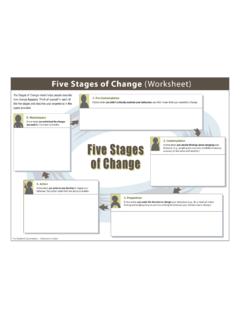
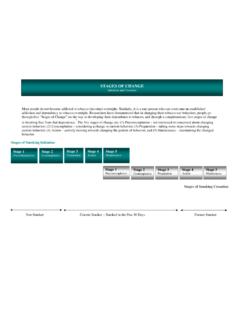
1 Stages of Change Precontemplation 1 The costs of the problem behavior (such as drug use) are not yet recognized. The individual is in denial and is not seriously considering changing their behavior. They may have made previous attempts to Change , but have since given up. Contemplation 2 The individual is experiencing ambivalence about Change . They can see reasons to Change their behavior, but they are still hesitant. The problem behavior continues. Preparation 3. The individual has decided to Change their behavior, and they begin to think about how to do so. During this stage they will begin to make minor changes to support their goal, but they might not have completely ended the unwanted behavior.
2 Action 4 Significant steps are taken to end the problem behavior. The individual might be avoiding triggers, reaching out for help, or taking other steps to avoid temptation. Maintenance 5 The changes made during the action stage or maintained. The individual may continue to face challenges, but at this point they have successfully changed their behavior for a significant period of time. Relapse After making changes, some individuals will return to their previous problem behavior. This can happen at any time during the previous Stages . Not everyone will experience relapse, but it is always a risk.
3 2012 Therapist Aid LLC Provided by