Transcription of Tax Implications on FRS 139 - CTIM
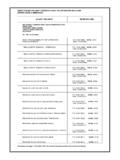
1 Draft for comments The Malaysian Institute of Certified Public Accountants TAX Implications RELATED. TO THE IMPLEMENTATION OF. FRS 139: FINANCIAL. INSTRUMENTS: RECOGNITION &. MEASUREMENT. Prepared by: Joint Tax Working Group on FRS. Draft for comments Tax Implications Related to the Implementation of FRS 139 : Financial Instruments: Recognition & Measurement Contents Page No. 1 Introduction 1. Background of FRS 139. Rationale 1. Scope of FRS 139 1. Definition of terms 1. Effective date 3. 2 Scope of the comments 3. 3 Changes introduced by the FRS regime 3. The MASB Regime 3.
2 The FRS Regime (FRS 139) 3. 4 Tax treatment before implementation of FRS 139 4. 5 Tax issues arising from FRS 139 implementation 5. Fair value concept 5. Accounting classification of financial assets 5. Computation of effective interest rate 6. Impairment loss for loans and receivables (LAR) and held-to-maturity 7. (HTM). Impairment loss for financial assets 8. Interest free loans and non-arm's length loans 9. Transaction costs 12. Hedging instruments/hedged items & hedge accounting 12. Derivatives/embedded derivatives 12. Transitional rules 14. 6 Tax treatments based on existing tax laws 14.
3 Revenue vs capital 14. Deductibility of expenses Section 33(1) 15. Realised vs unrealised 15. Discount and premium Section 27(1A) and 34C 15. Draft for comments Provision for doubtful debts/bad debts written off 15. capital allowances 16. 7 International tax practices 16. Hong Kong 16. New Zealand 16. Singapore 16. 8 Proposals/ Recommendations of tax treatments 17. Financial assets on revenue account 17. Assets classified as fair value through profit and loss (FVTPL) 17. Assets held to maturity (HTM) and loans and receivables (LAR) 17. Assets available for sale (AFS) 17.
4 Impairment losses 17. Financial assets on capital accounts 18. Financial liabilities 18. Liabilities classified as fair value through profit and loss (FVTPL) 18. Other liabilities measured at amortised cost using the EIR method 18. Transaction costs 18. Interest-free/non-arm's length loans 18. Interest free loan 18. Non-arm's length loan 19. Applicability of effective interest rate method (EIR) to transfer 19. pricing principle under Section 140. Hedging instruments 19. capital allowance 19. Transitional rules prior year adjustments 20. Financial assets and liabilities on revenue account 20.
5 Assets available for sale (AFS) 20. Concession of 5-year instalment plan 20. Taxpayers not required to comply with FRS 139 20. Draft for Comments Tax Implications Related to the Implementation of FRS 139 : Financial Instruments: Recognition & Measurement 1. INTRODUCTION. BACKGROUND OF FRS 139. Rationale The purpose of FRS 139 is to recognise and measure financial instruments. The key principles introduced by FRS 139 are:- Fair value measurement on financial instruments under FRS 139, certain financial assets and financial liabilities are required or allowed to be carried at fair value.
6 Recognition of all derivatives prior to FRS 139, derivative instruments ( foreign exchange contracts, options, forward contracts) were not recorded on the balance sheet. Only the premium and other costs paid were recorded. Hedge accounting prior to FRS 139, there was no rule in FRSs on hedge accounting (other than some limited rules per FRS 121) resulting in varying practice. Typically, the accounting treatment of the hedging instrument followed the accounting treatment of the underlying transaction. However, FRS 139 establishes rules and requirements governing when and whether transactions will qualify for hedge accounting.
7 Scope of FRS 139. a. FRS 139 is applicable to all types of financial instruments except those to which a separate FRS is applicable (for example: rights and obligations under leases to which FRS 117 applies, employers' rights and obligations under employee benefit plans to which FRS 119. Employee Benefits applies). b. FRS 139 applies to non-private entities ( publicly listed companies, their subsidiaries, associates, or companies jointly controlled by them). which are required to comply with FRS 139 for accounting purposes. Whereas private companies can either opt to adopt the FRSs in its entirety or continue to apply Private Entity Reporting Standards (PERS).
8 Until such time the Malaysian Accounting Standard Board (MASB). decides otherwise. Definition of terms Derivatives is a financial instrument or other contract with all three of the following characteristics: 1. Draft for Comments Tax Implications Related to the Implementation of FRS 139 : Financial Instruments: Recognition & Measurement - its value changes in response to the change in certain underlying variable;. - it requires no or little initial net investment that is smaller than would be required for other types of contracts that would be expected to have a similar response to changes in market factors; and - it is settled at a future date.
9 Effective interest rate (EIR) is the rate that exactly discounts estimated future cash payments or receipts through the expected life of the financial instruments. EIR method is a method of calculating the amortised cost of a financial asset or liability and of allocating the interest / finance income or interest /. finance expense over the relevant period. Financial instruments is any contract that gives rise to both a financial asset of one entity and a financial liability or equity instrument of another entity. Financial asset includes: - cash;. - contractual right to receive a financial assets - contractual right to exchange financial instruments under potentially favourable conditions - equity instrument of another entity Financial liability includes.
10 - contractual obligation to deliver another financial asset - contract obligation to exchange financial instruments under potentially unfavourable conditions Hedging instrument is a designated derivative or a designated non- derivative financial asset or non-derivative financial liability whose fair value or cash flows are expected to offset changes in the fair value or cash flows of a designated hedged item. Hedged item is an asset, liability, firm commitment, highly probable forecast transaction or net investment in a foreign operation that (a) exposes the entity to risk of changes in fair value or future cash flows and (b) is designated as being hedged.