Transcription of 2.9. PHARMACEUTICAL TECHNICAL PROCEDURES
1 EUROPEAN PHARMACOPOEIA disintegration of tablets and PHARMACEUTICALTECHNICAL PROCEDURES01/2008 disintegration OF TABLETSAND CAPSULESThis test is provided to determine whether tablets or capsulesdisintegrate within the prescribed time when placed in aliquid medium under the experimental conditions the purposes of this test, disintegration does notimply complete dissolution of the unit or even of its activeconstituent. Complete disintegration is defined as thatstate in which any residue of the unit, except fragments ofinsoluble coating or capsule shell, remaining on the screenof the test apparatus or adhering to the lower surface of thediscs, if used, is a soft mass having no palpably firm apparatus A for tablets and capsules that are notgreater than 18 mm long.
2 For larger tablets or capsules useapparatus A - TABLETS AND CAPSULES OF NORMAL SIZEA pparatus. The apparatus consists of a basket-rack assembly,a1litre,low-formbeaker,149 11mminheightandhavingan inside diameter of 106 9 mm for the immersion fluid,a thermostatic arrangement for heating the fluid between35 Cand39 C,andadeviceforraisingandloweringthebask et in the immersion fluid at a constant frequency ratebetween 29 and 32 cycles per minute, through a distanceof55 at the highest point of the upward stroke the wire meshremains at least 15 mm below the surface of the fluid, anddescends to not less than 25 mm from the bottom of thevessel on the downward stroke.
3 At no time should the topof the basket-rack assembly become submerged. The timerequired for the upward stroke is equal to the time requiredfor the downward stroke, and the change in stroke directionis a smooth transition, rather than an abrupt reversal ofmotion. The basket-rack assembly moves vertically along itsaxis. There is no appreciable horizontal motion or movementof the axis from the assembly. The basket-rack assembly consists of6open-endedtransparenttubes, having an inside diameter of mm and a mm thick; the tubes are held in a vertical positionby2plates,each90 ,with6holes,each24 2mmindiameter,equidistant from the centre of the plate and equally spacedfrom one another.
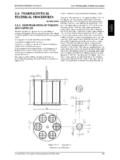
4 Attached to the under surface of thelower plate is a woven stainless steel wire cloth, which has aplain square weave with mm mesh apertures andwith a wire diameter of mm. The parts of theapparatus are assembled and rigidly held by means of 3 boltspassing through the 2 plates. A suitable means is providedto suspend the basket-rack assembly from the raising andlowering device using a point on its design of the basket-rack assembly may be variedsomewhat provided the specifications for the glasstubes and the screen mesh size are maintained. Thebasket-rack assembly conforms to the dimensions shown inFigure The use of discs is permitted only where specifiedor allowed.
5 Each tube is provided with a cylindrical mm thick and mm in diameter. Thedisc is made of a suitable, transparent plastic extend between the ends of the cylinder. One ofthe holes is centered on the cylindrical axis. The otherholes are centered 6 mm from the axis on imaginarylines perpendicular to the identical trapezoidal-shaped planes are cut into the wallof the cylinder, nearly perpendicular to the ends of thecylinder. The trapezoidal shape is symmetrical; its parallelsides coincide with the ends of the cylinder and are parallelto an imaginary line connecting the centres of 2 adjacentholes 6 mm from the cylindrical axis.
6 The parallel side ofthe trapezoid on the bottom of the cylinder has a mm from the cylinder s circumference. The parallelside of the trapezoid on the top of the cylinder has a lengthof mm and its centre lies at a depth of mmfrom the cylinder s circumference. All surfaces of the discare ,addadisctoeachtubeandoperate the apparatus as directed under Procedure. Thediscs conform to the dimensions shown in Figure use of automatic detection employing modified discsis permitted where the use of discs is specified or discs must comply with the requirements of densityand dimension given in this and, if prescribed, add a disc.
7 Operate the apparatususing the specified medium, maintained at 37 2 C, asthe immersion fluid. At the end of the specified time, liftthebasketfromthefluidandobservethedo sageunits:all of the dosage units have disintegrated completely. If1 or 2 dosage units fail to disintegrate, repeat the test on12 additional dosage units. The requirements of the test aremet if not less than 16 of the 18 dosage units tested B LARGE TABLETS AND LARGE CAPSULESA pparatus. The main part of the apparatus (Figure )is a rigid basket-rack assembly supporting 3 cylindricaltransparent tubes mm long, mm mm ininternal diameter, and with a wall thickness of tube is provided with a cylindrical disc ,madeoftransparentplastic with a relative density of Each disc ispierced by 7 holes, each mm in diameter, 1 vertically by 2 separate and superimposed rigid plasticplates 97 mm in diameter and 9 mm thick, with 3 spaced.
8 Attached to the under side of the lower plateis a piece of woven gauze made from stainless steel mm in diameter and having mesh apertures mm. The plates are held rigidly in position mm apart by vertical metal rods at the periphery. Ametal rod is also fixed to the centre of the upper plate toenable the assembly to be attached to a mechanical devicecapable of raising and lowering it smoothly at a constantfrequency of between 29 and 32 cycles per minute, throughadistanceof55 assembly is suspended in the specified liquid medium inasuitablevessel, liquid is such that when the assembly is in the highestposition the wire mesh is at least 15 mm below the surfaceof the liquid, and when the assembly is in the lowest positionthe wire mesh is at least 25 mm above the bottom of thebeaker and the upper open ends of the tubes remain aboveGeneralNotices(1)
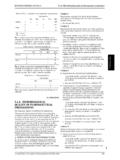
9 disintegration of tablets and capsulesEUROPEAN PHARMACOPOEIA of the liquid at 35-39 design of the basket-rack assembly may be Test 6 tablets or capsules either by using2 basket-rack assemblies in parallel or by repeating theprocedure. In each of the 3 tubes, place 1 tablet or capsuleand, if prescribed, add a disc; suspend the assembly inthe beaker containing the specified liquid. Operate theapparatus for the prescribed period, withdraw the assemblyand examine the state of the tablets or capsules. To pass thetest, all 6 of the tablets or capsules must have disintegration apparatus ADimensions in millimetres264 See the information section on general monographs (cover pages)EUROPEAN PHARMACOPOEIA disintegration of suppositories and pessariesFigure disintegration apparatus BDimensions in millimetres01/2008 disintegration OFSUPPOSITORIES AND PESSARIESThe disintegration test determines whether the suppositoriesor pessaries soften or disintegrate within the prescribedtime when placed in a liquid medium in the experimentalconditions described is considered to be achieved when.
10 A) dissolution is complete,b) the components of the suppository or pessary haveseparated: melted fatty substances collect on the surface ofthe liquid, insoluble powders fall to the bottom and solublecomponents dissolve, depending on the type of preparation,the components may be distributed in one or more of theseways,c)thereissofteningofthesamplet hatmaybeaccompaniedbyappreciablechangeof shapewithoutcompleteseparationof the components, the softening is such that the suppositoryor pessary no longer has a solid core offering resistance topressure of a glass rod,d) rupture of the gelatin shell of rectal or vaginal capsulesoccurs allowing release of the contents,e)