Transcription of 3.2. CONTAINERS - uspbpep.com
1 EUROPEAN PHARMACOPOEIA Glass CONTAINERS for pharmaceutical use01/2008 CONTAINERSA container for pharmaceutical use is an article that containsor is intended to contain a product and is, or may be, indirect contact with it. The closure is a part of the container (see General Notices section ) is so designedthat the contents may be removed in a manner appropriateto the intended use of the preparation. It provides a varyingdegree of protection depending on the nature of the productand the hazards of the environment, and minimises the lossof constituents. The container does not interact physically orchemically with the contents in a way that alters their qualitybeyond the limits tolerated by official container . A single-dose container holds aquantity of the preparation intended for total or partial useon 1 occasion container . A multidose container holds a quantityof the preparation suitable for 2 or more container . A well-closed container protects thecontents from contamination with extraneous solids andliquids and from loss of contents under ordinary conditionsof handling, storage and container .
2 An airtight container is impermeableto solids, liquids and gases under ordinary conditions ofhandling, storage and transport. If the container is intendedto be opened on more than 1 occasion, it must be so designedthat it remains airtight after container . A sealed container is a container closedby fusion of the material of the container . A tamper-proof container is aclosed container fitted with a device that reveals irreversiblywhether the container has been container . A container that is fitted with aclosure that prevents opening by USEG lass CONTAINERS for pharmaceutical use are glass articlesintended to come into direct contact with glassis highly transparent in the visible glassis obtained by the addition of small amountsof metal oxides, chosen according to the desired glassis a borosilicate glass containing significantamounts of boric oxide, aluminium oxide alkali and/oralkaline earth oxides. Due to its composition neutral glasshas a high hydrolytic resistance and a high thermal glassis a silica glass containing alkalimetal oxides, mainly sodium oxide and alkaline earth oxides,mainly calcium oxide.
3 Due to its composition soda-lime-silicaglass has only a moderate hydrolytic hydrolytic stability of glass CONTAINERS for pharmaceuticaluse is expressed by the resistance to the release of solublemineral substances into water under the prescribedconditions of contact between the inner surface of thecontainer or glass grains and water. The hydrolyticresistance is evaluated by titrating released alkali. Accordingto their hydrolytic resistance, glass CONTAINERS are classifiedas follows: Type I glass CONTAINERS : neutral glass, with a highhydrolytic resistance due to the chemical composition ofthe glass itself, Type II glass CONTAINERS : usually of soda-lime-silica glasswith a high hydrolytic resistance resulting from suitabletreatment of the surface, Type III glass CONTAINERS : usually of soda-lime-silica glasswith only moderate hydrolytic following italicised statements constitute generalrecommendations concerning the type of glass containerthat may be used for different types of pharmaceuticalpreparations.
4 The manufacturer of a pharmaceutical productis responsible for ensuring the suitability of the I glass CONTAINERS are suitable for most neutral, aqueous preparations whether or not forparenteral III glass CONTAINERS are in general suitable fornon-aqueous preparations for parenteral use, for powdersfor parenteral use (except for freeze-dried preparations)and for preparations not for parenteral CONTAINERS with a hydrolytic resistance higher thanthat recommended above for a particular type of preparationmay generally also be container chosen for a given preparation shall besuch that the glass material does not release substances inquantities sufficient to affect the stability of the preparationor to present a risk of toxicity. In justified cases, it maybe necessary to have detailed information on the glasscomposition, so that the potential hazards can be for parenteral use are normally presentedin colourless glass, but coloured glass may be used forsubstances known to be light-sensitive.
5 Colourless orcolouredglassisusedfortheotherpharmace uticalpreparations. It is recommended that all glass containersfor liquid preparations and for powders for parenteral usepermit the visual inspection of the improve hydrolytic resistance, to confer water-repellancy,etc. The outer surface may also be treated, for example toreduce friction and to improve resistance to abrasion. Theouter treatment is such that it does not contaminate theinner surface of the for type I glass CONTAINERS , glass containersfor pharmaceutical preparations are not to be for human blood and blood components mustnot be CONTAINERS for pharmaceutical use comply with therelevant test or tests for hydrolytic resistance. When glasscontainers have non-glass components, the tests apply onlyto the glass part of the define the quality of glass CONTAINERS according tothe intended use, one or more of the following tests for hydrolytic resistance are carried out to definethe type of glass (I, II or III) and to control its addition, CONTAINERS for aqueous parenteral preparationsare tested for arsenic release and coloured glass containersare tested for spectral (1) Glass CONTAINERS for pharmaceutical useEUROPEAN PHARMACOPOEIA RESISTANCET able Types of glassType of containerTest to be performedType I and Type II glass CONTAINERS (to distinguish from Type III glasscontainers)Test A (surface test)Type I glass CONTAINERS (to distinguishfrom Type II and Type III glasscontainers)TestB(glassgrainstest)or test C (etching test)
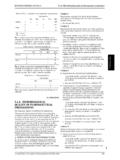
6 Type I and Type II glass containerswhere it is necessary to determinewhether the high hydrolyticresistance is due to the chemicalcomposition or to the surfacetreatmentTests A and B, or tests A and CThe test is carried out by titration of the extract solutionsobtained under the conditions described for tests A, B and an autoclave capable of maintaining a temperatureof 121 C 1 C, equipped with a thermometer or acalibrated thermocouple recorder, a pressure gauge, avent cock and a tray, of sufficient capacity to accommodateabove the water level the number of CONTAINERS neededto carry out the test;clean the autoclave vessel and allancillary equipment thoroughly before use with water R; burettes with a suitable capacity; one-mark volumetric flasks, with a capacity of 1000 ml; pipettes and beakers; conical flasks with a capacity of 100 ml and 250 ml; awater-bath; a metal foil ( aluminium, stainless steel).Flasks and beakers shall have been already used for the testor have been filled withwater Randkeptinanautoclaveat121 C at least for 1 h before being OF THE FILLING VOLUMET hefillingvolumeisthevolumeofwatertobefil ledinthecontainer for the purpose of the test.
7 For vials and bottlesthe filling volume is 90 per cent of the brimful capacity. Forampoules it is the volume up to the height of the and bottles. Select, at random, 6 CONTAINERS fromthe sample lot, or 3 if their capacity exceeds 100 ml, andremove any dirt or debris. Weigh the empty CONTAINERS withan accuracy of g. Place the CONTAINERS on a horizontalsurface and fill them withdistilled water Runtil about therim edge, avoiding overflow and introduction of air the liquid levels to the brimful line. Weigh the filledcontainers to obtain the mass of the water expressed to2 decimal places for CONTAINERS having a nominal volumeless or equal to 30 ml, and expressed to 1 decimal place forcontainers having a nominal volume greater than 30 the mean value of the brimful capacity in millilitresand multiply it by This volume, expressed to 1 decimalplace, is the filling volume for the particular container Place at least 6 dry ampoules on a flat, horizontalsurface and fill them withdistilled water Rfrom a burette,until the water reaches point A, where the body of theampoule declines to the shoulder (see Figure ).
8 Readthe capacities (expressed to 2 decimal places) and calculatethe mean value. This volume, expressed to 1 decimal place, isthe filling volume for the particular ampoule lot. The fillingvolume may also be determined by Filling volume of ampoules (up to point A)TEST A. HYDROLYTIC RESISTANCE OF THE INNERSURFACES OF GLASS CONTAINERS (SURFACE TEST)The determination is carried out on unused volumes of the test liquid necessary for the finaldetermination are indicated in Table Volume of test liquid and number oftitrationsFilling volume (ml)Volume of test liquidfor one titration (ml)Number of titrationsUp to 3 and up to 30 and up to Remove any debris or dust. Shortly before thetest, rinse each container carefully at least twice withwater Rand allow to stand. Immediately before testing empty thecontainers, rinse once withwater Rthen withwater R1and allow to drain. Complete the cleaning procedure fromthe first rinsing in not less than 20 min and not more than25 closed ampoules on a water-bath or in an air-oven atabout 50 C for approximately 2 min before opening; do notrinse before and heating.
9 The CONTAINERS are filled withwater R1up to the filling volume. CONTAINERS in the form of cartridgesor prefilled syringes are closed in a suitable manner withmaterial that does not interfere with the test. Each containerincluding ampoules shall be loosely capped with an inertmaterial such as a dish of neutral glass or aluminium foilpreviously rinsed withwater R. Place the CONTAINERS onthe tray of the autoclave. Place the tray in the autoclavecontaining a quantity ofwater Rsuch that the tray remainsclear of the water. Close the autoclave and carry out thefollowing operations: heat the autoclave to 100 C and allow the steam to issuefrom the vent cock for 10 min; close the ventcock and raise the temperature from 100 Cto 121 C at a rate of 1 C per min; maintainthetemperatureat121 1 Cfor60 1min;374 See the information section on general monographs (cover pages)EUROPEAN PHARMACOPOEIA Glass CONTAINERS for pharmaceutical use lower the temperature from 121 C to 100 C at a rate C per min, venting to prevent vacuum; do not open the autoclave before it has cooled down to95 C; remove the CONTAINERS from the autoclave using normalprecautions, place them in a water-bath at 80 C, andrun cold tap water, taking care that the water does notcontact the loose foil caps to avoid contamination of theextraction solution.
10 Cooling time does not exceed 30 extraction solutions are analysed by titration accordingto the method described Carry out the titration within 1 h of removal of thecontainers from the autoclave. Combine the liquids obtainedfrom the CONTAINERS and mix. Introduce the prescribedvolume (Table ) into a conical flask. Place the samevolume ofwater R1into a second similar flask as a to each flask ml ofmethyl red solution Rfor each25 ml of liquid. Titrate the blank M hydrochloricacid. Titrate the test liquid with the same acid until thecolouroftheresultingsolutionisthesame asthatobtainedfor the blank. Subtract the value found for the blank titrationfrom that found for the test liquid and express the results inmillilitres M hydrochloric acidper 100 ml. Expresstitration values of less than ml to 2 decimal places andtitration values of more than or equal to ml to 1 The results, or the average of the results if more thanone titration is performed, is not greater than the valuesstated in Table Limit values in the test for surfacehydrolytic resistanceMaximum volume of M HCl per100 ml of test liquid (ml)Glass containersFilling volume (ml)Types I and IIType IIIUp to 1 and up to 2 and up to 5 and up to 10 and up to 20 and up to 50 and up to 100 and up to 200 and up to B.