Transcription of Anticipation Guide - PALS
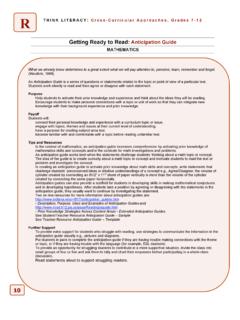
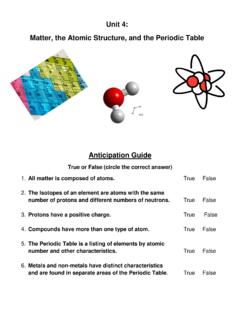
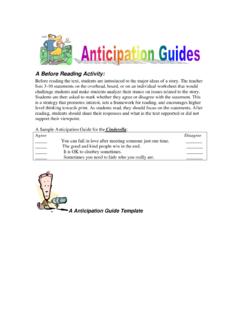
1 ProcedureMaterialsVirginia SOLsq Pre-K q Kindergarten q Grades 1 , , , GuideLiteracy Skills / Comprehension1. Identify major themes or ideas in the reading Write 3-5 statements related to selected themes or events that are likely to ignite Present the statements to the students on an overhead projector, the chalkboard, or as a Allow a few minutes for students to respond privately to each statement by indicating their agreement or disagreement on Engage the students in a discussion about the statements by asking for their reactions. This discussion should include reasons for Read the text.
2 Following the reading, continue discussion, including going back to the text to support their initial thoughts and new : Adapted from Literature-Based Reading Activities, 2/e Copyright (c) 1996 by Pearson Education. Reprinted by permission of the author. Yopp, H. K., & Yopp, R. H. (1996). Boston: Allyn and Bacon. 1. Anticipation Guide statementsProcedureSubmitted by: q Pre-K q Kindergarten q Grades 1 3 Virginia , , , , , , Before reading, write a word from the book or selection that represents the content Ask students to brainstorm their initial associations with the word or concept. What comes to mind when they read the word?
3 Write down students Read the selection. Then ask students to reflect on their initial Students may then reformulate their initial list, providing reasons based on the content of the story and the word s intended meaning in the selection. Students may weigh, reject, accept, revise and integrate any new ideas at this A word from a book or selection that represents the content MaterialsBrainstorm-Reflect-Reformulate (1-2-3)Comprehension / Literacy SkillsProcedureMaterialsVirginia SOLsq Pre-K q Kindergarten q Grades 1 , , MapsLiteracy Skills / Comprehension1. After reading part of a book, students identify at least 2 characters for analysis.
4 Each character s name is placed near the top of the box and character traits are listed under each Ask students to draw arrows from one square to the next, indicating the relationship between the Have students write words that describe the relationship between the characters next to the VARIATION: Students can take turns listing characters and traits. The teacher can write these in squares on the board. You may also create character maps similar to concept maps with a picture of the character in the : Adapted from Literature-Based Reading Activities, 2/e Copyright (c) 1996 by Pearson Education. Reprinted by permission of the author.
5 Yopp, H. K., & Yopp, R. H. (1996). Boston: Allyn and Bacon. 1. A single sheet of paper with 2-4 large squares on the page2. A book with 2-4 charactersProcedureq Pre-K q Kindergarten q Grades 1 3 Common ThreadsLiteracy Skills / Comprehension1. Common Threads helps students relate their experiences to the story/character prior to Before reading, ask students to think about a difficult situation they ve experienced. The situation may or may not be related to the Encourage students to talk about their situations/experiences. How did students cope with the situation? Did the experience change them in any way?
6 4. Explain to students that you re asking them to think about these experiences is that the main character in the book they will be reading faces a difficult or unusual situation. They will learn about the situation when they read the book, but first you want them to think about their own Write the headings problem, solution, and how changed? on the board. Model the activity by giving an experience from your own life. Elaborate orally on these responses as your write them. Tell students that you are writing quickly and not worrying about spelling or using complete sentences. 6. After modeling, have students write their own problems, solutions, and Let students share their experiences with the class.
7 You may want to record some on the board or a After ample discussion, introduce the story and relay the setting of the story to the class : Graves, M. F. (2003). Scaffolding reading eperiences for English-language learners , 52. 1. Read aloud with obvious conflict and solution MaterialsVirginia , , by: q Pre-K q Kindergarten q Grades 1 3 Graphic organizers help students organize their understanding of a text. Teachstudents how to use basic graphic organizers and allow them to choose whichhelps them best comprehend the story and/or non-fiction following templates:1. Before-During-After2. 3-2-13. Story MapMaterialsPhonological Awareness / ComprehensionGraphic OrganizersBefore, During, and AfterBeforeDuringAfterGraphic OrganizerName Title 3 things I interesting question I OrganizerName Title Story MapBeginningEnd/SolutionMiddle/ConflictG raphic OrganizerName Title ProcedureVirginia SOLsq Pre-K q Kindergarten q Grades 1 , , Entry JournalMaterialsLiteracy Skills / Comprehension1.
8 Paper2. Pencil3. Book1. Have students fold an by 11 inch lined sheet of paper in half Ask students to read a book or story and then select passages from this reading that are interesting or meaningful to Students write this important information on the left-hand side of the paper. Have students list the page number beside the passage Direct students to write their reactions to this information on the right-hand side of the paper, across from the listed Students may be given the opportunity to share their journal entries with their : Adapted from Literature-Based Reading Activities, 2/e Copyright (c) 1996 by Pearson Education.
9 Reprinted by permission of the author. Yopp, H. K., & Yopp, R. H. (1996). Boston: Allyn and Bacon. ProcedureMaterialsq Pre-K q Kindergarten q Grades 1 31. Newspapers for children to preview2. Sample book reviewsDeadline from News to Newspaper by Gail GibbonsThe Furry News: How to make a newspaper by Loreen LeedySource: Burke, M. (2008). 1. In this activity, children act as reporters and write a newspaper book review. 2. Review with students how a reporter writes and how newspapers are formatted. Discuss how reporters choose intriguing words. Students will want to choose words that make their book sound so exciting others will want to read it, Integrate the books covers when formatting the students newspaper articles.
10 You may photocopy the covers of the books, find images of the covers online, or take a picture of the student reading the Work with students to develop a snazzy headline for their article. A good way to begin the brainstorming process is to have students think of what is most exciting about their book and make that the focus. In the sample you provide, you may choose not to reveal how the story ends - a common convention of book Skills / ComprehensionExtra! Extra! Newspaper Book ReviewVirginia , , , SOLsq Pre-K q Kindergarten q Grades 1 , , Skills / ComprehensionInduced Imagery1. Select a passage to read aloud.