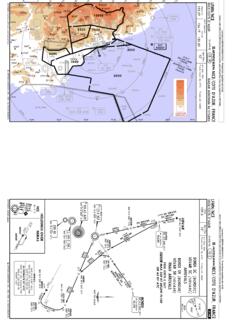
Transcription of JeppView : ESSA (61 charts)
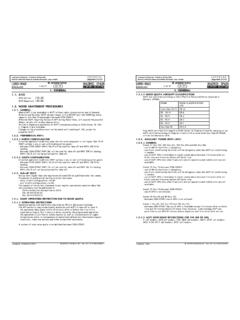
1 | JEPPESEN SANDERSON, INC., 2004, 2005. ALL RIGHTS MAY :ESSA/ARNJEPPESENARLANDASTOCKHOLM, SWEDEN1. GENERAL PARKING PARKING/DOCKING GUIDANCE2. SPEED NOISE ABATEMENT CAT II/III OPERATIONSP ilots should ensure that they have completed an early review and thoroughbriefing of airport and RWY layout before starting the achieve minimum RWY occupancy time, the expected RWY exit pointshould be nominated during the approach that it would be more efficient to use an exit situated farther away,than to try to exit too quickly, miss the exit, and then taxi slowly to the aim should be to achieve a normal touchdown, with progressive smoothdeceleration to exit, at a safe speed, at the nominated exit avoid go-arounds.
2 Vacate the RWY quickly and MINIMUM RWY OCCUPANCY RWY USAGEThe use of RWY 08 is restricted to those occasions when meteorological conditions or other circumstances eliminate the use of other RWY OPERATIONSTo reduce noise disturbances visual approaches are not allowed, andwhen cleared for ILS approach 2500' shall be maintained until established on available at stands 1 thru available at stands 31 thru parking aid available at stands 50 thru 56 and G141 thru available at stands 61 thru 68 and F28 thru stand graphic of visual docking guidance systems SAFEDOCK and SAFEGATE refer to 10-9 charts. If the docking guidance system is not activated the ACFT shall stop and contactthe handling company.
3 If docking guidance system is missing, the ACFT shall stopand a marshall shall be waited for. No follow-me car assistance to stands R5 thru R10. Follow guiding lights FMT airpark system in use. Stationary parking aid guidance available at stands G141 thru G146, G148 and S75 thru S79:RIGHT beacon indicates centerline guidance & LEFT beacon stop position when bothbeacons show a straight OTHER USE OF APUAPU shall not be used on parking unless required for engine start or adjustment of cabin heat. On these occasions APU must not be started earlier than 5 minutes before estimated time for push-back or taxiing. When the temperature outside exceeds 25^C and where air cannot otherwise be circulated in the cabin, APU may be started at a maximum of 20 minutes before estimated time for push-back or 01L right-hand 01R & 19L approved for CAT II/III, RWY 01L for CAT II operations, special aircrew & ACFT certification 250 KT below FL 100 unless otherwise to BRITISH AIRWAYS PLC.
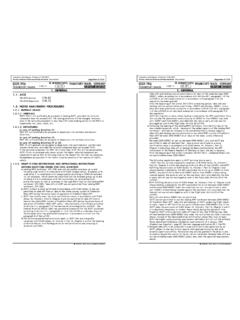
4 Printed from JeppView disc : After 0901Z this chart should not be used without first checking JeppView or MAY reindexed. RWY operations.| JEPPESEN SANDERSON, INC., 2004, 2005. ALL RIGHTS :ESSA/ARNJEPPESENARLANDASTOCKHOLM, SWEDEN2. ARRIVALWhen respective RWY is in use the following distances and exits will be used: ExitTypeACFTDist from TAXI PROCEDURESL anding ACFT RWY 01R/19L will be instructed to taxi via TWY U or TWY W. They will be instructed from Tower to contact ARLANDA Ground to receive taxiclearance to procedure requires a minimum separation of 2000m between successiveACFT arrivals on the same RWY. It is valid for arriving ACFT with turbulencecategory MEDIUM and preceding landing with turbulence category MEDIUMor LIGHT.
5 The following conditions apply:- at DAY- visibility at or above 5000m- cloudbase at or above 1000'- RWY should not be contaminated (snow, slush, ice, water) In order to minimize go-around it is essential that landing ACFT vacate the RWYas soon as possible, in accordance with MINIMUM RWY OCCUPANCY LANDING CLEARANCE BASED ON REDUCED RWY SEPARATIONYBYDYFYHYJYKWEWFWG or WHXEXFWDWCWB or WAYJYGYEYCYBYAXEXCXA90^33^Rapid exitRapid exit90^90^Rapid exitRapid exit90^90^90^Rapid exitRapid exit90^90^33^Rapid exitRapid exit90^90^90^Rapid exit30^lightlight/mediumallmedium/heavym edium/heavyheavyallmedium/heavymedium/he avylight/mediummedium/heavyallmedium/hea vymedium/heavylightlight/mediumallmedium /heavymedium/heavyheavylightallmedium/he avy2664'(812m)3852'(1174m)5407'(1648m)73 10'(2228m)
6 8241'(2512m)10,830'(3301m)5482'(1671m)70 44'(2147m)8202'(2500m)4413'(1345m)8202'( 2500m)5482'(1671m)7044'(2147m)8202'(2500 m)2667'(813m)3858'(1176m)5410'(1649m)745 1'(2271m)8241'(2512m)10,830'(3301m)3888' (1185m)6148'(1874m)8202'(2500m)Licensed to BRITISH AIRWAYS PLC, . Printed from JeppView disc : After 0901Z this chart should not be used without first checking JeppView or MAY | JEPPESEN SANDERSON, INC., 2004, 2005. ALL RIGHTS reindexed. Start-up :ESSA/ARNJEPPESENARLANDASTOCKHOLM, SWEDEN3. RWY 01L/19R or RWY 08/26De-icing is conducted at stand or other defined apron areas. At Terminal 2de-icing shall take place in pushed back RWY 01R/19 LDe-icing must be conducted on apron M and ATC must be informed whenrequesting push-back/taxi START-UP, PUSH-BACK & TAXI PROCEDURESDe-iced ACFT may not taxi on TWY U and TWY W.
7 Not valid for ACFT using onlypreventive de-icing. Preventive de-icing method is approved at all de-icing areasand at Terminal 2 to environment RWY 19L will be used for departures at NIGHT (2200-0700LT)when wind speed and direction so 19R will be allowed as departure RWY at NIGHT (2200-0700LT) only forperformance reasons. Before entering de-icing apron M "Iceman" shall be contacted on whenso instructed by ARLANDA Ground. The ACFT stop position is indicated by anilluminated yellow leading line. When stopped, the ACFT will have the yellowleading line across the cockpit. During de-icing ARLANDA Ground frequency shallbe monitored.
8 After de-icing and "all clear" signal, taxi clearance shall berequested from ARLANDA is generally required for all JET-ACFT, unless parked on apron Rstand R9C or apron S stand S71 thru S79. Power-back as an alternative topush-back is not allowed. When delayed by calculated take-off time (CTOT), ACFT must be orderedto push and hold due to stand capacity. Instructions will be given by holding positions on RWY's 01L, 19R, 08 and apron M will be used. Start-up, push-back and taxiing is subject to prior permission from ACFT position shall be stated in the initial call. Frequency will begiven by ARLANDA Clearance Delivery. Departing ACFT RWY 01R/19L will be instructed to taxi via TWY U or TWY TAXIROUTES shall be followed.
9 DEPARTING ACFTATC clearance shall be requested from ARLANDA Clearance Delivery not earlierthan 10 minutes before estimated start-up. ACFT type, position and designatorincluding QNH for ATIS broadcast latest received shall be stated in the initialcall. If an other RWY than the RWY-in-use is required for performance reasons thisrequest shall be made in connection with request for ATC clearance fromARLANDA Clearance Delivery. ACFT will be cleared via SID from the requestedRWY, possibly to another exit point than that stated in the flight plan. If suchclearance has been received, vectoring can be expected to the exit point statedin the flight plan.
10 When receiving ATC clearance from ARLANDA Clearance Delivery ACFT will beinstructed which frequency to call for push-back and/or taxi clearance. Whenrequesting push-back or taxi clearance the position shall be stated. Permissionfor push-back and/or taxi may only be requested if the ACFT is ready forimmediate action when approved. Take-off from intermediate position shallalways be requested from taxi time shall be estimated to 15 min. Longer time should be consideredwhen departing RWY 01R/19L, especially when de-icing on apron M is required. Departing ACFT shall change frequency to STOCKHOLM Control only wheninstructed by Tower.