Example: marketing
Moon Phase Flip Books - science-class.net
Moon Phase Flip Books Background Information: As the moon circles the Earth, the shape of the moon appears to change; this is because different amounts of the illuminated part of the moon are facing us.
Tags:
Information
Domain:
Source:
Link to this page:
Documents from same domain

Interactive Digestive System Review - science-class.net
science-class.netInteractive Digestive System Review Digestion begins in the _____. Teeth grind up food into smaller pieces. This is called mechanical digestion. Saliva breaks down _____. This is a type of chemical digestion. Saliva is found in the _____ ...

penny drops - science-class.net
science-class.netPenny Drops 2 M. Poarch – 1997 / 2004 http://science-class.net Compare your results to the results of your classmates. Did everyone in the class

Drops on a Penny Lab - science-class.net
science-class.net6th grade science Baker 2010/2011 Adapted from Penny Drops http://www.science-class.net/Lessons/NOS/penny_drops.pdf Testing Liquid B is 75% Water & 25% Soap 1.
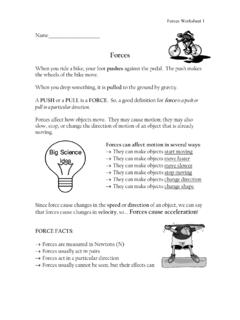
Big Science Idea - science-class.net
science-class.netForces Worksheet 1 Name_____ Forces When you ride a bike, your foot pushes against the pedal. The push makes the wheels of the bike move. When you drop something, it is pulled to the ground by gravity. A PUSH or a PULL is a FORCE.So, a good definition for force is a push or pull in a particular direction.

A Guide to Teaching Earth System Science
science-class.netThe scope of Earth Science is sometimes limited to the study of geology and some closely allied fields, such as oceanography. The Mission to Planet Earth calls for an interdiscipli-nary approach including biology, chemistry, and physics. 1 OUR MISSION TO PLANET EARTH A Guide to Teaching Earth System Science Introduction Earth as a System
Related documents
SCUSD Curriculum Map High School Mathematics Common …
d2qrgk75cp62ej.cloudfront.netHigh School CCSS Flip Book. SCUSD Curriculum Map High School Mathematics 1 7 Essential Questions Suggested Assessments for Learning ... SCUSD Curriculum Map High School Mathematics 1 . SCUSD Curriculum Map High School Mathematics 1 …
NCA COMPETITION RULE BOOK FOR SCHOOL TEAMS
nca.s3.varsity.com.s3.amazonaws.comNCA COMPETITION RULE BOOK FOR SCHOOL TEAMS. NCA SENIOR & JUNIOR HIGH SCHOOL NATIONAL CHAMPIONSHIP. Dallas, Texas. ... one of which is a Braced Flip Transition and Multiple Extended Structures Layouts or ... For High School and Junior High teams these forms must be notarized by school administration. The
Pewaukee High School - userweb.pewaukee.k12.wi.us
userweb.pewaukee.k12.wi.usPewaukee High School 2018-2019 School Supply List Art AP Studio Art ... th Edition) –not a school-owned book PHS purchases this book/flash card set; the cost of this book will be added to student’s accounts ... Lyre and flip folder for specific instrument (from a
Common Core State Standards for Mathematics Flip Book …
katm.orgCommon Core State Standards for Mathematics Flip Book Grade 2 Updated Fall, 2014 This project used the work done by the Departments of Educations in Ohio, North Carolina, Georgia, engageNY,
The Electromagnetic Spectrum - T E Harrington Middle School
hms.mtlaurelschools.orgYou need to remember: the names of the waves, which ones have high or low frequencies the order they fit into the electromagnetic spectrum All of these are "electromagnetic waves".
A Learning Activity for The Scoop on Soils Getting To Know ...
static.nsta.orgsample in a jar and by creating a soil profile flip chart. Student Outcomes After completing this activity, students will know about soil’s different properties ... book: The Scoop on Soils For each student group: samples (sand, ... • Getting to Know Soils Student Activity Sheet 1 (one per student) Part 2: • A soil sample from a site near ...

How can you use Transformational Geometry to create an ...
www.danielsroar.weebly.comHow can you use Transformational Geometry to create an animation? Your task in to create an animation flip book or PowerPoint slide show that shows all four
Steven Butler
orion.math.iastate.edubook of trigonometry (note there are several inexpensive problem books available for trigonometry to help supplement the text of this book if you find the problems lacking in number).
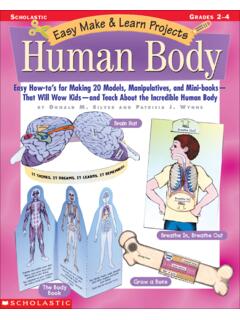
E a s y M a k e & Learn Projec - A Habitat For Learning
www.ahabitatforlearning.orgThe models and manipulatives in this book allow you and your students to investigate the human body’s structures and functions. The models in each chapter focus on a particular system of the body. The chapters are independent and can be used in any order.
Activity Title: Introduction to Ocean Zones - COSEE.net
www.cosee.netIntroduction to Ocean Zones -- 1 Activity Title: Introduction to Ocean Zones Learning Objectives Students will create a diagram of the ocean zones and determine what organisms live in each zone.
Related search queries
Curriculum Map High School Mathematics, High School, Flip book, NCA COMPETITION RULE BOOK, School, Flip, High, Pewaukee High School, Book, Common Core State Standards for Mathematics Flip Book, The electromagnetic spectrum, A Learning Activity for The Scoop, Can you use Transformational Geometry to, Trigonometry, Activity Title: Introduction to Ocean Zones