Transcription of Suprascapular Nerve Block: Important Procedure in …
1 Rev Bras Anestesiol SPECIAL ARTICLES2012; 62: 1: 96-10496 Revista Brasileira de Anestesiologia Vol. 62, No 1, January-February, 2012 Received from the Universidade Federal de Goi s, MSc Student in Healthcare Sciences at Faculdade de Medicina - Univesidade Federal de Goi s (UFG); Professor at the Department of Orthopedics and Traumatology Department, Faculdade de Medicina, UFG2. MD, UFG3. PhD, Public Health; Professor at the of Graduation Program, Faculdade de Medicina UFG4. PhD, Healthcare Sciences; Specialist in Cardiology by SBC/AMBS ubmitted on: March 15, on: May 19, to: Dr. Marcos Rassi Fernandes Av.
2 Azal ias Qd. 10 Lt. 20 Res Jardins Viena Ap de Goi nia74935187 Goi nia- Go, Brazil E-mail: ARTICLESS uprascapular Nerve block : Important Procedure in Clinical PracticeMarcos Rassi Fernandes 1, Maria Alves Barbosa 2, Ana Luiza Lima Sousa 3, Gilson Cassem Ramos 4 Summary: Fernandes MR, Barbosa MA, Sousa ALL, Ramos GC Suprascapular Nerve block : Important Procedure in Clinical and objectives: Shoulder pain is a frequent complaint that results in great functional disability in the affected shoulder as well as the decrease in patients quality of life. Suprascapular Nerve block is an effective therapeutic method and has been increasingly used by anesthe-siologists both for regional anesthesia and postoperative analgesia of surgeries carried out in this articulation, which justifies this review, whose main purpose was to describe the applied technique and clinical indications.
3 Content: It is presented the anatomy of Suprascapular Nerve , since its brachial plexus origin until its terminal branches, as well as general charac-teristics and technique employed to carry out the block of this Nerve , main drugs used, volume and situations that give rise to its applications. Conclusions: Suprascapular Nerve block is a safe and extremely effective Procedure in shoulder pain therapy. It also has an easy reproducibility and has been very used by professionals of many medical specialties. When it is well-indicated, this method must be taken into consideration. Keywords: Anesthesia, Conduction; Shoulder Pain; Anatomy, Regional; Anesthetics, Local.
4 2012 Elsevier Editora Ltda. All rights Nerve block (SSNB) is a safe and effective me-thod to treat pain in chronic diseases that affect the shoulder, like irrecoverable injury of rotator cuff, rheumatoid arthritis, calcific tendinitis, cancer, stroke sequels and adhesive cap-sulitis 1,2. Shoulder pain is a frequent complaint among elderly patients, which leads to a great functional disability and decre-ase in their quality of life. The prevalence in general popula-tion is approximately 20% therapeutics has been increasingly used by anesthe-siologists both for postoperative analgesia of surgeries car-ried out in this region, since pain, often severe, interferes with the rehabilitation process 4-6.
5 Other health care providers, like orthopedists, rheumatologists, neurologists and pain specia-lists also use this method for the desired analgesic effect in their patients 1,7, is Important to point out that in the last two decades the-re has been an increase in regional anesthesia application in anesthetic practice with regard to peripheral Nerve block . This technique included in this context, despite having low cost and easy reproducibility, is restricted by the lack of training of professionals in the area ASPECTS The Procedure can be performed in ambulatory and was ini-tially described by Wertheim and Rovenstein, in 1941.
6 They applied it in patients with chronic shoulder pain, although diag-nosis had not been made. They stated that it was necessary to apply it as a previous resource to manipulation of affected region and advised injection of 5 mL of procaine 2%, associa-ted with 5 mL of an oily analgesic solution directly in the su-prascapular incisure, site where Suprascapular Nerve passes under superior transverse scapular ligament. The effect dura-tion was 4-6 weeks 10. The article only described the techni-que to carry out SSNB. Therefore, it was not a clinical trial in which possible complications of method could be detected Nerve ANATOMYS uprascapular Nerve is a mixed Nerve , both motor and sensi-tive, originated in upper trunk of brachial plexus, C5 and C6 roots, receiving in over 50% contributions of fourth cervical root.
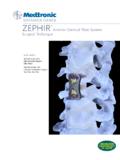
7 It crosses the deep posterior triangle of neck, below omohyoid muscle and trapezium, entering the Suprascapular incisure below the superior transverse scapular ligament (Figure 1). Suprascapular artery and vein run through abo-ve this ligament. The Nerve provides two motor branches for supraspinatus muscle and sensitive branches to acromiocla-RBA - 62-01 - 12 - 96 RBA - 62-01 - 12 - 961/9/2012 10:55:51 AM1/9/2012 10:55:51 AMSUPRASCAPULAR Nerve block : Important Procedure IN CLINICAL PRACTICE Revista Brasileira de Anestesiologia 97 Vol. 62, No 1, January-February, 2012vicular and glenohumeral articulation.
8 It continues its descen-ding obliquous path bypassing the spinoglenoid incisure, un-der the inferior transverse scapular ligament present in 50% of people. It follows then towards the infraspinatus fossa, in which it provides three to four motor branches for infraspina-tus muscle 7 (Figure 2). The sensitive components innervate upper and posterior part of capsule of the shoulder in addition to the acromioclavi-cular articulation, coracoclavicular ligament and subacromial bursa. They provide 70% of shoulder articulation sensitivity, as the rest take place through axillary Nerve branches sensitive branches emerge from Suprascapular ner-ve before and after passing below superior transverse scapu-lar ligament 13.
9 Two to three of them pass through the scapular incisure and reach the base of coracoid process, where they perforate supraspinatus muscle, extending towards subacro-mial bursa 6. To obtain the interruption of sensory impulses of the involved structures, it is Important to know these anatomic details so that SSNB develops in a healthy of supraescapular Nerve blockSuprascapular Nerve block can be carried out both for regio-nal anesthesia in open or arthroscopic surgeries of shoulder and postoperative analgesia in ambulatory 3,4, technique consists of injecting anesthetic in supraspi-natus fossa of affected shoulder, with the patient sitting down and upper limbs pending beside the body.
10 The health care provider must palpate anatomical parameters like clavicle, acromioclavicular articulation, acromion, scapula spine and coracoid process. This entire area is sterilized with alcohol, the needle introduction site is medial to vertex obtained from two imaginary lines traced over upper edge of clavicle and an-terior edge of scapula spine, laterally to the coracoid process (Figures 3 and 4). It is in this location that Neviaser portal is made in the arthroscopic surgery of shoulder 14. The needle is advanced in craniocaudal direction, perpendicular to skin, crossing the trapezium and supraspinatus muscles, until it reaches the supraspinatus fossa (3 to 4 cm), adjacent to co-racoid process basis where the Nerve is located.