Transcription of Telecommuting Policy - Alaska
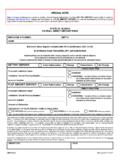
1 Effective: 05/06/2021 1 Last Updated: 12/01/2022 State of Alaska Division of Personnel and Labor Relations Telework Policy I. Policy This Policy provides direction and guidance for establishing employee teleworking arrangements and applies to employees in the classified and partially exempt service. Employees in exempt agencies are also required to follow the direction and guidance set forth in this Policy . Agencies should attempt to utilize telework wherever practicable. Agencies have the sole discretion to designate groups/units, positions and individual employees suitable for teleworking. The expectation is there will be no disruption of service or decline in the quality and timeliness of internal and external services provided by the teleworking individual or the agency. If there are service disruptions or decline in work product quality the telework agreement will not be renewed.
2 Teleworking is an arrangement to permit employees to perform their job duties at an alternate work location in accordance with a Teleworking Work Agreement (TWA). Agencies may allow participation in teleworking to the greatest extent possible without diminished services or employee performance. Teleworking is an arrangement established first and foremost to facilitate the accomplishment of work. Teleworking arrangements must conform to all State laws, regulations, and policies regarding State employment. Teleworking assignments do not change the conditions of employment or required compliance with policies. Managers and employees must understand that adherence to this Policy and procedures is an essential requirement of the telework program. Teleworking is not an employee benefit or right. employee participation in teleworking is voluntary and requires pre-approval by management.
3 This Policy in no way shall be interpreted as an employment contract between the state and its employees. II. Guidelines A. Teleworking is available to employees when approved by supervisors. These guidelines do not apply to employees who work at home as a temporary or permanent reasonable accommodation approved by Human Resource staff under the Americans with Disabilities Act. B. Teleworking generally falls into one of two categories: 1. Routine: Routine teleworking is when the arrangement occurs as part of a regular and ongoing schedule. 2. Situational: Situational teleworking is approved on a case-by-case basis, where the hours worked were not part of a previously approved, ongoing and regular telework schedule. Examples of situational teleworking include for reasons such as inclement weather, pandemic health crisis, special work assignments, convalescence from injury or illness, primary work site is inaccessible or uninhabitable, or other natural or human-caused disaster.
4 These agreements may also be referred to as episodic, intermittent, unscheduled, or ad hoc teleworking. These types of agreements only require supervisor approval and do not require a Telework Request and Agreement Form (TWA). C. Out-of-state telework arrangements are limited to three categories: family/personal emergency; medical situations; or in the best interest of the state ( critical knowledge transfer/training of a new incumbent or completion of a significant project). An initial out-of-state telework arrangement may only be approved Effective: 05/06/2021 2 Last Updated: 12/01/2022 for up to 12 months, and then must be reviewed prior to extending. Extensions may be approved for up to 12 months at a time. All out-of-state telework arrangements more than 30 days require written prior approval of the State Personnel Director.
5 If an out-of-state telework arrangement will be for less than 30 days ( planned leave, or one of the three categories listed above), there is no need for an Letter of Agreement (LOA), with the exception of telework performed in the state of Oregon. If telework will be performed in Oregon, regardless of the duration, an LOA is required and approval is needed from the State Personnel Director. Absent an emergency, out of state telework arrangements for less than 30 days will not be extended. If an extension is warranted, it will require the approval of the State Personnel Director and a LOA. D. Teleworking arrangements may be on a part-time or full-time basis. Initial teleworking arrangements may be approved for an initial period of up to 12 months, and then must be reviewed prior to extending. Once an arrangement has been shown to be successful, it may be approved for up to 12 months at a time.
6 Per section III (E), management may cancel the telework agreement at any time. Any change in the agreed upon schedule must be approved by the supervisor, and when permanent, documented and appended to the TWA. E. Employees must have an approved TWA prior to beginning a telework arrangement. Employees engaged in routine telework must have an approved TWA prior to beginning a telework arrangement. Continuing to telework long-term after beginning a situational telework arrangement requires the employee to establish a TWA. F. Employees must have approval from their union or from the Commissioner and State Personnel Director to telework away from their duty station. If working away from their duty station city, for more than 30 days, either in-state or out-of-state, an employee must have an approved Letter of Agreement (LOA) between the State and the union before beginning a telework arrangement.
7 If the position is not represented by a union, and the request is for out-of-state teleworking, the request will require written approval of the department s Commissioner or designee and the State Personnel Director. Please Note: employees teleworking out of state must contact the Division of Finance Payroll Production for further instructions on potential tax withholding (see section ) immediately upon approval of the TWA. G. Management retains the right to approve or deny requests based on established criteria. Teleworking should only be considered if mutually beneficial for the agency and the employee . In deciding whether to approve an employee s request for teleworking, the supervisor shall consider the following factors: 1. The position s suitability for teleworking (See section II R); 2. The employee s suitability for teleworking (See section II S); and 3.
8 The mutual benefits to the agency and the employee . H. Managers will monitor employee compliance with the TWA; relevant state policies; performance standards; expectations for work products; productivity; and time accountability. I. Employees must be available during work hours established in their TWA. Employees must be available and accessible by email, phone, or other online technology during their agreed upon work schedule. Absences (including unavailability during work hours) must be pre-approved. Employees must account for all time worked and use leave, as appropriate, with prior management approval only. If an employee becomes ill on a scheduled telework day, the employee shall follow their division's established protocol used for reporting absences. Effective: 05/06/2021 3 Last Updated: 12/01/2022 The employee may be called in to the office when necessary to meet operational needs.
9 The supervisor should provide reasonable notice whenever possible. However, the employee may be required to report to the office without advance notice, as needed. J. Managers are responsible for providing employees clear direction on assignment and project expectations. Management will provide the employer s expectations to the employee relating to performance, assignments to be completed, timely response to e-mail and phone calls, etc. The supervisor and employee must have an agreed upon reporting method for tracking work assignments. If it becomes evident that the reporting method is not effective, the supervisor may require the employee to use a Telework Assignment Log (TAL). A TAL would be submitted daily or weekly as appropriate. The supervisor and the teleworker must take actions to keep the remote employee engaged, productive, and connected.
10 For additional guidance, resources, and tools on how to manage remote employees please review the DOPLR Telework Resources page at: K. Supervisors must ensure adequate office coverage (if applicable). Supervisors will need to assess what work requires public or internal contact or needs to be done at the worksite. Absences due to leave, training, holidays, and Alternate Work Schedule (AWS) schedules must be addressed when participants and supervisors arrange TWA plans to ensure adequate office coverage. Managers/supervisors are responsible to ensure that their Divisions and working units have coverage during any applicable core hours, including the lunch period. Consideration should be given to the employees' workload and the type of work performed. These issues must be considered prior to approving any request for a telework schedule.