Example: bachelor of science
Twenty steps for developing - World Health Organization
1 Twenty steps for developing a Healthy Cities project 3rd Edition, 1997 World Health Organization Regional Office for Europe 1997
Tags:
Information
Domain:
Source:
Link to this page:
Documents from same domain
DAMPNESS - World Health Organization
www.euro.who.intVIII WHO GUIDELINES FOR INDOOR AIR QUALITY: DAMPNESS AND MOULD Malcolm Richardson University of Helsinki, Helsinki, Finland Peter Rudnai National Institute of Environmental Health,
WHO Regional Office for Europe NUTRIENT …
www.euro.who.intAbstract This publication describes a regional nutrient profile model for use and adaptation by Member States of the WHO European Region when developing policies to restrict food marketing to children.
Chapter 6.6 Hydrogen sulfide - World Health …
www.euro.who.intChapter 6.6 Hydrogen sulfide Air Quality Guidelines - Second Edition WHO Regional Office for Europe, Copenhagen, Denmark, 2000 3 Health Effects
Mosquitoes of the genus Anopheles in countries of …
www.euro.who.intMosquitoes of the genus Anopheles in countries of the WHO European Region having faced a recent resurgence of malaria Regional …
Infections and infectious diseases - WHO/Europe
www.euro.who.intInfections and infectious diseases are a great burden on many societies, including the countries in the WHO European region. To reduce …
Best practice guidance // How to respond to vocal …
www.euro.who.intAbstract This guidance document provides basic broad principles for a spokesperson of any health authority on how to respond to vocal vaccine deniers.
What are the main factors that influence the ...
www.euro.who.intWhat are the main factors that influence the implementation of disease prevention and health promotion programmes in children and adolescents?
OUTBREAKS OF WATERBORNE DISEASES - …
www.euro.who.intOUTBREAKS OF WATERBORNE DISEASES FACT SHEET 1.1 z December 2009 z CODE: RPG1_WatSan_E1 Number of outbreaks of waterborne diseases attributable to drinking-water and bathing water each year
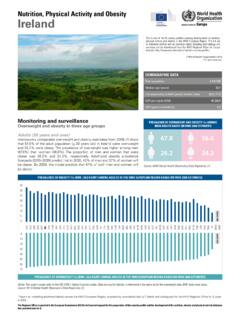
Nutrition, Physical Activity and Obesity Ireland
www.euro.who.intAdolescents (10–19 years) In terms of prevalence of overweight and obesity in adolescents, up to 37% of boys and 23% of girls among 11-year-olds were overweight, according to data
Chapter 5.9 Polycyclic aromatic hydrocarbons (PAHs)
www.euro.who.intWHO Regional Office for Europe, Copenhagen, Denmark, 2000 1 Chapter 5.9 Polycyclic aromatic hydrocarbons (PAHs) General description Polycyclic aromatic hydrocarbons (PAHs) are a large group of organic compounds with two or
Related documents

Special Theme – Environment and Health Indoor air ...
www.who.intIndoor air pollution in developing countries: a major environmental and public health challenge Nigel Bruce,1 Rogelio Perez-Padilla,2 & Rachel Albalak3 Around 50% ofpeople,almost allindeveloping countries,rely oncoal andbiomass inthe formofwood,dung and

Plant Development &Waste Management Proposal
www.proposalsmartz.com4 Executive Summary Solid Waste Management (SWM) is one of the major challenges that developing countries are facing today. Outbreak of various epidemics and deteriorating environmental …

WHO Public Health & Environment Global Strategy Overview …
www.who.int1 WHO Public Health & Environment Global Strategy Overview 2011 I. Focus on Primary Prevention Environmental hazards influence over 80% of the communicable and noncommunicable
Animal Health market in the BRIC countries and comparison of
dgra.deAnimal Health market in the BRIC countries and comparison of its regulatory requirements for veterinary medicinal products with EU legislation

THE ENVIRONMENT, HEALTH AND SAFETY PROGRAMME
www.oecd.orgTHE ENVIRONMENT, HEALTH AND SAFETY PROGRAMME 2 The Organisation for Economic Co-operation and Development 3 Preface 4 OECD and the Environment 5 OECD’s Environment, Health and Safety Programme 9 Common policies and high-quality instruments for chemical safety 18 OECD and the rest of the world 21 Focus: Safety of manufactured nanomaterials 23 Co-operation in other areas of environment, health ...
The Millennium Development Goals Report - un.org
www.un.orgTHE MILLENNIUM DEVELOPMENT GOALS REPORT 2010 5 Towards 2015 The Millennium Declaration represents the most important promise ever made to the world’s most vulnerable people.
UN WomenWatch: www.un.org/womenwatch
www.un.orgleading role in the global response to climate change. This should be particularly emphasised with regards to indigenous women who play a vital role as stewards of natural resources.11 A greater ...
A Discussion on Waste Generation and Management Trends …
www.isaet.orgwaste tyres are lying in dumps and stockpiles or scattered . Abstract—This paper, a continuation and expansion of the work of Muzenda et al, 2012 [1] looks at the management trends in South Africa. It focuses on waste classification, hierarchy, generation and
South African Hypertension Guideline 2011
www.kznhealth.gov.za1. Introduction This is the 5th hypertension guideline published by the Southern African Hypertension Society (SAHS). It is an important step towards implementing a national standard to improve the quality