Example: quiz answers
What is a Relapse
ROUTINE High-Risk Situations Positive Negative . 1. You are on vacation and staying at someone’s home or in a hotel. 2. You are traveling and eating out for each meal. 3. The weekend is relaxed (or busy) and you do not have a structured routine. 4. 5. 1. You are ill and cannot do your usual activities. 2. You are very busy at work or at home. 3.
Tags:
Information
Domain:
Source:
Link to this page:
Documents from same domain

School Chemistry Laboratory Safety Guide
www.cdc.govSchool Chemistry Laboratory Safety Guide. October 2006. U.S. Consumer Safety Product Commission DEPARTMENT OF HEALTH AND HUMAN SERVICES. Centers for Disease Control and Prevention
Biosafety in Microbiological and Biomedical …
www.cdc.goviii. Foreword. Biosafety in Microbiological and Biomedical Laboratories (BMBL) quickly became the cornerstone of biosafety practice and policy in the United States upon first
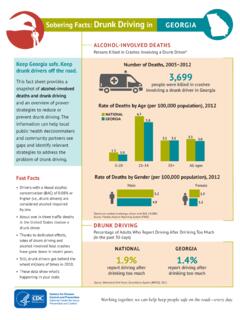
Sobering Facts: Drunk Driving in Georgia
www.cdc.govSobering Facts: Drunk Driving in GEORGIA Keep Georgia safe. Keep drunk drivers off the road. This fact sheet provides a snapshot of alcohol-involved deaths and drunk driving
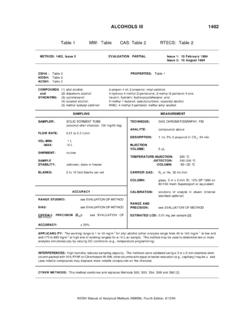
ALCOHOLS III 1402
www.cdc.govALCOHOLS III: METHOD 1402, Issue 2, dated 15 August 1994 - Page 3 of 4 a. Remove and discard back sorbent section of a media blank sampler. b. Inject a known amount of analyte or DE stock solution directly onto front sorbent section
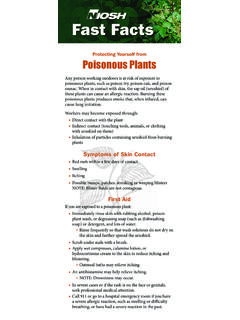
Fast Facts
www.cdc.govAny person working outdoors is at risk of exposure to poisonous plants, such as poison ivy, poison oak, and poison sumac. When in contact with skin, the sap oil (urushiol) of

Trans Fat: The Facts
www.cdc.gov• Read the Nutrition Facts label and ingredient list to compare foods. » Choose products with 0 grams trans fat. » Check the Ingredient List to see if there is any partially hydrogenated oil in the product.

ANTIBIOTIC RESISTANCE THREATS
www.cdc.govApr 23, 2013 · 6. ANTIBIOTIC RESISTANCE THREATS IN THE UNITED STATES, 2013. Executive Summary. Antibiotic Resistance Threats in the United States, 2013. is a snapshot of the complex problem
Chlorine Residual Testing
www.cdc.govChlorine Residual Testing Fact Sheet, CDC SWS Project 4 Methods to Test Free Chlorine in the Field in Developing Countries There are three main methods to test free chlorine residual in drinking water in the field
2018 Combined Recommended Immunization …
www.cdc.govRecommended Immunization Schedule for Children and Adolescents Aged 18 Years or Younger, UNITED STATES, 2018 Approved by the Advisory Committee on …
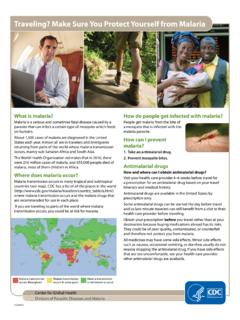
Traveling? Make Sure You Protect Yourself from …
www.cdc.govCS26201 Malaria transmission occurs throughout Malaria transmission occurs in some parts Malaria transmission is not known to occur Center for Global Health
Related documents
Good Sleep Hygiene Handout Do - offices.vassar.edu
offices.vassar.eduGood Sleep Hygiene Handout The most common cause of insomnia is a change in your daily routine. For example, traveling, change in work hours, disruption of other behaviors (eating, exercise, leisure, etc.), and relationship conflicts can all …

MILITARY CORRESPONDENCE B030096 STUDENT HANDOUT
usmcofficer.comOfficers don't sign most routine correspondence. Rather, others have the authority to sign correspondence for them. This is called "By direction" authority and is the most common of all of the signature blocks. Whenever someone other than the CO is signing for the CO, “By direction” is typed below their name to indicate that someone is signing
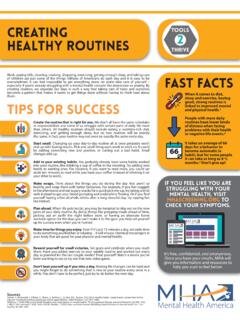
CREATING HEALTHY ROUTINES Tips for success
www.mhanational.orgCreate the routine that is right for you.We don’t all have the same schedules or responsibilities and some of us struggle with certain parts of daily life more than others. All healthy routines should include eating a nutrition-rich diet, exercising, and getting enough sleep, but no two routines will be exactly the same.
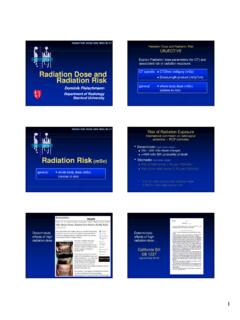
Radiation Dose and Radiation Risk - Home | Stanford …
med.stanford.eduJul 14, 2012 · Routine abdomenb 35 780 Liver and spleenb 35 900 Routine pelvisb 35 570 Osseous pelvisb 25 520 Notes: a.Data relate to head phantom (PMMA, 16 cm diameter) b.Data relate to body phantom (PMMA, 32 cm diameter) European guidelines on quality criteria for Computed Tomography – EUR 16262 Table 3: Proposed reference dose values for routine CT

Daily Routine Pictures and Questions
englishatiessf.webs.comDaily routine Worksheet 7 Lesley is an ESOL teacher at Hackney College in London. On weekdays she always gets up at about 7 o’clock. She has a shower and then she has breakfast with her husband and daughter. After breakfast she brushes her teeth and gets dressed and then she takes her daughter to school. She goes to college by bicycle at

Handout Preschool Language 2 - WVSHA
www.wvsha.orgEach routine (such as play outside) includes many different activities (swings, slide, or sandbox). Each activ-ity (such as a swing) offers multiple learning opportunities to address spe-cific developmental intervention strate-gies (skills such as check that helmet is fastened, climb on the swing, hold on with both hands, ask for a push, talk
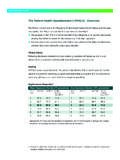
The Patient Health Questionnaire-2 (PHQ-2) - Overview
cqaimh.orgReducing depression evaluation to two screening questions enhances routine inquiry about the most prevalent and treatable mental disorder in primary care. Scoring A PHQ-2 score ranges from 0-6. The authors1 identified a PHQ-2 cutoff score of 3 as the optimal cut point for screening purposes and stated that a cut point of 2 would enhance

Energy Conservation Techniques - Aurora Health Care
ahc.aurorahealthcare.org1. Analyze your work routine: List your daily or . weekly activities on paper; consider chores you do monthly, quarterly or weekly. * Do you feel rushed or pressured to get tasks done? * Do you feel stressed because your goal wasn’t met by the end of the day or week? 2. Eliminate unnecessary tasks: or those that can