Example: dental hygienist
What is Fat?
Post-Core:Fats – Saturated, Unsaturated, and Trans Fat . Healthy Fats: Omega-3, Monounsaturated, and Polyunsaturated . Omega-3 fats . are an especially“heart healthy” fat and can help with lowering high triglyceride values in your blood. Omega-3 fats can be found in: Fish: salmon, mackerel, herring, sardines, albacore tuna, and rainbow trout
Tags:
Information
Domain:
Source:
Link to this page:
Documents from same domain
School Chemistry Laboratory Safety Guide
www.cdc.govSchool Chemistry Laboratory Safety Guide. October 2006. U.S. Consumer Safety Product Commission DEPARTMENT OF HEALTH AND HUMAN SERVICES. Centers for Disease Control and Prevention
Biosafety in Microbiological and Biomedical …
www.cdc.goviii. Foreword. Biosafety in Microbiological and Biomedical Laboratories (BMBL) quickly became the cornerstone of biosafety practice and policy in the United States upon first
Sobering Facts: Drunk Driving in Georgia
www.cdc.govSobering Facts: Drunk Driving in GEORGIA Keep Georgia safe. Keep drunk drivers off the road. This fact sheet provides a snapshot of alcohol-involved deaths and drunk driving
ALCOHOLS III 1402
www.cdc.govALCOHOLS III: METHOD 1402, Issue 2, dated 15 August 1994 - Page 3 of 4 a. Remove and discard back sorbent section of a media blank sampler. b. Inject a known amount of analyte or DE stock solution directly onto front sorbent section
Fast Facts
www.cdc.govAny person working outdoors is at risk of exposure to poisonous plants, such as poison ivy, poison oak, and poison sumac. When in contact with skin, the sap oil (urushiol) of
Trans Fat: The Facts
www.cdc.gov• Read the Nutrition Facts label and ingredient list to compare foods. » Choose products with 0 grams trans fat. » Check the Ingredient List to see if there is any partially hydrogenated oil in the product.
ANTIBIOTIC RESISTANCE THREATS
www.cdc.govApr 23, 2013 · 6. ANTIBIOTIC RESISTANCE THREATS IN THE UNITED STATES, 2013. Executive Summary. Antibiotic Resistance Threats in the United States, 2013. is a snapshot of the complex problem
Chlorine Residual Testing
www.cdc.govChlorine Residual Testing Fact Sheet, CDC SWS Project 4 Methods to Test Free Chlorine in the Field in Developing Countries There are three main methods to test free chlorine residual in drinking water in the field
2018 Combined Recommended Immunization …
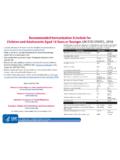
www.cdc.govRecommended Immunization Schedule for Children and Adolescents Aged 18 Years or Younger, UNITED STATES, 2018 Approved by the Advisory Committee on …
Traveling? Make Sure You Protect Yourself from …
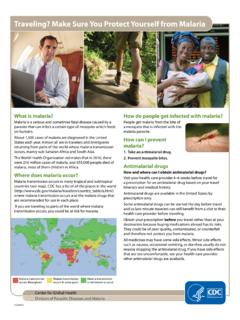
www.cdc.govCS26201 Malaria transmission occurs throughout Malaria transmission occurs in some parts Malaria transmission is not known to occur Center for Global Health
Related documents

The Importance of Water, Carbohydrates, and Fats
www.chicagoagr.orgMar 14, 2011 · FATS Fats and oils are also known as lipids. A lipid is a food component that provides energy and is also the form in which animals store energy. Lipids can be dissolved with ether, a colorless liquid solvent used in nutrition research. Fats are solid and oils are liquid at room temperature. Fats contain the highest amounts of energy.

OILS AND FATS
www.fosfa.orgOILS AND FATS GLOSSARY ACIDITY: Free fatty acids have, as the name implies, a weak acidic nature.There will be a naturally occurring level of these present in each oil and levels can be further increased by hydrolysis (water breakdown) of triglyceride.
Structure of Proteins, Carbohydrates and Fats
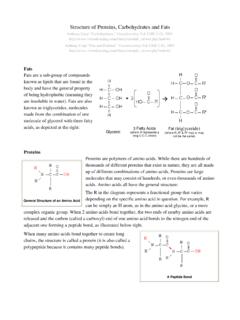
www.sciencegeek.netFats are a sub-group of compounds known as lipids that are found in the body and have the general property of being hydrophobic (meaning they are insoluble in water). Fats are also known as triglycerides, molecules made from the combination of one molecule of glycerol with three fatty

Good Fats, Bad Fats - Stanford Health Care
stanfordhealthcare.orgGood Fats, Bad Fats All fats are not alike. Some types of fats are essential for good health. Other fats can raise blood cholesterol levels or have other negative effects on cardiovascular health. Eating too much fat of all types can add excess calories and lead to weight gain.

Healthy Fats - Human Resources University of Michigan
hr.umich.eduTop 5 reasons to enjoy healthy fats 1. Maintain radiant skin 2. Manage weight 3. Lower risk of heart disease 4. Absorb health-sustaining vitamins 5. Stabilize blood sugar levels Eat more of these fats Monounsaturated Fat • Olive, canola, safflower, sesame and peanut oil • Nuts and seeds • Olives • Avocados • Nut and seed butters ...

Blood Fats Explained - HEART UK
www.heartuk.org.ukFats in the blood. At risk of cardiovascular disease? Fats that circulate in the blood are called . lipids. Cholesterol. and . triglycerides. are both lipids. They have essential roles in the body. In excess they are harmful. Cholesterol. is needed to build cell walls and . to make hormones and vitamin D. Some of our cholesterol comes from the ...

Saturated fats and health - GOV.UK
assets.publishing.service.gov.ukvi Substitution of saturated fats with PUFA and serum total cholesterol:HDL cholesterol ratio..... 119

Glycerin—produced by hydrolysis of fats and oils
www.ams.usda.gov49 showed that fats are glycerin esters of fatty acids. He also gave glycerin its name, “ ” the Greek 50 word for sweet. Pasteur, in 1857, showed alcoholic fermentation of sugars produced glycerin and succinic 51 acid. Glycerin is an intermediate in cellular carbohydrate and lipid metabolism found naturally in all living

FOG Control Device Guidance Manual - Miami-Dade County
www.miamidade.govThe Fats, Oil, and Grease (FOG) Control Device Guidance Manual is intended to serve as a design guide for Professional Engineers designing FOG Control Devices for Food Service Establishments in Miami‐Dade County.