
Operational Risk Management Guide - USDA
Feb 26, 2020 · achieved by the identification of opportunities and threats and the allocation and use of resources to increase the odds of success, avoid hazards, minimize consequences and provide for recovery. Risk management seeks to reduce risks to acceptable levels. In most endeavors, we will not be able to reduce risk to zero.
Download Operational Risk Management Guide - USDA

Information
Domain:
Source:
Link to this page:
Documents from same domain
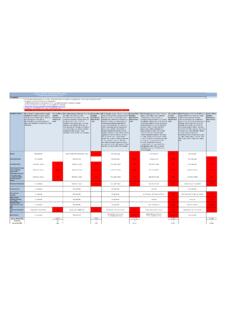
Average Annual Cost for Road Maintenance by Operational ...
www.fs.usda.govpatching, crack sealing, chip sealing and removal of unsuitable material. Shoulders are shaped to provide a smooth transition to traveled way and drain efficiently. Ditches and culverts function efficiently. Clean/Repair structures (cattleguard, gate) and signs. Paint pavement markings. Road
CAD Standards User’s Guide - USDA
www.fs.usda.govComputer Aided Design (CAD) construction and design drawings for the Forest Service. The purpose of this document is to establish standards, which will result in the preparation of consistent and compatible AutoCAD files. It is intended to guide users in the overall CAD system, operations, and to establish standards and procedures that will
Engineering Calculations DEMOLITION DEBRIS WASTE …
www.fs.usda.govstructures. To estimate the volume of the spread footing foundation, use the surface area method. For volume estimating purposes, assume that the slab is 12 in thick. There are 15 visible courses of 8-in tall concrete masonry units (CMU) serving as the Upper Level foundation; for volume estimating purposes assume the CMU foundation
Developed Campground Rules and Regulations
www.fs.usda.govDay use visitors may be in developed recreation areas from 6 a.m. to 10 p.m. Only campers may remain in this area after 10 p.m. Check bulletin boards and observe posted hours. 36 CFR 261.58 (u). Fees Some campgrounds are designated U.S. Fee Area. You must pay a fee to use these facilities. Refer to the fee section of bulletin
Hunting Safety: Information for Hunters and Non-Hunters
www.fs.usda.govSafety Tips for Non-hunters visiting the National Forests • Wear bright clothing. Make yourself more visible. Choose colors that stand out, like red, orange or green, and avoid white, blacks, browns, earth-toned greens and animal-colored clothing. Orange vests and hats are advisable. • Don’t forget to protect fido.
HERBICIDES, TRADE NAMES, AND TARGET SPECIES
www.fs.usda.govFor any pesticide classified as a potential carcinogen, the risk would depend on the extent to which a person might be exposed (how much time and to what quantity of the pesticide). The factors considered include short-term studies, long-term cancer studies, mutagenicity studies, and structure activity concerns.
Tree Owner's Manual - USDA
www.fs.usda.govU.S. Department of Agriculture 11 Campus Blvd., Suite 200 Newtown Square, PA 19073 NA-FR-04-07 November 2008 www.na.fs.fed.us . Tree Owner's Manual . for the Northeastern and Midwestern United States . Tree Owner's Manual. Authors: Jill R. Johnson, Forest Service Gary R. Johnson, University of Minnesota Maureen H. McDonough, Michigan State ...
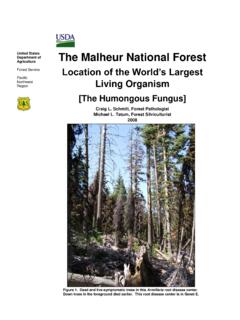
The Malheur National Forest - Home | US Forest Service
www.fs.usda.govForest Service Pacific Northwest Region The Malheur National Forest Location of the World’s Largest Living Organism [The Humongous Fungus] Craig L. Schmitt, Forest Pathologist Michael L. Tatum, Forest Silviculturist 2008 Figure 1. Dead and live-symptomatic trees in this Armillaria root disease center. Down trees in the foreground died earlier.
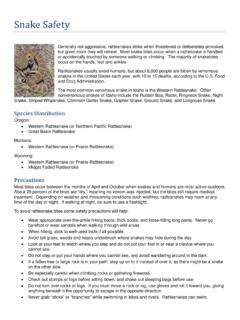
Snake Safety - US Forest Service
www.fs.usda.govStay calm Call Dispatch via radio or 911 Wash the bite area gently with soap and water if available Remove watches, rings, etc., which may constrict swelling
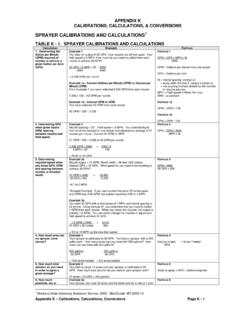
SPRAYER CALIBRATIONS AND CALCULATIONS
www.fs.usda.govV1 = 3 gallons The final mixture (Volume 2 or V2) is the amount of the concentrate (V1) plus the required amount to make up to V2. If V1 = 3 gallons and the required amount is 100 gallons, add 97 gallons of water to 3 gallons of concentrate. Formula 11 C1 x V1 = C2 x V2 C1= % of a.i. in concentrate V1 = quantity of concentrate needed
Related documents

Desk study: literature review and secondary data
documents.wfp.org• Geographic and historic information on the occurrence of hazards • Current exposure to sudden-onset natural disasters • Understanding/awareness of long-term threats to food and livelihood security (soil erosion, depletion of forest resources, water scarcity, etc.) • Issues involving migration, conflict, or large-scale exodus of refugees
Understanding Disasters - NIDM
nidm.gov.inUnderstanding Disasters ... environmental losses caused by hazards and to ensure that these losses are minimized when the disaster actually strikes. 2. During Disaster: ... economic and social vulnerability to threats and the underlying causes for this vulnerability.
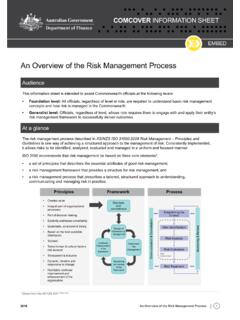
An Overview of the Risk Management Process
www.finance.gov.auAnother method is to begin thinking of the threats and opportunities the entity faces, and use ... including expected benefits and potential hazards • accountabilities for approving the plan and its implementation ... • obtaining further information to improve the understanding and management of already identified risks