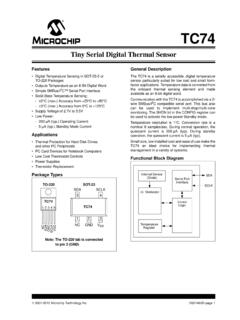
TC74 - Microchip Technology
Nov 29, 2012 · Communication with the TC74 is accomplished via a 2-wire SMBus/I2C compatible serial port. This bus also ... F = Acknowledge Bit Clocked into Master G = MSB of Data Clocked into Master H = LSB of Data Clocked into Master ... Slave The device addressed by the master. START A unique condition signaling the begin-ning of a transfer indicated by ...
Download TC74 - Microchip Technology

Information
Domain:
Source:
Link to this page:
Documents from same domain
Power Factor Correction in Power Conversion …
ww1.microchip.com© 2007 Microchip Technology Inc. DS01106A-page 2 AN1106 FIGURE 1: CURRENT WAVEFORMS WITH AND WITHOUT PFC These waveforms illustrate that …
2.7V to 5.5V Single Supply CMOS Op Amp
ww1.microchip.comMCP601/1R/2/3/4 DS21314G-page 2 © 2007 Microchip Technology Inc. 1.0 ELECTRICAL CHARACTERISTICS Absolute Maximum Ratings † VDD –VSS.....7.0V
Data Encryption Routines for PIC24 and dsPIC Device
ww1.microchip.com© 2006 Microchip Technology Inc. DS01044A-page 1 AN1044 INTRODUCTION Currently, there are three data encryption standards approved …
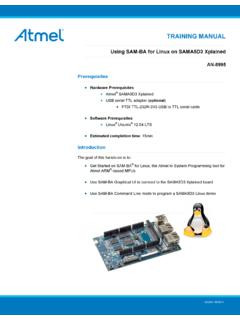
Using SAM-BA for Linux on SAMA5D3 Xplained
ww1.microchip.comAN-8995 – Using SAM-BA for Linux on SAMA5D3 Xplained: 42328A−06/2014 Page 5 of 19 2. Setup With Ubuntu distributions, a user has to be member of the dialout group to access serial devices like
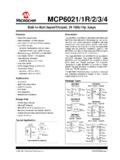
MCP6021/1R/2/3/4 - Rail-to-Rail Input/Output, 10 …
ww1.microchip.com2001-2017 Microchip Technology Inc. DS20001685E-page 1 MCP6021/1R/2/3/4 Features • Rail-to-Rail Input/Output • Wide Bandwidth: 10 MHz (typical)
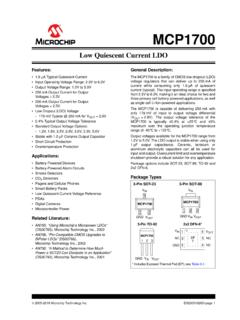
Low Quiescent Current LDO - Microchip Technology
ww1.microchip.com2005-2016 Microchip Technology Inc. DS20001826D-page 1 MCP1700 Features: • 1.6 µA Typical Quiescent Current • Input Operating Voltage Range: 2.3V to 6.0V
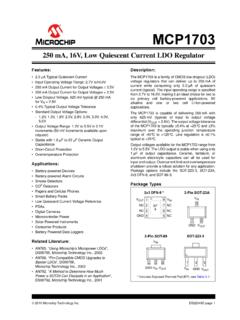
MCP1703 250 mA, 16V, Low Quiescent Current
ww1.microchip.com2010 Microchip Technology Inc. DS22049E-page 1 MCP1703 Features: • 2.0 µA Typical Quiescent Current • Input Operating Voltage Range: 2.7V to16.0V

MTCH6102 Low-Power Projected Capacitive Touch …
ww1.microchip.com2014 Microchip Technology Inc. DS40001750A-page 1 Description: Microchip’s MTCH6102 is a turnkey projected capacitive touch controller that simplifies adding
PIC32 GUI Development Board with Projected …
ww1.microchip.comPIC32 GUI Development Board with Projected Capacitance (PCAP) Touch Information Sheet Microchip Technology Inc.
RN4020 Bluetooth Low Energy Module User’s Guide
ww1.microchip.comRN4020 BLUETOOTH LOW ENERGY MODULE USER’S GUIDE 2014 Microchip Technology Inc. DS70005191B-page 7 Preface INTRODUCTION This chapter contains general information that will be useful to know before using the
Related documents

Master-Slave Communication via a CM PtP Using the …
cache.industry.siemens.comMaster-Slave Communication via Modbus RTU Entry ID: 68202723, V2.0.1, 01/2018 2 Security 2018 proof to your detriment. d Warranty and Liability Note The Application Examples are not binding and do not claim to be complete regarding the circuits shown, equipping and any eventuality. The Application

Micro800 Family of PLCs Brochure - Rockwell Automation
configurator.rockwellautomation.comDeviceNet Master/Slave — Slave only Master (1 Max) and Slave Master (1 Max) and Slave Isolated RS232/485 — Via Plug-In Via Plug-In Via Plug-In 2/4-ch Analog — Via Plug-In Via Plug-In Via Plug-In RTD/TC — Via Plug-In Via Plug-In Via Plug-In Trim Potentiometer — Via Plug-In Via Plug-In Via Plug-In Back-up Memory Module — No Via Plug ...
Serial Peripheral Interface (SPI) with Audio Codec Support
ww1.microchip.comIn Normal mode operation, the SPI master controls the generation of the serial clock. The num-ber of output clock pulses corresponds to the transfer data width: 8, 16 or 32 bits, or depending upon variable data width configuration, from 2 to 32-bit. Figure 1-2 and Figure 1-3 illustrate SPI master-to-slave and slave-to-master device connections.

Automotive Audio Bus A2B Transceiver …
www.analog.comconnected to the slave transceivers via the I2C or SPI ports for I 2C to I C communication over distance between multiple nodes. All nodes in an A2B system are sampled synchronously in the same A 2B superframe. Synchronous I S/TDM downstream data from the master arrives at all slaves in the same A 2B superframe,

ESP8266 Technical Reference - Espressif
www.espressif.com1.3.1. General SPI (Master/Slave) 1.3.2. HSPI (Master/Slave) 1.4. I2C Interface ESP8266EX has one I2C used to connect with micro-controller and other peripheral equipments such as sensors. The pin definition of I2C is as below. Both I2C Master and I2C Slave are supported. I2C interface functionality can be realized via

Modicon Modbus Protocol Reference Guide
www.modbus.orgrates, and parity checking. Controllers can be networked directly or via modems. Controllers communicate using a master–slave technique, in which only one device (the master) can initiate transactions (called ‘queries’). The other devices (the slaves) respond by supplying the requested data to the master, or by taking

BACnet MS/TP Overview Manual
www.neptronic.comThe BACnet Master Slave Token Passing (MS/TP) protocol is used to relay and exchange information between building devices. The MS/TP is a based on BACnet standard protocol SSPC-135, Clause 9. The BACnet MS/TP is a peer-to-peer, multiple master protocol based on token passing. A token is information packets in the form of
Introduction to Modbus TCP/IP
www.prosoft-technology.comModbus devices communicate using a master-slave (client-server) technique in which only one device (the master/client) can initiate transactions (called queries). The other devices (slaves/servers) respond by supplying the requested data to the master, or by taking the action requested in the query. A slave is any peripheral device (I/O transducer,