Transcription of Synthesis of Triarylmethane and Xanthene Dyes …
1 In the Vol. 84 No. 11 November 2007 Journal of Chemical Education1799 The Synthesis and characterization of dye molecules haslong been a popular topic in organic chemistry laboratory ex-periments, because such experiments allow students to see firsthand that knowledge learned in organic lecture can be usedto make useful and practical materials (1 9). From a morehistorical perspective this is also appropriate as the synthesisof commercial dyes was the impetus leading to many of theearlier discoveries in organic chemistry (10 14). In this ex-periment electrophilic aromatic substitution reactions, Friedel Crafts type reactions, and halogenation are used to synthesizetriarylmethane and Xanthene type dyes (Scheme I).The Triarylmethane or Xanthene carbon skeletons of thedyes are produced by reacting two equivalents of a substi-tuted phenol with phthalic anhydride.
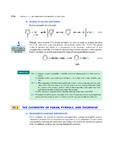
2 The overall process isactually two sequential Friedel Crafts type reactions that oc-cur in the same reaction flask without having to isolate theproduct of the first reaction as shown in Scheme II. Depend-ing on the type and orientation of the substituents presenton the phenol, either a Triarylmethane or Xanthene type dyewill be Synthesis experiments of related dyes that have ap-peared in laboratory texts and the literature use Lewis acidssuch as ZnCl2, which are extremely hygroscopic and mustbe extensively dried before use and kept dry (2, 3). This isoften inconvenient in a typical undergraduate laboratory set-ting. In the reactions shown here, the use of hygroscopicLewis acids is avoided. Instead inexpensive and readily avail-able protic acids (H2SO4) are used in catalytic quantities (15).
3 This experiment starts with inexpensive colorless sub-stituted phenols and phthalic anhydride and uses Friedel Crafts type reactions to produce a variety of dyes includingfluorescein, rhodamine B, and thymolphthalein as shown inthe first two equations in Scheme I. The Synthesis of each ofthese three dyes are run in a test tube or small Erlenmeyerflask as a melt with a very small quantity of sulfuric acid cata- Synthesis of Triarylmethane and Xanthene DyesWUsing Electrophilic Aromatic Substitution ReactionsJames V. McCullagh* and Kelly A. Daggett Department of Chemistry and Biochemistry, Manhattan College, Riverdale, NY Current address: Department of Chemistry and Biochemistry,University of Maryland at College Park, College Park, I. dyes synthesized in this experiment by electrophilic aromatic substitution the Laboratory1800 Journal of Chemical Education Vol.
4 84 No. 11 November 2007 present. For most cases, a few drops of 2 M H2SO4 issufficient to catalyze the reaction. The reactions are heatedin a sand bath to a temperature between 115 C and 190 Cdepending on the dye synthesized as outlined in the Supple-mental In addition to the Friedel Crafts reactions shown, an aro-matic halogenation reaction can be used in this experiment toconvert fluorescein into erythrosine B, a red food dye (FD&Cred 3), as shown in the third equation of Scheme I (16, 17).This iodination reaction, which uses molecular iodine in thepresence of a weak base, can be run in a test tube. The solu-tion is heated to a gentle boil until all the iodine has different dye syntheses presented here have reactiontimes between 30 and 80 minutes, allowing students to com-plete the Synthesis and workup of any one of the dyes in asingle laboratory session.
5 A detailed lab procedure for eachof these dyes is given in the Supplemental brightly colored dyes produced in this experimenthave many applications including use as food dyes , ink andpaper dyes , biological staining reagents, and pH properties and uses are summarized in Table organic solvents used in this laboratory experiment(acetone, THF, hexane, diethyl ether, and methyl tert-butylether) are volatile, flammable solvents of moderate toxicity,but should prove little hazard if handled in a fume hood anddisposed of properly after use. Methylene chloride is a vola-tile solvent that is toxic and potentially carcinogenic. Theorganic reagents used in this experiment are also classified asirritants with moderate toxicity. Molecular iodine (I2) is toxicand corrosive. Students should not conduct halogenationswith iodine unless closely supervised.
6 Some of the strong ac-ids and bases used in this experiment (H2SO4 and NaOH,respectively) are toxic and and DiscussionThis laboratory experiment was originally developed andtested as part of an undergraduate research project and hasbeen used in a second-semester organic chemistry laboratorycourse for the last two years. Most students who conductedthese experiments successfully obtained the desired dye yields were fairly reasonable averaging, forfluorescein, for erythrosine B, and forrhodamine The yields for thymolphthalein This lower yield results because the reaction is stoppedprematurely owing to time constraints of an organic lab pe-riod. The unconsumed starting materials from this reactioncan effectively be removed during the workup. The productsof each dye Synthesis were reasonably pure and showed dyeproperties and UV vis spectroscopy consistent with litera-ture values and spectra taken on commercially available this experiment demonstrates a wealth ofchemical concepts to the students including substituent ef-fects in electrophilic aromatic substitution reactions, equi-libria and how to push a reaction towards completion (LeCh telier s principle)
7 , acid base chemistry of organic com-pounds, UV vis spectroscopy, and resonance considering the electrophilic aromatic substitu-tion reactions used in the Synthesis of these dyes , it is impor-tant to understand how substituents effect the reactivity ofthe aromatic ring in terms of activating or deactivating thering and in terms of regioselectivity (ortho, para directingversus meta directing). The activating and deactivating ef-Scheme II. Two-stage alkylation reaction used in formation oftriarylmethane and Xanthene )3deRC&DF(derthgirB;eydgurddnascitemsoc; repapdnasknirofeyd;eyddooFeydloowdnaklis ;niatslleclacigoloibniecseroulFegnaro wolleYecnecseroulfneerggnorts(erusopxeno pu)thgilVUevaw-gnolotdesuebnacyticixotwo ldnaecnecseroulfgnortsoteuD;.cte,srekram eucseraesni,wolfmaertsecartot,sllewenima xeotlaenrocfonoitceted;sdnuopmoclacigolo ibfognilebaltnecseroulfscitemsocdnasgurd rofeyd;snoisarbaBenimadohRatnegaM)ecnecs eroulfegnaro(lleclacigoloib;eydscitemsoc ;repapdnasknirofeyd;eydresaLsnoyarc;nott ocdnaloowrofeyd;niatsnielahthplomyhT)Hpl artuendnacidica(sselroloC)01 ( 71In the Vol.
8 84 No. 11 November 2007 Journal of Chemical Education1801fects of the substituents are demonstrated by the fact that inall the reactions used to make dyes in this experiment, sub-stitution always occurs on the phenolic aromatic rings andnever on the aromatic rings containing carbonyl groups (suchas the phthalic anhydride) (21, 22). This difference in reac-tivity is because the phenols have strongly activating groups(OH and NR2) while the other aromatic rings are stronglydeactivated by electron withdrawing carbonyl containing directing effects of the substituents are revealed bythe regioselectivity observed in the products of the electro-philic aromatic substitution reactions. In the Friedel Craftsreactions, the new C C bonds are only formed at the mosthighly activated positions (ortho para) to the strongest acti-vating group (OH or NR2).
9 The directing effect of thestrongly activating OH group can also be seen in the haloge-nation of fluorescein to form erythrosine B. The iodinationonly occurs ortho to the OH groups owing to the directingeffects of this conversion of fluorescein to erythrosine B is also agood demonstration of LeCh telier s principle, where a reac-tion with an unfavorable equilibrium can be pushed tocompletion. Most organic chemistry texts state that owingto an unfavorable equilibrium that favors the starting mate-rials halogenation reactions with molecular iodine (I2) do notwork. Direct iodination using I2 will only work if strong oxi-dants such as nitric acid are added to convert I2 to I+ or ifthe more reactive ICl gas is used (21, 22). However, this isnot necessary for cases where the aromatic ring is heavily ac-tivated with either hydroxy or amino groups.
10 In these cases,the halogenation reaction with I2 will work in the presenceof a weak base such as NaHCO3. This might be contrary towhat students expect because commonly acid catalysts areemployed in electrophilic aromatic substitution reactions. Thebase used in this case helps this usually unfavorable reactionrun to completion in two ways. Normally, in the absence ofa base, an iodination reaction would be expected to producehydroiodic acid (HI) as a byproduct. The addition of sodiumbicarbonate would irreversibly remove this byproduct fromthe reaction and release carbon dioxide gas from the reac-tion flask. According to LeCh telier s principle we would ex-pect the reaction to generate more products in an attempt toreestablish equilibrium as shown in Scheme III. Also, depro-tonation of acidic phenol proton in the starting material willform the corresponding phenoxide anion.