Example: bankruptcy
Acceptable Solutions and Verification Methods
Amendment 1 September 1993 p. 3, 1.2.1 p. 4, 2.0.1 Amendment 2 19 August 1994 pp. i and ii, Document History p. 3, 1.1.1, 1.2.1 p. 3, Table 1, Table 2 p. 5, Index Reprinted incorporating Amendments 1 and 2 March 1995 Amendment 3 1 December 1995 p. ii, Document History p. iii, F4.3.3 ... or from a sudden change of level within or associated with ...
Tags:
Information
Domain:
Source:
Link to this page:
Documents from same domain
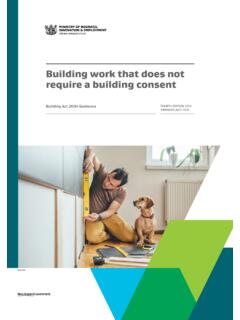
Building work that does not require a building consent
www.building.govt.nzGUIDANCE Building Act 2004 THIRD EDITION 2014 - AMENDED AUGUST 2017 Building work that does not require a building consent
C/AS2 - Acceptable Solution for Acceptable Solution for ...
www.building.govt.nzC/AS2 Acceptable Solution for Buildings with Sleeping (non institutional) (Risk Group SM) For New Zealand Building Code Clauses C1-C6 Protection from Fire
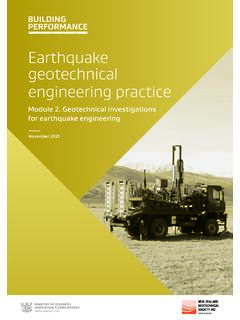
Earthquake geotechnical engineering practice
www.building.govt.nzEarthquake geotechnical engineering is a highly specialised field. As such the investigations for this need to be developed and carried out by an appropriately qualified and experienced geotechnical engineer or engineering geologist (referred to herein as the geotechnical professional). For the purposes of this document ‘geotechnical
E2 External Moisture
www.building.govt.nzFor single- and two-storey concrete and concrete masonry construction within specific limitations: E2/AS3. For light steel framed buildings up to 3 storeys, within specific limitations: E2/AS4. E2.3.3 Ground contact or proximity All walls, floors and structural elements in ground contact or proximity, except for buildings where external

Module 6: Earthquake resistant retaining wall design
www.building.govt.nzguidance on earthquake design aspects for retaining . structures that are not well covered in these handbooks or elsewhere. The main objective is to identify situations where seismic design of retaining structures should be considered, to provide the necessary seismic parameters, and to identify key issues relating to seismic design.
Worked Example 4 | Design of a tied-back retaining wall to ...
www.building.govt.nzDesign of a tied-back retaining wall to resist earthquake loading . Worked example to accompany MBIE Guidance on the seismic design of retaining structures for residential sites in Greater Christchurch (Version 2) November 2014 . Tied-back retaining walls were used originally as a substitute for braced retaining walls in deep excavations.
Acceptable Solutions and Verification Methods
www.building.govt.nz4.2 Sizing of downpipes 42 4.3 Installation of downpipes 42 5.0 Roof Gutters 42 5.1 Size of roof gutter 42 5.2 Materials44 5.3 Gradients44 5.4 Thermal movement 44 5.5 Overflow outlets 44 Appendix A Rainfall intensities 45 Index 47 Contents Amend 4 Dec 2000 Amend 4 …
Acceptable Solutions and Verification Methods
www.building.govt.nz4.2 Sizing of downpipes 42 4.3 Installation of downpipes 42 5.0 Roof Gutters 42 5.1 Size of roof gutter 42 5.2 Materials44 5.3 Gradients44 5.4 Thermal movement 44 5.5 Overflow outlets 44 E1/AS1 Appendix A Rainfall intensities 45 Acceptable Solution E1/AS2 52 1.0 AS/NZS 3500.3 Stormwater Dec 2000 drainage52 Index 56 Contents Amend 4
Commentary for Acceptable Solutions C/AS1 to C/AS7 ...
www.building.govt.nzDecember 2013. Contents Acceptable Solutions C/AS1 to C/AS7 Part 1: General 2 ... 4.11 Protected shafts 31 4.13 Floors 32 4.14 Subfloor spaces 32 ... INNOVATION AND EMPLOYMENT – 15 FEBRUARY 2013 I 1 Part 5: Control of external fire spread 34 5.1 General principles 34 5.2 Horizontal fire spread from external walls 36 5.5 Table method for ...
Constructing Cavities - Building Performance
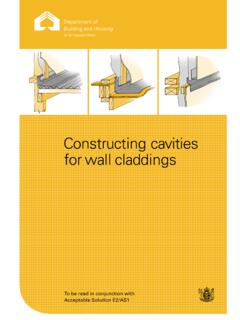
www.building.govt.nzTable 23 (’Properties of roof underlays and building wraps‘). Install the wall underlay directly over the framing. Install the cavity battens directly over the wall underlay as described in Cavity battens on page 9. No additional wall underlay is needed between the wall cladding and the cavity battens except in the following situations.
Related documents
1 1 MAR 2015 - United States Army
armypubs.army.milIncorporating Change 2, Effective April 10, 2014. h. DoDM 1332.18, Volume 2 (Disability Evaluation System (DES) Manual: Integrated Disability Evaluation System (IDES)), August 5, 2014. i. DoD 5500.07-R (Joint Ethics Regulation (JER)), August 1, 1993, Incorporating Change 7, Effective November 17, 2011. Army Directive 2015-12 Enclosure 1

Certified Medication Technician Student Manual
www.missouricareereducation.orgIn 1993, the Missouri Division of Aging formed an ad hoc committee to review the curriculum for accuracy, relevancy, and organization. Oral metered dose inhalation medications, transdermal patches, and body substance precautions were incorporated. Several committee members deserve special recognition for their writing contributions:
Keller-Lehmann-Brands and Branding-final
bear.warrington.ufl.edu1 For commentary on the state of branding, see special issues of International Journal of Research in Marketing (Barwise 1993) and Journal of Marketing Research (Shocker et al. 1994). For a more exhaustive review of the academic literature on brands and brand management, see